
 •
Rating:
•
Rating:
THE REVIEW
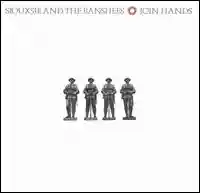
Just a year after the sinisterly tinged punk of "The Scream", Siouxsie and the Banshees released this "Join Hands," one of the most controversial works of their career. It is a raw, funereal album, a child both of the urgency of punk and the mal de vivre unrest that is certainly not a whim in the quartet, but instead is expressed in corrosive sounds and symbolist lyrics that delve deep. Seven tracks (plus the period piece "The Lord's Prayer") as sharp as razors and suffocating as catacombs, where the lyrical theme is death, or rather, the funeral ritual that follows: crosses, flower wreaths, corpses in the morgue waiting for burial, premature burials... However, these are symbols, behind which more controversial feelings are hidden, such as the denunciation of power that generates humiliation or the sense of frustration and incommunicability among men. But while the themes unfold over time, the sounds arrive with an abrasive immediacy that disorients:
"Poppy Day", preceded by tolling death bells, is a funeral litany of monotone guitars and sharp drum beats, two sparse minutes that almost seem like the product of a soundcheck, but which inevitably leave a mark, perhaps becoming the programmatic manifesto of the entire album. It is followed by "Regal Zone", angry and convulsive, with McKay’s saxophone highlighting the instrumental parts. The pace slows down with "Placebo Effect", a track that closely recalls the Joy Division’s parallel musical story, but also draws from the acid experience of the Stooges. "Icon" further distances itself from the punk past, unfolding a macabre ballad, at times tribal, on which Siouxsie’s voice rises in a great performance. The pagan ritual cadences of "Premature Burial", evocative and theatrical, would instead suit a Grand Guignol show, and certainly consecrate Siouxsie as the undisputed priestess of the underworld. The second side opens with the skewed "Playground Twist," also chosen as a single, a concentrate of all the previous ingredients with an expressive drama still hauntingly theatrical. The sound of a carillon then serves as the structural base for the lullaby-lament of "Mother/Oh Mein Papa", the only moment of catharsis on the album, an oneiric fragment with a nightmare lurking around the corner. But the finale is already at hand, entrusted to the lengthy expressionist ride of "The Lord's Prayer": it's a live recording of the first song performed on a stage by the group, which practically improvised wildly for fourteen minutes. An emblematic choice, but which in fact ends up depriving the album of a real thematic closure, leaving it in some ways unfinished.
When "Join Hands" is released, it is 1979, and while punk is heading towards a slow decline, many new ideas are emerging on the musical landscape. This album can still be called a punk product as it is instinctive, restless, written and composed almost spontaneously, but the music takes new directions, closer, in retrospect, to that gothic trend that will soon prevail. "Join Hands" can be considered one of the first examples of a dark or gothic work, if you will, to this day one of the purest, rawest, wildest, and uncompromising; in other words, the reflection in the mirror of the disturbing, enigmatic, and witchy image of the incredible character Siouxsie.
Loading comments slowly
Summary by Bot
Join Hands is a raw and funereal album by Siouxsie and the Banshees that merges punk urgency with gothic darkness. Released in 1979, its abrasive sounds and symbolist lyrics explore death, ritual, and societal frustrations. The album's theatrical and unsettling atmosphere marks it as a pioneering gothic punk work. Despite an unfinished feel, it showcases the band's intense creativity and marks a key moment in musical evolution.Tracklist Lyrics Videos
Siouxsie and the Banshees
Siouxsie and the Banshees were a British band associated with punk’s aftermath and the rise of post-punk and gothic rock, fronted by Siouxsie Sioux. Reviews describe their early era as austere and alienated, later expanding into electronics, pop-leaning songwriting, and stylistic experimentation, while remaining influential for gothic iconography and sound.13 Reviews
