
 •
Rating:
•
Rating:
THE REVIEW
Siouxsie Soux has left an indelible mark on the history of darkwave music, of which she has become one of the major icons.
A former groupie of the Sex Pistols, the importance of the godmother of gothic in the birth and development of the genre can be understood even from small details, such as the fact that people began to expressly talk about gothic rock precisely with regard to the music and stage presence of Susan Dallion, and the love-hate relationship that characterized her professional and non-professional union with Robertino Smith, who took his first steps into the music world by playing guitar in the band of the queen of dark-punk.
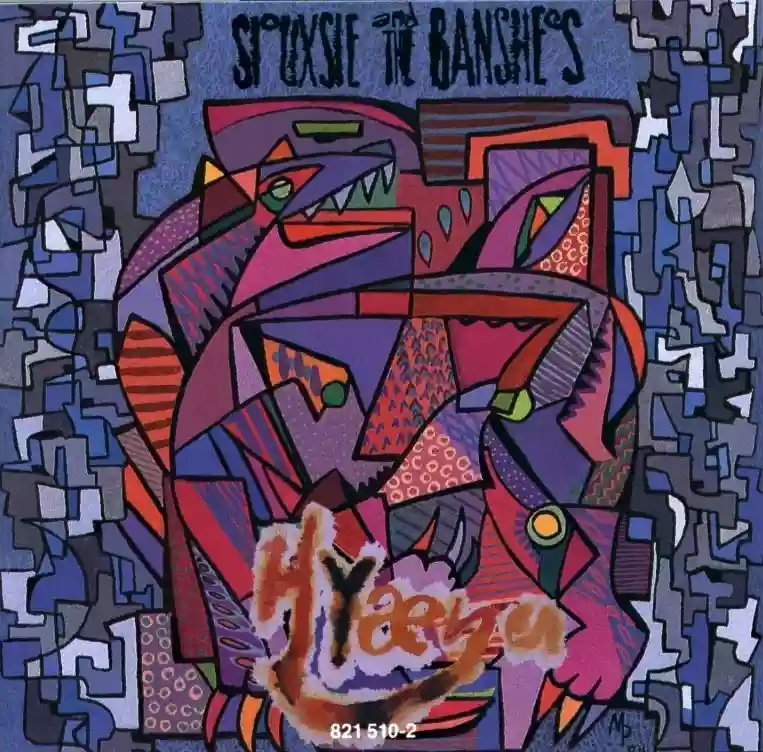
The partnership between the frontman of the Cure and the beautiful Susan was materialized, discographically speaking, with the live album “Nocturne,” recorded at the legendary Royal Albert Hall in London, and with “Hyaena.” Released in the U.S.A. with the addition of the Beatles' cover “Dear Prudence,” “Hyaena” is a particular album and much darker than its predecessors, and in this sense, it is greatly influenced by Robert, who handles the guitar and keyboard parts on this platter, having just completed the dark trilogy of the Cure (Seventeen Seconds, Faith, Pornography) with his main group.
In fact, it is an album that is not easy to assimilate, but extremely fascinating. The collaboration between our heroes is truly compelling, and the strength of the album is, needless to say, Siouxsie's voice, which, compared to previous works, becomes more modulated and enchanting, and thus, so to speak, less shouted. The opening of Hyaena is entrusted to the symphonic “Dazzle,” a piece where Susan's delicate, almost echoing vocalizations contrast with the claustrophobic and dark sound instrumentally created. The subsequent “We Hunger,” with its obsessive progression, is suffocating and provides a perfect backdrop for Soux's vocal performance, the best, in my opinion, of the album, which becomes poetic and captivating. More subdued and relaxed is “Take me Back,” which could lend itself to the soundtrack of a quiet lullaby (it's not guaranteed, however, that the fruit of sleep will be dreams or nightmares).
It continues with “Belladonna,” with its dreamy atmosphere and psychedelic choirs. The top, according to this writer, is reached with “Swimming Horses,” a song characterized by the sweet notes of the piano, played almost in a western style, accompanying Dallion's now fuller voice. Even in the following “Bring Me The Head of The Preacher Man,” we hear sounds reminiscent of rustic duels, complete with tumbleweeds rolling in the desert and pistols aimed at each other.
More rhythmic and fast is “Running Town,” where the sound of keyboards is prominently displayed, amidst screams and background choirs, in a sort of infernal carillon. The album closes with the somber “Pointing Bone” and the arabesque “Blow the House Down.”
In conclusion, it must be said that lovers of the genre will certainly not be able to do without listening to this album, especially those who adore the dark trilogy of Smith's creation, of which, personally, I consider this "Hyaena" a kind of ideal continuation.
Ah, I almost forgot, … . God save the Queen!
Loading comments slowly
Summary by Bot
Hyaena by Siouxsie And The Banshees is a dark, captivating album heavily influenced by Robert Smith's guitar and keyboard work. Siouxsie's voice is more modulated and enchanting, shaping the album's haunting atmosphere. Tracks like "Dazzle," "Swimming Horses," and "Bring Me The Head of The Preacher Man" stand out for their unique soundscapes. This record is a must-listen for fans of gothic rock and darkwave, continuing the legacy of The Cure's dark trilogy.Tracklist Lyrics Videos
Siouxsie and the Banshees
Siouxsie and the Banshees were a British band associated with punk’s aftermath and the rise of post-punk and gothic rock, fronted by Siouxsie Sioux. Reviews describe their early era as austere and alienated, later expanding into electronics, pop-leaning songwriting, and stylistic experimentation, while remaining influential for gothic iconography and sound.13 Reviews
