
 •
Rating:
•
Rating:
THE REVIEW
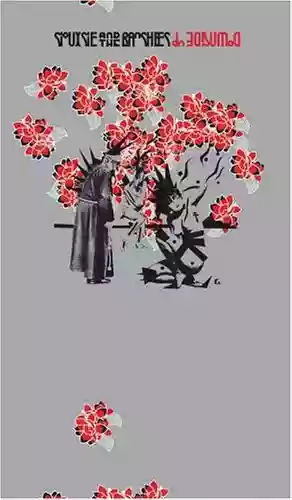
In 2004, nearly a decade after their last studio album, fans of Siouxsie and the Banshees can celebrate a major event: it's called "Downside Up," a box set that collects all, every single b-side recorded by the group over 17 years of career, plus the now-untraceable EP "The Thorn." And for once, it's worth spending a few words on the form in which the product is presented: 4 CDs for a total of 55 tracks, featuring essential and elegant graphic design, and, dulcis in fundo, a 76-page booklet with photos of all the single covers, song lyrics, and for each, the memories and opinions of the various members: truly an unmissable gem for those like me who loved and sought them, and now can revel in the idea of having all the remaining knowledge at their fingertips...
Creating a collection of such monumental scope is a clear sign, besides the affection for their supporters, of the sincere passion for the universe of b-sides. From the very beginning, the Banshees have always believed in the importance of "b-sides," for that dark allure they knew how to add to singles, and certainly not for commercial urgencies (the record label always worried about those). What stands out is the way almost all the tracks came to light, as Siouxsie immediately reveals in the preamble to the collection: no discards from album track lists, nothing pre-packaged like remixes or reworkings, but raw ideas transformed into songs over a weekend; a couple of days, often those of the weekend, was indeed the margin that Polydor allowed the group to lock themselves in the studio and compose the b-sides, after which the related single would be released.
And precisely these tight timespans, instead of leading to nervous exhaustion, acted as a propellant for our members to unleash all their creative power. This is how raw, anarchic, experimental tracks, born of instinct and momentary sensations, emerged and sometimes did not even negotiate with the producers' minimal cares. It is easy at this point to understand why the indomitable Siouxsie declared she was more attached to these b-sides than to anything else recorded. It's time then to open the chest and embark on a long journey into the Banshees' kaleidoscope, retracing the steps year by year and re-tasting the lost atmospheres. The journey is long and challenging (I will limit myself to sketch a few coordinates), but never mind the preconceptions or preferences for one artistic period over another because the pearl is always around the corner.
CD 1 - It encompasses the story of the early Banshees' period, to be precise, from the beginnings (1978) to the departure of the guitarist McGeoch (1982, after "A Kiss In The Dreamhouse"). For many, this is the timeframe when the group gave their best, moving from the dark and sharp sounds of the beginning to the more exotic, yet no less somber, of memorable albums such as "Kaleidoscope" and especially "Juju". We can listen again to the dark "Voices," which, together with side A "Hong Kong Garden," served as the first business card; followed by the childhood nightmare "Pulled to Bits," and the infuriated "Drop Dead - Celebration" dedicated furiously to the traitors Morris and McKay; "Eve Black - Eve White" is one of the first examples of a b-side in tune with side A, while in "Supernatural Thing" the group ventures into a funk-rhythm cover (!) But the first real shakes come with the tribal madness of "Congo Conga," partly cartoon, partly jungle horror, and with "Cannibal Roses" also with an exotic taste but even more disorienting. There's also room to revisit an old French folk song, "Il Est Ne, Le Divin Enfant."
CD 2 - Between 1983 and 1987, the group evolved in mutable forms, partly due to frequent line-up changes. The collaboration with Robert Smith for "Hyaena" can only be found here in the free-jazz prank of "There's A Planet In My Kitchen," while the three historical members, without a guitarist, crafted the nocturnal "Tattoo" and "Let Go," two tracks still of a decent level. The entry of John Carruthers brings new life to the Banshees in the excellent "Tinderbox," and even the b-sides return to the dark glories of the past: notable are "An Execution," rich in dark pathos, and the sharp geometric slashes of "Umbrella." 1987 is the year of "Through The Looking Glass," a collection of covers, but the group does not run out of ideas, distributing three singles with as many as six unreleased tracks; among these stands out the ornithological "She's A Cuckoo," the work of the quirky Budgie, and the intense "Something Blue" with dreamy atmospheres, which perhaps deserved greater fortune.
CD 3 - Two new members, guitarist John Klein and multi-instrumentalist Martin McCarrick, become permanent additions. From 1988 to 1995, it will be with them that the Banshees will experience the final phase of their career, with alternating musical fortunes but at least with more media visibility. The old dark line is definitively running out, yet the two additions increase the technical capacity of the group, which can now venture into wild glam twists ("False Face") or even celebrate a Mexican fiesta to the rhythm of salsa ("El Dia De Los Muertos"). The curious experiments continue, see "Catwalk" and "Hothead," but there are also moments of pure magic, with seas of soft keyboards of the splendid "Sea Of Light" and "Return." Special mention goes to "I Could Be Again," which takes us back to the impulses of ten years ago, and not by chance, was included in the 2002 reunion concert setlist.
CD 4 - It's an additional gift to the devotees, who can listen again to the four tracks of the EP "The Thorn" (1984). On that occasion, the group entered the studio partly to test the newcomer Carruthers, and partly to give a new light to some songs that were perhaps too sparse initially. The result is satisfying, particularly for "Overground," rendered symphonic and of great impact thanks to the collaboration with an orchestra.
The parallel universe of b-sides thus delivers us the image of a group even more instinctive and imaginative than we already thought. Thanks then to Siouxsie and her Banshees, always generous, in the never-enough-missed years of 7 and 12 inches, for their multicolored waves of b-sides; and thanks now for having curated this magnificent "sound autobiography" that gives them all back to us at once. I can only wish you a good (long) listening...
Loading comments slowly
Summary by Bot
The 'Downside Up' box set by Siouxsie and the Banshees is a must-have for fans, featuring 55 rare b-sides from a 17-year span plus the elusive EP 'The Thorn.' The review highlights the band's raw creativity unleashed in brief studio sessions and praises the elegant packaging and detailed booklet. Each of the four CDs takes listeners through distinct eras, showcasing diverse and experimental sounds. This collection offers a deep dive into the band’s artistic evolution beyond their main albums.Tracklist Lyrics Videos
04 Mittageisen (Metal Postcard) (04:10)
05 Drop Dead/Celebration (04:25)
06 Eve White/Eve Black (03:04)
07 Red Over White (04:36)
08 Follow the Sun (02:49)
09 Slap Dash Snap (03:42)
13 We Fall (03:39)
14 Cannibal Roses (04:30)
15 Obsession II (03:52)
16 A Sleeping Rain (04:19)
17 Il est né, le divin enfant (02:31)
Siouxsie and the Banshees
Siouxsie and the Banshees were a British band associated with punk’s aftermath and the rise of post-punk and gothic rock, fronted by Siouxsie Sioux. Reviews describe their early era as austere and alienated, later expanding into electronics, pop-leaning songwriting, and stylistic experimentation, while remaining influential for gothic iconography and sound.13 Reviews
