
 •
Rating:
•
Rating:
THE REVIEW
There are those bands you grow up with; they are the first you listen to when you're a youngster and don't yet know music. And it may be that as you grow up, you elevate your musical knowledge, taking different paths, choosing those genres that best suit your personality. But you always have, in a corner of your memory, the thought that that song, that band wasn't so bad after all, despite what most people say.
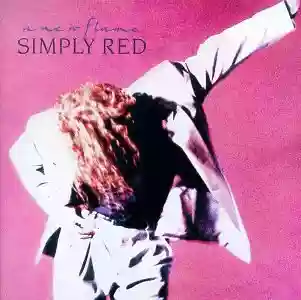
Simply Red was an example of this mechanism for me, a band that, with their third album - dated 1989 -, reached the peak of success.
The LP thus takes shape with the awareness of having established themselves in the public's attention, after the fantastic debut, followed by the chart-topping hits of the second work. Hucknall and company can thus compose in a climate of relative serenity, manifested in the generally slow - romantic tempo of the songs. The sounds breathe placidly on a soft velvet carpet, and the soul transforms from aggressive to melodic, graceful. The keyboards, masterfully led by McIntyre, become the fulcrum for each song, with melodic lines that have the merit of never slipping into banality. Hucknall knows very well how to get the best out of every melody, and his vocal performances reach very high peaks (compared to later works).
If you don't know me by now is a clear example of this: the vocal harmonies that Mick and Fritz compose in the bridge are reminiscent - even if the comparison may seem bold - of those of John and Paul in If I fell, year 1964. The song, a true international success of that year, also reflects another characteristic of the band. They don't hesitate to pillage other compositions (It's only love, besides the already mentioned If you don't know me by now, by soul authors duo Gamble and Huff); and they make it a point to put the experienced "guru" Lamont Dozier, from the Motown school, in the cockpit, who contributes with Hucknall by drafting the splendid You've got it (one of the peaks of their entire discography) and the similar-protest of Turn it up. Incidentally, the two best-achieved tracks of the album.
The instrumental setup is well supported by Chris Joyce on drums and a very active Tony Bowers on bass; and if on some occasions Hucknall is guilty of self-satisfaction (She'll have to go), the powerful brass section, led by the other "red" Tim Kellet - and assisted by Ian Kirkham - brings him back to earth. It goes without saying then that the guitars can only play a marginal role - and furthermore Heitor T. Pereira pays the price of settling in, after the departure of Sylvan.
The production, entrusted to Stewart Levine, helped the album leap to the top of the charts of the time. And this also symbolized a kind of swan song, a snapshot of what could have been and never was. From here, the point of no return was crossed, and since then, the members were no longer "simply red." The pieces of the wonderful castle they had laboriously built over four years - from '85 to '89 - were swept away by their charismatic leader. They all left, one after the other: how far-sighted that choice was would be shown by the years to come.
Loading comments slowly
Summary by Bot
Simply Red’s 1989 album 'A New Flame' marks the peak of their early success, blending soulful melodies and romantic tempos under skilled production. Mick Hucknall’s vocal performances stand out, supported by masterful keyboard work and a strong brass section. The album reflects both homage to classic soul and the band’s own evolving sound. It serves as a snapshot of a fleeting but brilliant phase before major lineup changes.Tracklist Lyrics Videos
Simply Red
Simply Red are a British soul/pop group formed in Manchester in 1985, led by singer Mick Hucknall. They broke through with Holding Back the Years and reached massive European success with A New Flame and Stars, amid frequent lineup changes and Hucknall’s firm creative control.08 Reviews
Other reviews
By Abraham
Mick Hucknall is unbearable... but in this case, tension leads to a good result.
'A New Flame' is a clean record, an excellent viaticum for leaving behind the '80s ghosts and accessing the chaos of the '90s without woes.
