
 •
Rating:
•
Rating:
THE REVIEW
So I was taking my father to get the Pfizer. At the last minute, I went with my wife's car. Mine wouldn't even start. Damn injectors. The red zone prevented me from retrieving, there at my parents', the discs that come to me from abroad. The one from Baier? I unwrap and slip it into the player, eager for that confident, polite, ineffable voice. After all, my old man, born in 1940, is a bit deaf and won't complain. I keep all his 45s. He's given up music for years (something I can't understand, unlike never wanting to get a driver's license). Well, the ones I prefer, strictly from when he emigrated to Switzerland, are “Mr. Paganini” by Fitzgerald, "Tous Les Garçons/Oh Oh Chéri" by Françoise graceful Hardy and Ray Charles (“I Can't Stop Loving You"). There are, then, Chubby Checkers, Charles Aznavour, Gilbert Bécaud, and, besides Betty Curtis, a lot of Celentano and Robertino. All stored in a tin box, “Tre Marie” panettone, used to the cynical irony of time.
Well, in the car, it's only a dozen kilometers. To do, however, with slowness, since the urban circuit surpasses the more suitable rural scenarios. Mothers and children, strolling, on bike paths. Ladies in jogging pants, waddling, upon which even paternal gazes rest, devoid of deficit.
The less transitory fact, however, is Sibylle Baier. That perplexed irrationality in which she immerses you, that stretches over every rational certainty and instinct. Yes, because, in short, listening makes you transparent. A transparency without expectations. A non-consoling transparency. But neither indifference. There's no resignation that becomes despair, nor tranquility or sense of trust. Nor regret. A transparency of being, here and now. Without destination. It's music that writes an unfinished book. It is. It has withstood every test. And whatever. Or something like that.
Sibylle composed these songs for her son, after giving up her film career (she was in “Alice in the Cities” by Wenders). She sang her folk pieces on the guitar. She recorded them at night, in 1973, on her battery-operated recorder. She lulled her little one thus, singing from the other room, while he slept. A dialogue without divine words on the lips. But in a familiar and deifying language.
That son found, thirty years later, those tapes and transferred them to 10 CDs to give as Christmas gifts to his close relatives. By chance, one came to the ears of J Mascis, leader of Dinosaur Jr., who, temporarily interrupted the habit of tormenting his bandmate Lou Barlow, understood the totally unfathomable beauty of these songs and facilitated their publication (by Orange Twin Records). So, since 2006 we can all hear those songs that weren't meant for us.
"Forget About" is the song I can't get out of my head. Because Sibylle sings with velvet fingers these verses, that gently squeeze the throat:
"You made me forget
To have, want, do
And suddenly I feel proud
To be, without saying a word
You made me forget
Past and pain
Time, you slipped
Like a soft, sudden, summer shower
You make me feel good
You make me
So good, you made me forget
And suddenly I discovered it
Oh, it's beautiful the way you wear your shirt
You make me feel good, you made me forget everything".
A dedication that, in closing, we discover is not to the beloved, but to the little son.
I leave my father near the entrance, sitting on a wall, park, and rush back to him. When I slammed the car door, I locked Sybille Baier in a thought. How many such songs remain unknown to us?
Dad, in the end, it wasn't me running in those corridors, it was you shuffling your legs awkwardly, unlike ever before. But forget it, come on.
Loading comments slowly
Summary by Bot
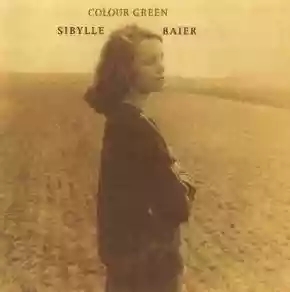
The review reflects on Sibylle Baier's 1973 folk album 'Colour Green,' a deeply intimate collection recorded for her son and later discovered by the public. The reviewer connects the music’s ethereal and transparent qualities to personal memories with their father. The album’s haunting, delicate voice and poetic lyrics evoke timeless emotions without regret or despair. It underscores the rare beauty of hidden musical treasures finally reaching audiences.Tracklist Lyrics Videos
Sibylle Baier
Sibylle Baier is a German singer-songwriter and actress whose intimate home recordings from 1970–1973 were compiled and released in 2006 as Colour Green (Orange Twin). The songs were recorded privately and include pieces Baier sang for her son.02 Reviews
Other reviews
By Seb
The intimacy of the album’s 14 tracks is undeniably adorable, and the accompaniment is as sparse as it is fascinating.
These songs are the splendid result of an uncontrollable necessity, and her soft and hypnotic voice becomes the means to release through sound the impressions, feelings, and ghosts of a sensitive and receptive mind.
