
 •
Rating:
•
Rating: THE REVIEW
New trends, new inspirations, and suggestions animate the varied "Southern" landscape between the late '70s and the early '80s, in reaction to a phase of collective crisis in the genre that spares not even its most illustrious figures: if the Allman Bros. and Marshall Tucker Band are languishing through mediocre routine records and now bland concerts, devoid of the vigor and emotional charge of just a few years earlier, neither are the Skynyrd doing well, far from it... The 1977 plane crash takes away Ronnie Van Zant, Steve, and Cassie Gaines, and it is a severe blow from which the band will never recover, despite the various but insignificant reunions that will follow over the years; survivors Gary Rossington and Allen Collins, for their part, will attempt to carry on the legacy of a now-defunct group by creating the failing project of the Rossington Collins Band, while many epigones engaged in the banal re-proposal of a monotonous Southern sound, always the same and annoyingly adorned with the most overused "stars and bars" stereotypes of certain American Bands, impose themselves on the scene in droves: I'm referring to bands of the caliber of Molly Hatchet, Blackfoot, Doc Holliday, and 38 Special, openly inspired by Lynyrd Skynyrd but actually closer to certain radio-friendly AOR than to the original (and certainly more genuine) artistic contribution of the best Southern Boogie. It is precisely the centrality given to guitars by the traditional Southern philosophy that is entering a crisis, revealing its chronic inability to innovate: exhausted and predictable solutions that define a cliché to which few, in such a period of creative aridity, have the strength to escape.
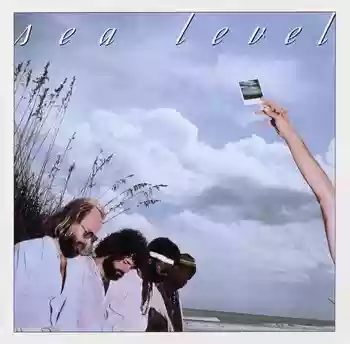
Among the few, notable exceptions certainly fall the great Sea Level by keyboardist Chuck Leavell, born as a side project carried on by some instrumentalists from the Allman Bros. Band, but later established as an autonomous group with its own history and characteristics. It's likely that many lovers of the more classic Southern sound, the one more influenced by Blues and Boogie characterizing the entire production of the Skynyrd and the very first Allman Bros., are less inclined to appreciate Sea Level's original offering: in fact, Leavell and associates do not target the "purists" of the genre, nor simple rockers interested in songs of three chords at most, but reclaim the multifaceted origins of Southern sound by blending, marvelously harmonizing all the elements that have historically marked the musical evolution of that vast area from Florida to New Orleans; extensive use of piano and guitar, as well as a horn section always discreet, never too invasive or redundant, for an elegant and composite exposition of Jazz, Creole rhythms (and at times also borrowed from certain Brazilian music), Funk and Rhythm & Blues. A diverse Fusion, a mix of styles and influences not always clearly distinguishable: their music is as far as can be from the classic guitar-based Southern Boogie, and resembles more, stylistically speaking, the direction that around the same years a brilliant and learned musician like Dickey Betts was taking, in part autonomously and in part also with the Allman Bros. Band (notably, the excellent album he recorded with the Great Southern in 1977 is indicative of this new and commendable stylistic course).
The Sea Level (a name chosen simply for its phonetic coincidence with the founder's abbreviated name: C. Leavell) are born concurrently with the Allman Bros. Band, and indeed represent the evolution, the ideal continuation, and expansion of a splendid journey begun with "Brothers And Sisters" in 1973 and meant to extend until "Enlightened Rogues" in 1979, before "Reach For The Sky" and "Brothers Of The Road" closed the second part of the glorious Macon band's career in an unworthy manner. Joining Leavell in this historic debut album of the new formation, released by Capricorn in February 1977, are guitarist Jimmy Nalls (incidentally very close to Betts in terms of execution fluency), bassist Lamar Williams, and drummer Jai Johanny "Jaimoe" Johanson, all open to the unique styles crossover that the keyboardist plans to achieve.
The exotic and irresistible formula of Sea Level is worthily illustrated right from the first track on the list, the excellent "Rain In Spain": an instrumental animated by Leavell's piano evolutions, at times even inclined to venture into modal improvisation, and by the incisive, soulful guitar of Jimmy Nalls, here engaged in two solos with different characteristics (the first being more melodic, the second more biting and "bluesy" closing the piece).
It is the more classic Rhythm & Blues with a "dixie" flavor (in a faint Little Feat style) that animates the lively "Shake A Leg", a tribute to the sound of Louisiana and New Orleans: it's a catchy track, supported by precise and Funk rhythms, the ideal backdrop for a new, commendable solo by the guitarist.
The long "Tidal Wave" follows, stylistically very close to "Rain In Spain" and in which Leavell displays an elegant pianistic touch worthy of the best Chick Corea, and the less significant "Country Fool," the album's only interlude that doesn't stand out for originality: mere routine Country Blues complete with slide guitar, and a voice that closely resembles Leon Russell's (in fact, the entire piece seems built on the pattern of his well-known Delta Lady).
But they do not take long to return to excellence with the next (and superb) "Nothing Matters But The Fever": the Southern matrix of this captivating "slow" with Caribbean accents is evident, notably marked by the wah-wah effect of Jimmy Nalls' guitar alongside the substantial and constant support of Lamar Williams' bass; on an equally excellent plane dwells "Grand Larceny," which starts with a Samba rhythm against a percussion backdrop and then evolves into an extraordinary instrumental ride, with Leavell’s piano and Hammond taking center stage: hints of Latin Rock and Santana's "Abraxas", before the guitar bursts onto the scene for a solo of great lyricism and fluency.
The delicate piano weavings of the leader manage to enhance and bring out the timeless allure of a Folk classic like the traditional "Scarborough Fair" (listeners of the Simon and Garfunkel version will surely be amazed): the piece is rearranged in an instrumental version with powerful and sudden guitar surges, set in an atmosphere of unparalleled charm. It finally concludes with the brief yet equally valid "Just A Good Feeling."
Five stars rightfully go to an album not widely known but of undeniable historical significance, capable of pointing to an alternative and original expressive path within Southern Rock.
Loading comments slowly
Summary by Bot
Sea Level's 1977 debut album stands out as an innovative evolution within Southern Rock, blending jazz, funk, and Creole rhythms. Founded by keyboardist Chuck Leavell, the band moved away from traditional guitar-centric Southern Boogie to a multifaceted sound. The review praises the album's instrumental variety, elegant piano work, and inventive guitar solos, highlighting tracks like "Rain In Spain" and "Grand Larceny." Overall, the album is celebrated for its originality and historical significance in the genre.Tracklist Videos
Sea Level
Sea Level was an American band formed by keyboardist Chuck Leavell as a side project of the Allman Brothers Band; their self-titled debut was released in 1977.01 Reviews
