
 •
Rating:
•
Rating:
THE REVIEW
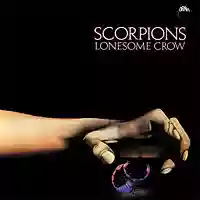
A pleasant rediscovery, this "Lonesome Crow," debut album of the Scorpions, dated 1972, very distant from the plastic sounds of the '80s (obviously), but upon closer inspection, also different from what the band would offer in the immediate coming years. The lineup includes, besides the founders Klaus Meine and Rudolph Schenker, a bass/drum rhythm section that would prove to be the best of the Scorpions' entire career (despite their contribution ending with this album) but most importantly, his majesty Michael Schenker, Rudolph's younger brother, here at his debut at just 17 years old (!!), but already with enviable technique and personality that would lead him to be recognized over the years as one of the most skilled and influential guitarists in the hard rock/heavy metal scene (a certain Ozzy Osbourne wanted the German guitarist as a replacement for Randy Rhoads...).
"Lonesome Crow" could be defined as hard rock, but in reality, it is something more, heavily influenced as it is by the typical sounds of Black Sabbath and partly Hendrixian, with pronounced psychedelic overtones that complete the picture: despite the evident nods to those sounds, the album manages to sound new and original, in a formula that, alas, would never be revisited by the band, except in part in the subsequent "Fly To The Rainbow."
The opener "I'm Going Mad" could be defined as the perfect synthesis of what we'll hear later: after a small but effective drum intro, it's Schenker's guitar that enters the scene forcefully with a rather determined but short solo, followed by a sustained riffing that occasionally gets nastier and continues at a doomy pace, in perfect Sabbath style. The voice will enter consequently, but it is neither evil nor "sick," it is simply relaxed, angelic in a certain sense, and especially the singing is reduced to a single verse that ends in a scream that seems to tear through the atmosphere of the song that was "stabilizing"; Schenker's furious solos will do the rest, mixing with Klaus's anguished screams in the finale.
The following "It All Depends", as well as "Action", are more markedly close to a classic hard-rock, and indeed Schenker is free to indulge with the solos that are there to simply demonstrate what kind of guitarist he is, despite his young age.
With "Leave Me" we return to "reasoning": the intro is absolutely psychedelic, with those sounds that almost stun the listener and that will accompany in the background the entire song, well guided by the ever more convincing voice of Klaus Meine, here supported by suitable backing vocals; the song stops around the 4-minute mark, only to resume and accelerate with the crossed guitars of the Rudolph/Michael duo, the first true example of a style that would be revisited by many bands like Thin Lizzy, Judas Priest and so on. "In Search Of The Piece Of Mind" opens with a very particular electric guitar riff, but the song will proceed with the acoustic, and the pulsating bass supporting the singing; everything seems to end at the 3-minute mark, with the voice and instruments fading into the echo of the wind that seems to gradually move away: we could define it as a near-ballad, due to its quiet pace, but the song restarts at full throttle with the hysterical voice and hard riffs that seem like bell tolls. It's also noteworthy the splendid drum work here as well as in the previous songs, which does not appear at all square or anonymous, but rather creative and free to explore and carve out its own precise space within the songs.
With "Inheritance" it is Klaus Meine's voice that takes center stage, gifting us with what I do not hesitate to define as one of his best performances ever: spectacular his almost sudden way of raising his voice, and then bringing it back "composed" with surprising ease, demonstrating great vocal flexibility. The song then is a continuous intertwining of typically Hendrixian solos that sublimely complete the piece, which proves to be one of the best of the lot, along with the opener, and the subsequent title track.
The concluding "Lonesome Crow" is perhaps the peak of the album, with its 13 minutes of pure sonic madness in which, more than in any other composition, one notices the heavy shadow of the Black Sabbath, so much so that the intro rather evidently recalls the dark and mysterious atmosphere of the eponymous Sabbath song. However, Schenker's "exaggerated" guitar distortions push everything towards psychedelic sounds, with the relentless beat of the drums, and the pulsating bass that well accompany the ongoing guitar delirium, which occasionally spills into solos in full Tony Iommi style; the guitar is thus the real protagonist of the piece, and it calms only during the sung parts, continuing to produce echoes and reverberations, authentic touches of "class."
In conclusion, an album that I do not hesitate to define as the best of the Scorpions '70s, vying for the crown with the equally different (and beautiful) "Taken By Force" six years later. An album unfairly relegated into oblivion, primarily by the band itself, which never considered the idea of carrying forward certain tracks over the years, preferring instead to focus on a certainly more "immediate" hard rock but less original and "enchanting," gradually slipping into the plastic banalities of the '80s. A pity.
Loading comments slowly
Summary by Bot
Lonesome Crow, Scorpions' 1972 debut, showcases a psychedelic hard rock style distinct from their later '80s sound. Michael Schenker shines with impressive guitar work at just 17. The album pays homage to Black Sabbath and Hendrix influences, producing an original and captivating sound. Considered one of their best '70s efforts, it remains an underrated gem.Tracklist Lyrics Videos
Scorpions
Scorpions are a German rock band formed in Hanover in 1965, widely known for their hard rock/heavy metal output and for global hits spanning heavy anthems and ballads.24 Reviews
