
 •
Rating:
•
Rating:
THE REVIEW
Late '80s, Bay-Area of San Francisco, the punk scene in Berkeley and its surroundings is very lively and among the bands warming up around 924 Gilman Street are names like Operation Ivy, Green Day, Jawbreaker, and Samiam.
If from the historic core and the ashes of the ska-punk of the first will emerge the future Rancid, and for the history of Green Day rivers of ink have been spilled, with the Jawbreaker who will implode after leaving their mark in the mid '90s with “24 Hour Revenge Therapy”, the Samiam formed in 1988 from the ashes of Isocracy, can be considered the losers of the group, despite several lineup changes, have survived these 30 years the illusion of becoming something greater.
High (in)fidelity.
The historical core of Samiam is formed by the duo of Jason Beebout, the singer, and Sergie Loobkoff (guitarist), who have been present from the beginning to today, while the roles of bassist and drummer have seen significant changes, considering that no less than 6 drummers have passed through the band!
After all, when you're in a band that doesn't tickle the fancy of the masses or either pocket, the motivations can also falter, and you decide to do something else or move elsewhere.
Stateless punk in no man's land.
Many bands, many, don't succeed, that’s not the point, the news is not here. Nevertheless, it must be said, Jason and Sergie had also smelled the success of their friends Green Day (with whom they played several times) back in 1994 when signing with Atlantic, see below.
Samiam, in a certain sense, are children of everyone and no one. They are somewhat stateless punks with imprints left all over the place, but never well-marked in an indelible way. Honestly, they never cared too much about being too fundamentalistic.
After all, Samiam’s records, as lucidly stated by one of the two historical members, would almost never end up among the Best emo '90s records nor among the Best punk-rock '90s records. Too undisciplined to be a trivial pop-punk band, too inconsistent to ascend to the hardcore throne.
The career of Samiam, which counts eight studio albums in total, has been a real rollercoaster, and the evolution in terms of sound over the years has been significant, without losing spontaneity and those characteristics that make them recognizable.
1994: point break
If on July 17, 1994, further south of the Bay-Area, precisely at the Rose Bowl in Pasadena, Italy is at a crucial point, almost at the peak of its American adventure teetering between dream and despair, a bit further north, Samiam decides to take the plunge and sign a contract with a major label (Atlantic), preparing to take the decisive penalty kick. On August 23, “Clumsy” would be released, the successor to “Billy”, but the reception, despite a timely hook like “Capsized” with a related music video, will be lukewarm.
1996-1997: point break (in reverse)
Atlantic, not being satisfied, and with a second album already ready, decides to cut ties with the band and refuses to release the work. These are fairly tumultuous years for the band, which, after a dispute with mom-major, will manage to obtain, by buying them, the rights to the album only in 1997: it will be the Swedish Burning Heart that publishes it after a thousand vicissitudes.
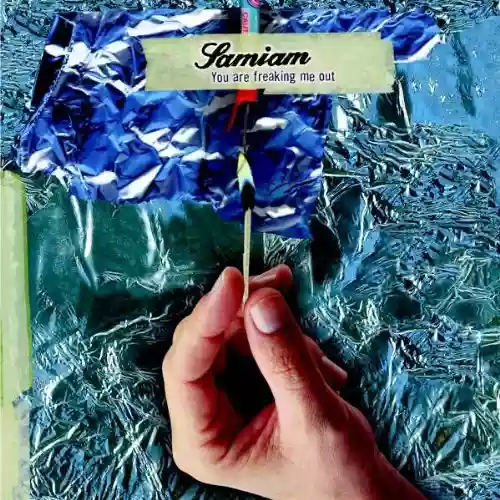
Matchstick on a sea-blue background.
If “Billy” (1992) had been the album of post-hardcore precariousness that would make Bob Mould, Grant Hart, and Greg Norton laugh under their smug mustaches in a photographic snapshot of the "New Day Rising" period and “Clumsy” that of illusory permanent stability, “You Are Freaking Me Out” updates the dark parables of broken loves translating them into shouted pop-punk prose.
That the losers’ trademark made of heavy silences and spectacular emotional surges is always there is demonstrated by “Factory”, a totem piece to shout at the top of your lungs. And one can talk without reverential fear of that three-letter word, without risking indictment for fascism apology.
And it matters little if “She Found You” might seem to diminish their value by trivializing the formula if you can still faintly whisper the refrain of “If You Say So” under your breath at the horizon or return to shouting in unison with Jason on “My Convenience” and “Full On”.
Although, as emphasized, wearing more shoes has certainly not helped increase their audience neither among the skateboarders raised on beer, Converse, and melodic hardcore like Lagwagon nor among those who at the time were struck on the road to the new (?) rock attractions coming from north direction Seattle.
Let’s resound the notes of “My Convenience” in unison, hold each other tight, cry and scream to the sky, forget the last penalty kick of the divine ponytail like life's bitter pills and rise again from the flames together.
“I think that our style has grown in a way that we are concerned in writing songs rather than trying to be punk or aggressive. Definitely, I would agree with anyone that complained that we are no longer punk enough. That isn’t a concern for us...we just try to make music. That isn’t to say that we aren’t considered loud, shitty punk by most people that don’t listen to aggressive music. Hopefully, we have come to the point where both people that love punk music and others that hate punk, can like us. It has always been a goal for me to bridge that gap and get all sorts of people into what we are doing.”
(Sergie Loobkoff)
Loading comments slowly
Summary by Bot
The review explores Samiam’s journey through the vibrant 90s Bay Area punk scene, highlighting their struggle for mainstream success amid peer bands' rises. 'You Are Freaking Me Out' is praised as an emotionally charged album that combines punk rawness with melodic pop-punk elements. Despite lineup changes and major label setbacks, Samiam maintained a distinct identity balancing punk roots and broader musical appeal. The album is seen as a significant but overlooked piece in 90s punk and emo history.Tracklist Lyrics
Samiam
Samiam are an American punk rock band from Berkeley, California, formed in 1988. Anchored by vocalist Jason Beebout and guitarist Sergie Loobkoff, they emerged from the 924 Gilman scene and built a catalog that spans from the raw urgency of Billy (1992) and the major-label Clumsy (1994) to You Are Freaking Me Out (1997), Astray (2000), and Stowaway (2023).05 Reviews
