
• Rating:
THE REVIEW
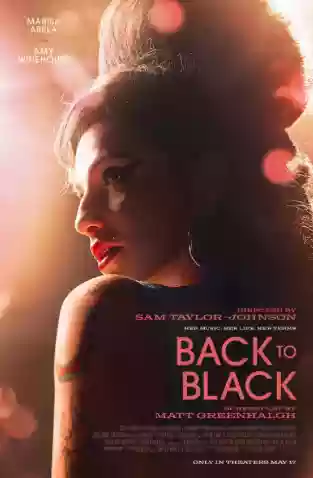
This is a film that wants to celebrate Amy Winehouse, mourn her, and excuse her - and ends up doing none of the three convincingly. Back to Black suffers from a fundamental misunderstanding of its subject: Amy Winehouse’s life is treated as inherently meaningful simply because it ended badly, as if chaos automatically produced depth. It doesn’t. Without a narrative spine and despite the sympathetic core, the film just drifts through excess.
The story begins with a teenage Amy fascinated by her grandmother Cynthia - a former cabaret singer and alleged “style icon”. From there, the plot moves briskly through Amy’s first successes and growing celebrity, supported by her family, particularly her father Mitch. Whether one finds Amy’s brash personality appealing or not is subjective, but the portrait that emerges is fairly consistent: insecure, defensive, and aggressively performative.
Biopics live or die by their anchor. Bohemian Rhapsody, for all its flaws, is built around the extraordinary crescendo of Live Aid and the undeniable charisma of Freddie Mercury. Amy Winehouse’s life, by contrast, has no equivalent. There is talent, chaos, repetition - but no defining arc, no event that gives meaning to her meandering trajectory. Inevitably, the turning point must be Amy’s meeting with Blake, alternately framed as the love of her life and her undoing.
Their encounter in a pub occupies an inordinate amount of screen time, as if duration could convey destiny. Marisa Abela is convincing as Amy, but Jack O’Connell is the real surprise: he delivers Blake with exactly the right mix of charm, vacancy and menace. Unfortunately, the film mistakes this effective performance for narrative substance. Their relationship is sketched from a safe distance, more observed than understood, and while Cynthia’s death is identified as a destabilising blow, the causal chain between grief, addiction and self-destruction remains curiously underdeveloped. Blake becomes less a tragic catalyst than a convenient explanation.
Back to Black is a long film that feels both overstuffed and oddly evasive. It lingers on minor moments that add little, while skating politely around Amy’s addictions and violent behaviour, before stopping short of her death as if afraid of its own conclusions. All her major hits are dutifully played, so fans will find familiar comforts. Others may simply feel confirmed in their indifference. In the end, the film resembles its subject: chaotic, and leaning heavily on the well-worn myth of the “tormented artist,” as if talent were a license for self-destruction and addiction the unavoidable side effect of genius.
This is a narrative the audience continues to swallow with touching devotion, perhaps because it flatters both the artist and the spectator: she suffers because she is special, and we admire because we understand, but romanticising this lifestyle only absolves everyone involved, from families to managers to the audience itself, of the far less glamorous responsibility of acknowledging damage for what it is.
Loading comments slowly
Summary by Bot
The review critiques 'Back to Black' for failing to authentically capture Amy Winehouse’s complexity, relying instead on familiar artist myths. Despite strong performances, especially by Jack O’Connell, the film avoids tough topics and offers little new insight. Major life events are skimmed and addiction handled tentatively. Fans may appreciate the music, but others may find the narrative lacking emotional punch. Ultimately, the film mirrors Amy’s chaos but never truly reveals her essence.
Sam Taylor-Johnson
Sam Taylor-Johnson is a British filmmaker and visual artist, also known as Sam Taylor-Wood.01 Reviews
