 •
Rating:
•
Rating:
THE REVIEW
I love Led Zeppelin. The primordial moan of Plant, the pyrotechnic bass drum of Bonham, the discipline of Jones, the genius of Page. Reverently, I bow before the instrumental acrobatics of Yes. The Peter-Pan voice of rock from Anderson, the countertimes of Bruford first and then White (I still haven't recovered from "Sound Chaser"...), the instrumental fury of Squire, the progressive touch of Howe, the schizoid flair of Wakeman.
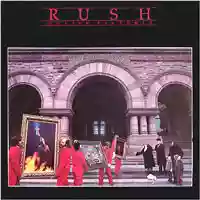
Well, if all of this were brilliantly synthesized into 3 musicians, what would we be talking about? About pure dynamite, of course. Rush. One of the most overlooked bands by critics and the general public, yet one of the most influential and copied. But let's talk about the album.
I must start by stating that, from my point of view, "Moving Pictures" is not THE masterpiece of Rush, as I read around. I find "2112" more epochal, electrifying, and incisive, definitely unsurpassable. What I really like about this album is the balance with which hard-rock elements are combined with progressive ones. In fact, this "contaminatio", proverbially quite problematic (the typical polymorphism of progressive doesn't easily align with the substantial immobility of the blues harmonic base on which hard-rock typically rests), finds its best possible realization here.
"Tom Sawyer" opens the dance and is a true statement of intent: the buzz of a very progressive synthesizer precedes the explosion of Lee's very hard-rock voice which seems to mimic Plant's in "Black Dog". The piece then unfolds on an essentially hard-rock framework, over which unfolds a carpet of amazing keyboards that give the piece an oriental exotic touch akin to "Kashmir", so to speak.
Compared to the opening track, "Red Barchetta", with its galloping pace, accentuates the epic tones while also being characterized by the perfect blend of lyrics and music. It truly feels like being behind the wheel of the famous "Red Barchetta" alongside the protagonist, stepping on the accelerator pedal with all our longing for summer and freedom. The ideal soundtrack for the journeys of Sal and Dean in the legendary "On the Road" by Kerouac, as well as for every journey towards freedom and life. Peart, as usual, is masterful, powerful in his hits and incredibly varied in rhythm.
The instrumental "YyZ" confirms the band's incredible technical-compositional skills and is probably the summa of the "Rush philosophy": the hard-rock riffs perfectly marry the progressive matrix, expressed mainly by Lee's wise and never excessive use of Eastern-flavored keyboards. We continue with "Limelight", simply magical in its catchiness and linearity. Wonderful is the central break, enhanced by an extraordinary solo by Lifeson, and the majestic Genesis-style closure, with Peart’s drum roll taking center stage. The splendid lyrics also deserve attention, as usual crafted by the drummer, offering a non-trivial reflection on success and the alienation associated with it.
"The Camera Eye", with its 11 minutes, presents itself as the longest and most challenging track. Lee's synth stitches a splendid intro, over which Peart's extremely imaginative drumming is superimposed in a continuous crescendo of pathos, followed by the meows of Lifeson's electric guitar. The piece then alternates between more engaging phases with repeated time changes and moments of calm, as per the best progressive tradition.
The last 2 tracks don't add much to the overall value of the album, although they don't skimp on good ideas, particularly referring to "Witch Hunt", based on Peart's magic on drums and a splendid melodic progression, emphasized by an ethereal synth. A little gem.
Ladies and gentlemen, this is "Moving Pictures". Listen to it, many metal bands (or prog-metal if you will...) will seem just a tad less extraordinary.
Loading comments slowly
Summary by Bot
The review praises Rush's album Moving Pictures for its seamless fusion of hard rock and progressive elements. It highlights key tracks such as Tom Sawyer and Limelight, emphasizing the band's technical skills and musical balance. While not considered Rush's ultimate masterpiece, the album is recognized as influential and compelling. The reviewer encourages listeners to appreciate the album's complexity and impact on progressive and metal genres.Tracklist Lyrics Videos
Rush
Canadian trio formed in 1968, best known for blending progressive rock and hard rock across a multi-decade career; core lineup credited in reviews: Geddy Lee, Alex Lifeson, Neil Peart.46 Reviews
Other reviews
By splinter
"Moving Pictures surely represents one of the peaks in the career of this fabulous Canadian rock trio."
"It only takes 7 songs to showcase all the creativity they had accustomed us to in previous years."
