
 •
Rating:
•
Rating:
THE REVIEW
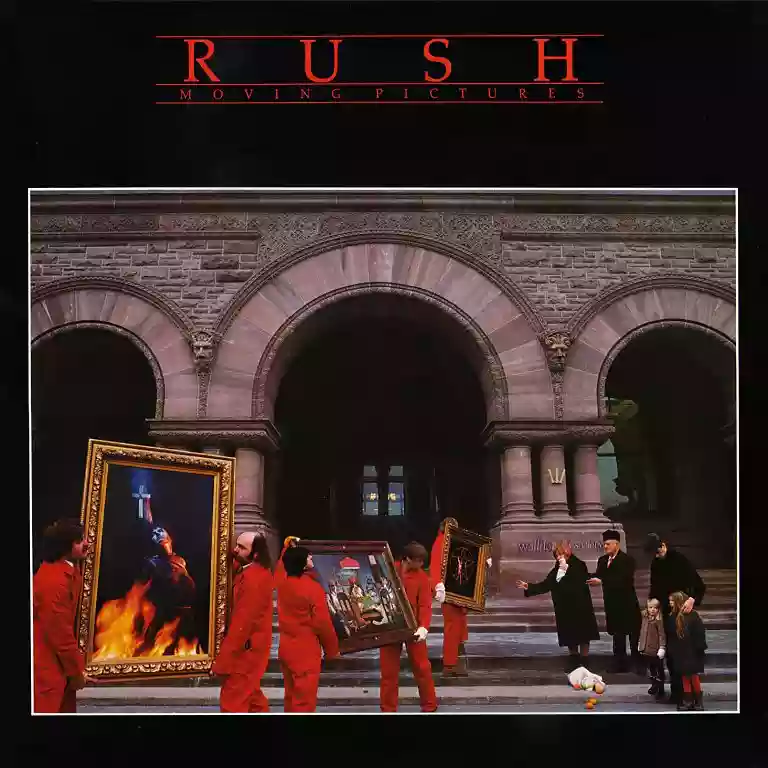
How should I approach describing one of the greatest masterpieces that rock has ever offered us so far? Certainly with a good touch of clarity and mental freshness.
"Moving Pictures" surely represents one of the peaks in the career of this fabulous Canadian rock trio, and in front of it, one can't help but bow. It only takes 7 songs to showcase all the creativity they had accustomed us to in previous years. An album clearly inspired by the classic rock of the '80s. We are far from the power of the hard rock of previous records and probably also from the rich progressive vein of the late '70s. Rush offers songs that are definitely short and accessible but without giving up the complex structures and experimentation that had characterized them in the past and will characterize them in the years to come.
The opening "Tom Sawyer" alternates clean and direct guitar riffs with electronic experiments, giving us a nice synth turn in the middle part and a beautiful solo by Lifeson, not to mention Neil Peart's excellent drumming. "Red Barchetta" has a decidedly on-the-road sound: after the intro with keyboards and bass-guitar harmonics, the track arches in the direction of classic rock from the '80s with dreamy guitars and flowing rhythm; Lifeson doesn't spare a solo, the ending is similar to the beginning. And we arrive at the instrumental "YYZ", where Rush demonstrates that they are still connected to the complex prog structures; it is precisely here that the class of the three musicians truly stands out: 4 minutes and 24 seconds accompanied by the technique of Lifeson and Lee and Peart's drumming tricks... and a few splashes with the synth before the final riff. "Limelight" is instead a more radio-friendly and immediate track but still played with great determination. And "The Camera Eye", with its over 10 minutes, confirms that Rush's prog vein is not entirely extinguished: the beginning, in fact, is characterized by pure experimentation thanks to the exquisite synthesizers masterfully played by Geddy Lee; however, the rest of the track follows the classic rock path taken in the other tracks without forgetting the synthesizers.
Another decidedly more experimental chapter is "Witch Hunt": a decidedly fantasy intro well executed by the keyboards, then it shifts from verses marked by Lifeson's rhythmic guitars to choruses marked by the power of the synths, this time much more massive than the other tracks. And we close with "Vital Signs", a luxurious preview of what Rush will offer us in the years to come: a track with a peculiar reggae-rock in the Police style, influenced by electronics.
And so... enjoy listening to "Moving Pictures"!
Loading comments slowly
Summary by Bot
Moving Pictures is regarded as one of Rush's greatest works and a peak in their career. The album combines accessible rock songs with progressive and experimental elements. Highlights include 'Tom Sawyer' and 'YYZ,' showcasing technical skill and creative songwriting. It reflects a balance between classic '80s rock and complex structures from their progressive past. This album remains essential listening for fans of sophisticated rock music.Tracklist Lyrics Videos
Rush
Canadian trio formed in 1968, best known for blending progressive rock and hard rock across a multi-decade career; core lineup credited in reviews: Geddy Lee, Alex Lifeson, Neil Peart.46 Reviews
Other reviews
By Zarathustra
"Rush is one of the most overlooked bands by critics and the general public, yet one of the most influential and copied."
"Moving Pictures is a perfect realization of combining hard-rock elements with progressive ones."
