
 •
Rating:
•
Rating:
THE REVIEW
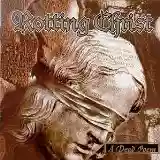
Imagine being in the now distant 1997. You are fans of Rotting Christ and are attached to their albums up to this moment, the latest of which is “Triarchy of the Lost Lovers”, yes very different from the previous “Non Serviam”, but there are still important affinities between the two. You buy the new “A Dead Poem” without hesitation, confident of another great work made in RC. Inserted the disc into the player, track 1 begins.
I think no listener could be more bewildered than someone who has experienced this. “Sorrowfull Farewell” starts scratching with its massive riff, but it's a riff that has nothing to do with our Rotting Christ. Nothing more than a nice Heavy Metal riff.
Now that you have read these lines, dear fans of the Greeks' early albums and thought “A Dead Poem” was the natural follow-up to “Triarchy…”, you must have taken quite a hit. But do not despair.
Less than a minute into the song and you will already find yourself in familiar shores, in a melancholy very typical of Sakis' group, which wanted and absolutely succeeded in this sense to surprise the listener. Sure, the genre and the offering are undeniably different from previous albums, but deep down the RC Style is always the same. What we have before us is indeed a 100% Heavy-Gothic Metal album which in terms of genre has little in common with the Black Metal to which we had been accustomed. But even with “Triarchy of the Lost Lovers”, which already had very little Black Metal, “A Dead Poem” doesn’t have much to share. It’s an album easier to approach compared to the previous ones and therefore requires less time for assimilation.
But as said in terms of sensations, the kinship this album has with its predecessors is close: it perhaps embodies a slightly less evil side of the Greeks, but the underlying melancholy that made “Triarchy…” popular is always that. But let’s move on.
“A Dead Poem” is a CD that listens very well, smoothly and bearing a certain atmosphere. But it is this “smoothly” that is not good. The album contains several noteworthy tracks, very good tracks decidedly above average, but none of them really stand out. Likewise, looking at the other side of the coin, there are no entirely poor tracks (though, let's face it, there aren't many in Rotting’s discography).
However, one of the most significant tracks is surely the aforementioned opener, “Sorrowfull Farewell”, with its tough riff (we’ve reflected on it enough already) and the rest of the piece that is more properly Gothic.
“Among Two Storms” is perhaps the most beautiful chapter of this platter, gaining excellent power in the live setting. A very melancholic nature chorus contrasts with a verse enriched by a fantastic distorted guitar under Sakis’ shouts.
On the podium, there is definitely also “Full Colour Is the Night”, one of the album’s heaviest, most linear, and “honest” tracks, without any truly exciting moment but which really makes for a pleasant listening experience. Nice riff, nice verse, good chorus and nice guitars. What you call a simple and effective track.
The two closing songs, “Between Times” and especially “Ira Incensus”, which deserve the award for the most melancholic episodes of the album, are also beautiful. Finally, a mention also for “Semigod”, which perhaps represents the most malignant chapter of “A Dead Poem” (but don’t expect the musical incarnation of Evil, I speak relatively compared to the album in general).
You will have understood how it is difficult to identify the best tracks of this album, which indeed presents itself with many good or very good tracks and none truly exceptional.
Thus, in conclusion, an album different from its predecessors, inferior to “Triarchy of the Lost Lovers” (an album with some truly superlative excellence), but on reflection not by much. It is a shift to a more direct and easier-to-capture genre, something that will have made several fans frown, but certainly not a loss of personality.
Well done RC.
Loading comments slowly
Summary by Bot
Rotting Christ’s A Dead Poem marks a notable shift from black metal to heavy gothic metal with a melancholic atmosphere. The album is easier to approach than previous works, featuring many good tracks without any true standout. While different and somewhat less intense than Triarchy of the Lost Lovers, it maintains the band's signature melancholy and personality. The album is smooth and enjoyable but may divide longtime fans due to its genre change.Tracklist Lyrics Videos
Rotting Christ
Rotting Christ is a Greek extreme metal band formed in Athens in 1987 by brothers Sakis and Themis Tolis. Early releases like Thy Mighty Contract (1993) and Non Serviam (1994) helped define Hellenic black metal. The band later integrated gothic and melodic elements (e.g., Triarchy of the Lost Lovers, 1996) and pursued an epic, myth-infused direction on Theogonia (2007) and Aealo (2010).05 Reviews
