
 •
Versione 1
Rating:
•
Versione 1
Rating:
THE REVIEW
PARABOLA (1971) 6/10
Although listening to it today makes it sound like a museum piece (except for 3 songs I didn’t know, I already knew all the others, albeit with different arrangements), the mere fact that it came to be is almost a miracle. Let’s say it’s a decent album, hastily recorded in just 3 days, with nobody — neither producer nor artist — really believing in it (after all, at the time Vecchioni was better known as a songwriter for others, see Nuovi Angeli). The fact that Tullio De Piscopo also plays on it is another story, because in 3 days, what can you really try out? Either your ideas are more or less clear, or you simply can’t do anything. The arrangements are rather rudimentary (apart from a few passages), too orchestral, and Vecchioni, as he was used to doing early in his career, sings (never understood why) almost whining, as if his voice were about to break from crying, from emotion, or from who knows what else. This habit he would soon abandon. Besides, some tracks are actually quite bad — I’m thinking of "Il tamburo battuto" or "Speranza," which, quite rightly, even Vecchioni himself no longer remembers — not to mention a couple of songs drawn out pointlessly: "Per la cruna di un ago" (with the little choir in the background) goes over 5 minutes, and sure, the theme is noble (religion), but after a while, well, enough is enough.
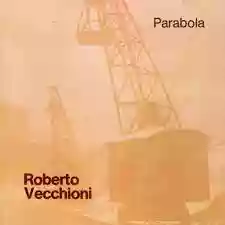
Right from the cover, with the crane in full view, Vecchioni makes it clear he’s a city guy (even if born in Carate Brianza) and in that world of endless construction sites and traffic, he truly thrives. Naturally, the city in question is Milan, and it so happens that here, at the start of side B (because according to him the leading track should have been "Lui se n’è andato") appears the legendary "Luci a San Siro." No one could have ever imagined what it would become in the years to come. For two reasons: first, this record sold very little, almost nothing; and second, Vecchioni would only “grab” success in 1977 with "Samarcanda", with 6 other albums in between, some of them quite fine indeed ("Elisir", 1976) but, essentially, ignored by the public (though not by those who matter — see Club Tenco). Guccini would envy his colleague for it, publicly stating more than once that he wished he’d written it himself.
The track included here wasn’t unreleased. Rossano recorded it, amidst general indifference, in a totally different version a few months earlier (and you might rightly say, who is Rossano? Exactly, I didn’t know either until yesterday morning). On the Internet (blessed be), you can find the version recorded by this Rossano: it’s a song telling a whole series of love disappointments in which neither the stadium nor Milan is mentioned. Fortunately, Vecchioni eventually re-sang it, because Rossano’s original version is really dreadful. As usual, censorship got involved and the line: "...Io quando ho amato, ho amato in fondo agli occhi tuoi/magari anche, fra le tue gambe" was changed to "...fra le tue braccia," but Vecchioni re-recorded it so many times (1973, 1979, and countless times live) that he got the original text back with "gambe" instead of "braccia." "...Milano mia, portami via/ho tanto freddo schifo e non ne posso più/facciamo un cambio, prenditi pure quel po’ di soldi, quel
Loading comments slowly
Summary by Bot
This review assesses Roberto Vecchioni's album 'Parabola', offering a critical take with a low rating. The reviewer notably found the album underwhelming, expressing disappointment in its execution. Key elements, such as songwriting or performance, did not meet high expectations. While Vecchioni's reputation is acknowledged, this particular work is seen as lacking. Recommended primarily for completists or die-hard fans.Tracklist Lyrics Videos
Roberto Vecchioni
Roberto Vecchioni is an Italian singer‑songwriter, lyricist, writer and academic from Carate Brianza. Active since the late 1960s, he’s known for literary, mythic and autobiographical songwriting. He won the Sanremo Music Festival in 2011 with “Chiamami ancora amore.”42 Reviews
Other reviews
By nikman
"In 'Luci a San Siro,' Vecchioni responds to record executives by reflecting on a love he had to abandon for his dreams."
"For the world that is mine, I curse you, you will have twenty years all your life, but you can only love Margherita."
