
 •
Rating:
•
Rating:
THE REVIEW
"I wonder what Rino Gaetano would write today if he were still alive?"
This is the question I always ask myself when I think about him. Then, as always, I give myself the answer: "What he wrote thirty years ago!" Yes, because whether you like it or not, his songs are as relevant today as they were back then.
Take "Nuntereggae più". Rino wanted to bring it to Sanremo in 1978. His record producers forced him to change his mind, saying the song was too uncomfortable to be accepted. The nursery rhyme-like rap over a reggae base spared nothing and no one, names and surnames, events, scandals, and characters of the Italy of those years were mentioned, which is basically the same as today if we wanted to play a name substitution game. He brought Gianna to Sanremo, and it was a success!!
A success that was also, unfortunately, the beginning and the end for Rino.
By that time, Rino Gaetano from Crotone had been hanging around the music scene for a few years, having recorded 3 albums, but no one paid him any attention. In Italy, the songwriters of the time were divided into two categories: those committed and serious (Guccini, De Gregori, De André...) and those uncommitted focused on love (Battisti, Baglioni...). Gaetano did not fit into either category; he belonged to both with something more: irony, self-irony, and intelligent, never crude, provocation. Who could take seriously a character who appeared on TV with a gas pump in hand or with a little bike on a leash??
Rino suffered, he suffered because, musically born at the Folkstudio in Rome alongside De Gregori and Venditti, he was still there waiting for success while the other two were already entering Italian homes through radio and TV. Sanremo, therefore, whether you like it or not, was a great launch pad for him and his record.
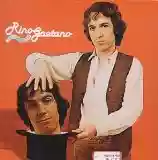
I've already talked about Nuntereggae più and Gianna, but all the songs on this record deserve mention. Fabbricando Case speaks of the ever-increasing urbanization that brings with it scandals and bribes. Notably, De Gregori's presence in the choirs. Stoccolma is a fun song constructed with snippets of noises and voices. And Cantava Le Canzoni is a tribute to the South and its emigrants. Dans Le Chateau, written and sung in French. Capofortuna tells the story of someone who today might be named Silvio. Cerco is dedicated to those still searching for their life path. Nuntereggae Collection is simply a collage that summarizes all the songs on the album.
From that day at Sanremo, Gaetano became a national-popular figure. He recorded two more albums: Resta Vile Maschio Dove Vai (1979) with the help of Mogol and E Io Ci Sto (1980). They are not up to the level of the four previous ones, something seemed to have broken. The success pursued for years was not for him... then the night of June 2, 1981, a car accident and a sad fate took him away.
For a few years now, his songs have come back into fashion and can be heard on the radio as well as in election rallies... and I still find myself wondering "I wonder what Rino Gaetano would write today?"
Loading comments slowly
Summary by Bot
This review reflects on Rino Gaetano's landmark album Nuntereggae Più, highlighting its enduring relevance and sharp social commentary. The album blends reggae and folk with witty, ironic lyrics targeting Italy's political and social issues of the 1970s, many still pertinent today. Gaetano's struggle for success and unique place in Italian music are emphasized, with special attention to his breakthrough at Sanremo. The review honors his creative genius and lasting influence despite his untimely death.Tracklist Lyrics Videos
Rino Gaetano
Rino Gaetano (Salvatore Antonio Gaetano) was an Italian singer-songwriter known for ironic, provocative songwriting that mixed catchy melodies with sharp social and political commentary. He rose to national popularity around the late 1970s, including a breakthrough at the Sanremo Festival with “Gianna,” and died in Rome in a road accident on June 2, 1981.14 Reviews
Other reviews
By stargazer
Rino lists, in one of his most politicized lyrics, a parade of characters from the late '70s jet-set, juxtaposed in a quirky and sarcastic way.
'Gianna' contains very daring metaphors and was Rino's umpteenth provocation presenting it at Sanremo.
