
 •
Rating:
•
Rating:
THE REVIEW
The well-deserved success reached its peak in 1978: Rino placed third at the Sanremo festival with "Gianna" (ahead of him, only those mummified figures of Matia Bazar and Anna Oxa), but, as always, the verdict was overturned by the sales charts, projecting Rino to the top positions of the Italian hit parade.
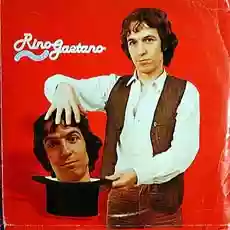
Shortly after, out comes what is considered the best album of Rino Gaetano (even though I still prefer "Mio Fratello è Figlio Unico") with the quirky title "Nuntereggae Più". The title track opens the show: on a cheerful reggae base, Rino lists, in one of his most politicized lyrics, a parade of characters from the late '70s jet-set, juxtaposed in a quirky and sarcastic way ("Cazzaniga avvocato Agnelli Umberto Agnelli Susanna Agnelli Monti Pirelli dribbla Causio che passa a Tardelli Musiello Antonioni Zaccarelli Gianni Brera Bearzot Monzon Panatta Rivera D'Ambrosio Lauda Thoeni Maurizio Costanzo Mike Bongiorno Villaggio Raffa Guccini"). Notably, Lino Banfi appears, repeating "Nuntereggae Più" throughout the song. Next is "Fabbricando Case", another ironic track, dedicated to those who speculate in the construction industry; building houses even becomes a way to earn paradise and die in the odor of sanctity. In "Stoccolma" you can find the most non-sense Gaetano: the entire track is based on the assonance between "Stoccolma" and "sto colma," set against a background full of hand claps, whistles, and strange warbles.
And here comes the album's hit, the ultra-famous "Gianna": who hasn't heard the guitar arpeggios of the intro or the carefree rhythm? Here too, the lyrics contain very daring metaphors, but I think Rino wanted to describe the showbiz world, made only of appearances, and presenting it at Sanremo was his umpteenth provocation. The autobiographical theme returns in "E Cantava le Canzoni", with evident folk influences in the music and the lyrics telling stories of people going away for various reasons (the emigrant looking for work, the mercenary going to war, the producer to shoot his film), but all these people are united by singing the songs they always heard by the sea. An unusual track is "Dans le Chateau", a sad ballad sung in French, only for acoustic guitar and accordion. Another satirical peak of the album is "Capofortuna", in which a secretary (party secretary?) is described who "is so handsome he looks like Jesus" or "gives relaxed smiles to his voters, to children bon bon" or again "fears neither summer nor winter, if he goes to hell he'll go with a vest." It would be curious to know who Rino was referring to, but this description fits a dear former premier of ours like a glove…
"Cerco" is a sweet love ballad with violins in the background and fitting sax solos. It closes with the quirky "Nuntereggae Collection", which on a disco base makes a medley of all the songs on the album and also others ("Berta Filava", "Ma il Cielo è Sempre più Blu" and "Aida"). How to end a fantastic album in a brilliant way.
RATING = 8
Loading comments slowly
Summary by Bot
The review praises Rino Gaetano's 1978 album 'Nuntereggae Più' as a politically charged and quirky work that cemented his reputation in Italian music. It highlights the standout tracks 'Nuntereggae Più' and 'Gianna', noting the witty, sarcastic lyrics and reggae-inspired rhythms. The album blends satire, social commentary, and personal themes with distinctive musical experimentation. Overall, it's described as a fantastic and brilliant classic.Tracklist Lyrics Videos
Rino Gaetano
Rino Gaetano (Salvatore Antonio Gaetano) was an Italian singer-songwriter known for ironic, provocative songwriting that mixed catchy melodies with sharp social and political commentary. He rose to national popularity around the late 1970s, including a breakthrough at the Sanremo Festival with “Gianna,” and died in Rome in a road accident on June 2, 1981.14 Reviews
Other reviews
By ez
"I wonder what Rino Gaetano would write today if he were still alive?"
"His songs are as relevant today as they were back then."
