
 •
Rating:
•
Rating:
THE REVIEW
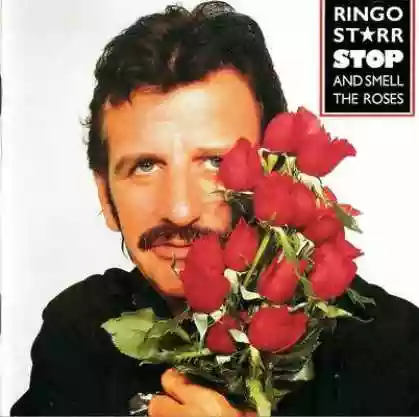
The late '70s for Richard Starkey coincided with a series of notable discographic failures. Having abandoned the "all-stars" formula, which had been successful for "Ringo" and partially for "Goodnight Vienna", the drummer focused on his original songs written in collaboration with Vini Poncia for "Ringo The 4th" but the result was a total disaster along with the subsequent "Bad Boy" in '78 (this time an album of rock'n'roll covers). As if the bad turn his musical career took wasn't enough, Ringo had serious alcohol problems that also involved his new partner Barbara Bach. To improve his fortunes a bit, he decided to call in his old friend Lennon for help in trying to put together a more than decent album. However, fate took John away in December '80, and Ringo was left alone with some demos and a lot of uncertainty.
But help arrived from Paul and George who decided to give their friend in trouble a few songs for his new LP, which would be titled "You Can't Fight Lightning". George had "All Those Years Ago" at hand, Paul (with what was left of the Wings in '81) gathered from the bottom of the barrel "Attention" and "Private Property", which he recorded with Laurence Juber, Linda, and Howie Casey on sax. For his part, Ringo had a new version of "Back Of Boogaloo" and other songs written by Harry Nilsson and Stephen Stills. Harrison eventually kept his song for "Somewhere In England" and swapped it for the ironic "Wreck My Brain", and ultimately the title of Ringo's work changed to "Stop And Smell The Roses".
As in many other works of Ringo, this '81 LP also contains decent material, the tracks composed by the other ex-Beatles are catchy and conceived for the friend's nasal voice. It is a fairly adequate and smooth work, played very well as always but in the end, it does not revive the shaky career of the performer. In the early '80s, it seemed difficult for Ringo to find a credible placement in the music scene; he had his admirers, but in a reality dominated by the New-Wave, "Stop And Smell The Roses" drowned in the charts. The failure of the relaunch would increasingly lead a faded Ringo to cling to the bottle; the subsequent album, "Old Wave", wouldn't even see a worldwide distribution, and the drummer would literally disappear for the rest of the decade, sucked into the vortex of alcoholism along with his wife.
Loading comments slowly
Summary by Bot
The review covers Ringo Starr’s 1981 album 'Stop and Smell the Roses,' released after a series of commercial failures. With help from Paul McCartney and George Harrison, and inspired by the loss of John Lennon, the album features decent tracks but failed to revive Ringo’s career amid a changing music scene. Despite quality performances and notable collaborations, the album did not achieve commercial success, foreshadowing further difficulties in Ringo's life and career.Tracklist Lyrics
01 Private Property (02:43)
03 Drumming Is My Madness (03:30)
05 Stop and Take the Time to Smell the Roses (03:11)
07 You Belong to Me (02:11)
08 Sure To Fall (03:42)
09 You've Got a Nice Way (03:34)
12 Red and Black Blues (03:20)
13 Brandy (04:09)
14 Stop and Take the Time to Smell the Roses (Original Vocal Version) (03:09)
15 You Can't Fight Lightning (05:41)
16 Hand Gun Promos (02:02)
Ringo Starr
Ringo Starr (born Richard Starkey) is an English musician best known as the drummer of the Beatles, later pursuing a long solo career marked by pop-rock releases, prominent collaborators, and a trademark lighthearted humor.16 Reviews
