 •
Rating:
•
Rating:
THE REVIEW
The year is 1973. The world is beginning to emerge from that kind of intense Beatles nostalgia that engulfed it in the early '70s. Before now, every recording released by a former Fab has always and anyway achieved instant success. Often due to musical merits, but sometimes also due to the simple desire to hear glimpses of Beatles-branded magic again (see the sales of some of McCartney's poor singles or Ringo's first album). The situation seems to be at a turning point.
Harrison's tormented "Living in the Material World" receives rather lukewarm reviews and sales, even though it is indeed a good album. Worse still for the poor "Some Time in New York City," totally ignored by the charts and slammed by critics. Even "Mind Games," released a week before this "Ringo," received a decidedly cool reception. It would seem, therefore, that the audience, teased by the new prog and glam waves, is tired of living in a '60s revival and is beginning to judge the solo Beatles' works more objectively, without being swayed by just the names on the covers. The impression couldn't be more wrong.
Regardless of the musical merits of the album (which will obviously be discussed), the enormous success of this album cannot be separated from the "When will they get back together?" atmosphere that hovered back then. But let's go in order...
Ringo's solo career so far has been hit-and-miss. His first two albums (an irritating collection of standards and a good country album) went almost unnoticed, pushing Ringo to focus more on cinema than music. This belief was shaken by the great success of his singles "It Don’t Come Easy" and "Back Off Boogaloo" (1971 and 1972 respectively), infusing him with renewed confidence in his songwriting and performing abilities. Aware of not being able to fill a valid album with compositions of his own, he did the most logical and sensible thing he could do. Ask for help from his former adventure companions. The first to respond was George Harrison who composed two pieces for him and co-wrote "Photograph"; then came Lennon with his "I'm the Greatest”; finally, even McCartney donated a piece to the needy Ringo. And here's what we were talking about: for the first time since "Let it Be," the four Beatles found themselves together on the same record (although they didn't all play on any piece).
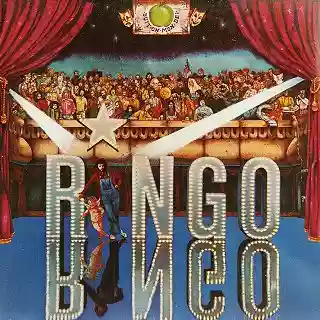
The revival effect was heightened by the cover which clearly harked back to that of Sgt. Pepper, with Ringo in the foreground and all his collaborators in the background (Harrison, Lennon with Yoko, and McCartney with Linda were easily recognizable). The stratospheric sales of the album are also explained by this and by the (unfounded) hope that this reunion on the nice Ringo's album would serve as a prelude to the long-desired reunion. History tells us the public was wrong. But what are the merits of this album that reached number 2 in the USA (7 in Britain) and placed two hits in the first place and another in the Top 5? The listener might well be prejudiced against listening to a solo Ringo Starr album, famous as the last wagon wheel of the Beatles, decent drummer and nothing more, charming and willing singer but with obvious vocal capabilities.
It starts with "I’m the Greatest”, the piece provided by Lennon. The beginning is really a surprise. A musically pleasant boogie, with a very ironic and fun text and a wonderful Harrison on guitar. Already from the first piece, one can understand the general lines of the LP: music not too original but engaging, fun, and performed in a sincerely amused and amusing atmosphere. After the negligible cover of "Have You Seen My Baby", comes the first hit: "Photograph", penned by Starkey/Harrison. A really beautiful pop piece, I repeat the term "surprise": it was really difficult to expect a gem like this, a jewel of composition and execution, not surprisingly one of the most requested pieces in Ringo's current concerts. Harrison's piece, "Sunshine Life for Me” slips away bouncing and cheerful, leading to the second hit: the cover of the classic rock n' roll "You're Sixteen." Ringo will specialize in the recreation of old classics, reinvigorating them thanks to the exceptional instrumentalists he has surrounded himself with (splendid choirs by Harry Nilsson). Ringo's singing is indeed limited, but it's impossible not to find it engaging in pieces like these, perfectly arranged by an excellent Richard Perry, careful to fill the sonic space without, however, overdoing it like a Spector.
"Oh My My", another hit, opens the second side, in the vein of the other pieces: a bit of predictability, but much craftsmanship and above all a lot of fun. After another good piece signed by Ringo (Step Lightly), we come to the piece provided by McCartney: "Six O'clock." Only by considering Macca’s golden period (he was about to release the mythical "Band on the Run") can one understand how he could have gifted such a jewel to Ringo. A really beautiful song, with a less banal text than the standard Macca, a simple and effective arrangement and a perfect execution by the two former bandmates. "Devil Woman" positively surprises with its aggressive charge. "You And Me (Babe)" is Ringo’s friendly farewell, who humbly doesn't forget to thank all the guests and the audience.
This album won't change your life. Nor your musical tastes. It doesn't have particularly original flashes and it doesn't conquer any new unexplored territory. It is essentially pop-rock. But, setting aside the initial prejudices, it's really hard not to get caught up by this LP, especially for those who loved the Beatles. The songs are all appreciable (some even excellent), Ringo incredibly effective and charming in singing, the arrangements excellent and never overflowing, the instrumentalists exceptional but never over the top. All this would already be enough, but the added value of the album lies in the extraordinary atmosphere of fun that oozes from the record: it almost seems we can see them, Ringo and his guests, laughing and joking before recording the tracks of his eponymous album. The listener can only be pleasantly entangled. Undoubtedly the best episode of Ringo's career and perhaps, objectively, the only one to recommend to anyone who would never have thought of listening to an album by the former Beatles drummer.
Give it a chance, this album deserves it.
P.S.: there is one more reason to get "Ringo." The CD reissue includes 3 bonus tracks. The first is "Down and Out", the B-side of "Photograph", a good rock. But above all, his 1971 single is included: if the B-side "Early 1970" is almost moving in outlining Ringo's life without the other 3 mates, "It Don’t Come Easy" is the best and most famous song of his solo career. A great piece that would have looked good on any band album, thanks also to the usual, extraordinary performance by George Harrison.
Loading comments slowly
Summary by Bot
Ringo Starr's 1973 self-titled album marked a significant moment as all four Beatles contributed, sparking hope of a reunion. Despite limited originality, the album offers engaging pop-rock performances with notable tracks like "Photograph" and "I'm the Greatest." The relaxed, fun atmosphere and quality arrangements make it the best highlight of Ringo's solo career. Its success was fueled by Beatles fans craving their magic post-breakup.Tracklist Lyrics
Ringo Starr
Ringo Starr (born Richard Starkey) is an English musician best known as the drummer of the Beatles, later pursuing a long solo career marked by pop-rock releases, prominent collaborators, and a trademark lighthearted humor.16 Reviews
