
 •
Versione 1
Rating:
•
Versione 1
Rating:
THE REVIEW
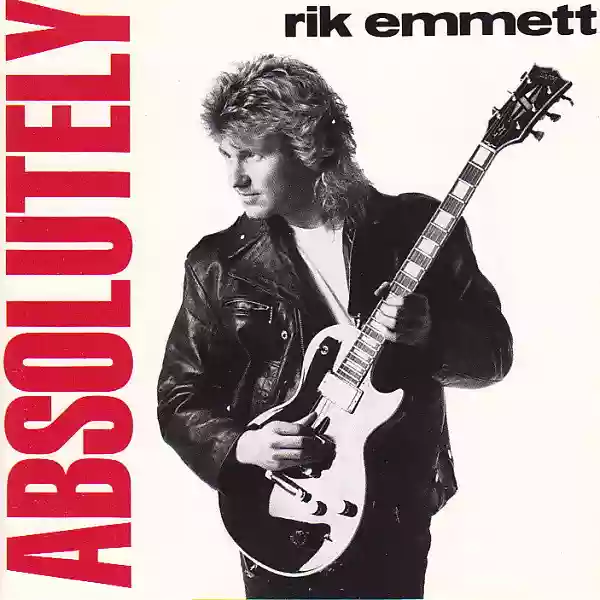
The blond Richard Emmett, with the quirk of using a "k" not preceded by a "c" in his nickname, is a Canadian guitarist, singer, and songwriter. When he was young, he was part of a melodic hard rock trio called Triumph, and this 1990 record—his first solo effort—came out while the aforementioned band's career was still ongoing.
Not long after, the good relationship with his Triumph companions came to an end, but our protagonist forged ahead as far as possible, releasing more than twenty albums over a quarter of a century, alone or in company, ranging from rock to folk to jazz to classical, showing off his eclecticism, his broad horizons, and his all-encompassing approach—even educational—to the instrument and to music in general. In fact, for a long time he was also a teacher in his hometown of Toronto, at the highest level of institutions devoted to this, including the top-tier magazine Guitar Player.
Then arthritis in his hands robbed grandpa Rik of quite a bit of his fantastic agility… but here we are still at the dawn of the nineties with our man only thirty-seven and still limber. The reference to Triumph is guaranteed by his particularly sharp, distinctive, and well-recognizable vocal timbre, which fans are happy with but is much less convincing to other people… I think you just have to get used to it.
He’s really skilled on the guitar, and his dexterity immediately stands out with the fleet-fingered acoustic opening, in an insanely ragtime tempo, of the first track, “Drive Time.” A stop, and the song instantly transforms into a tumultuous hard rock’n’roll, which nonetheless frequently circles back to the virtuosic ragtime opening.
“Big Lie” is a melodic hard blues driven by muted power chords and a blazing voice. “Saved by Love” is a sturdy power ballad in a style that’s a clear descendant of his Triumph days. The piano-led “When a Heart Breaks” is just what its title suggests: a slow, pompous, and rhetorical number. “World of Wonder” is made light by the percussion and fits into that melodic rock vein that was popular at the time (like U2, for instance).
A complex a cappella choir (all Rik’s voices, at least ten of them) kicks off the taut and sculpted “Stand and Deliver”, decked in sax and packed with keyboards. The unmistakable sound of one of the most legendary synths ever, the Roland Prophet 5, introduces the AOR power ballad “The Way that You Love Me,” similar to a thousand others from that musical era. The piano number “Middle Ground” is all syncopation and doesn’t reveal particular strengths, and the following “Heaven Only Knows” isn’t much better, with its predictable chorus.
The highlight—apart from the album’s explosive beginning—comes at the end with “Theme for Big Nick”, an instrumental somewhere between melancholic, grateful, and hopeful, featuring Rik’s formidable solo, searing and speaker-shredding, over a bed of keyboards such as you just don’t hear anymore. Perhaps this Nick—who probably passed away—inspired him profoundly… In any case: moving.
Albums like this I hardly ever listen to again… they’ve lived on my shelves for over thirty years and will never leave: out of respect for a period, for a handful of years when these sounds were the norm and sold well, taking quite a toll on my wallet too.
Loading comments slowly
Summary by Bot
This review explores Rik Emmett's solo album 'Absolutely,' highlighting both its musical strengths and some shortcomings. The reviewer provides a critical yet fair assessment of Emmett's transition from Triumph to a solo act. The focus is on the album's craftsmanship, guitar work, and songwriting. While there are notable merits, the review suggests the album may not reach the highs of Emmett's previous work. The verdict is balanced and informative.
Rik Emmett
Canadian guitarist, singer, and songwriter best known as a member of Triumph. Launched a solo career with Absolutely (1990), exploring rock, folk, jazz, and classical, and engaged in teaching in Toronto and writing for Guitar Player.00 Reviews
