
 •
Rating:
•
Rating:
THE REVIEW
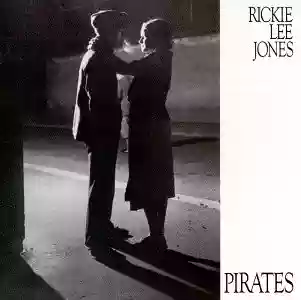
Among various reasons, almost all sentimental, that lead some like me to prefer the dear old vinyl to the cold CD, there's also the opportunity to truly admire the album covers. In the years when LPs reigned, the illustration of the covers, think of progressive records for example, had become a true art form, a sort of iconic preface to the album that, in the most successful cases, was capable of revealing the deeper meaning of the work. And if that's true, covers like the one of this famous Rickie Lee Jones album, "Pirates," manage to reflect its content in the best possible way.
Brassai, the great Hungarian photographer, famous for capturing the Parisian nocturnes of the '30s and their composite "fauna," captures the moment when a man and a woman meet in a suggestive nocturnal twilight. She holds her arms around his neck; he remains with his hands in his pockets, a masculine composure betrayed by a hint of a smile. It's not possible to know if they are saying goodbye, planning an escape, or if it's a fleeting or mercenary encounter. The feeling, however, is that two solitudes have crossed paths; two "losers" who don't think much about the future, but only about making their precarious human condition at least bearable with a bit of love.
"Pirates" is precisely about this: bohemian, wandering, Bukowskian life, or better yet, Waitsian (Rickie was also Tom's woman and appears in the inner cover of "Blue Valentine," where she tries to support her partner probably knocked out by too many libations).
The stories alternate between ordinary despair ("Skeletons") and disarming romanticism ("We Belong Together"), naive vital bursts ("Pirates" - "...I'm trying to have fun/ while I wait for the Pirates to come take me away...") to corrosive and very feminine irony ("A Lucky Guy" - "...yes, quite a lucky man/ doesn't worry about me... okay, he's not the only one/ but what happened to the others?/ They worked hard/ until they annihilated themselves for a lonely girl./ Now I'm a lonely girl").
But such tales wouldn't be so incisive, wouldn't remain so impressed in memory if it weren't for Rickie's unmistakable voice interpreting them and, above all, her piano's music capable of sketching nervous, syncopated melodies, straddling tradition and innovation, between jazz, rhythm and blues, and folk, as thrilling as they are sophisticated. But it's not just her and her spleen; the success of the venture involves a bunch of great musicians, Steve Gadd, Dean Parks, Randy Brecker, David Sanborn, even Donald Fagen, who makes an appearance with his synth in the title track (a few years later his buddy, Walter Becker, will be the producer of another recommended album by the artist, "Flying Cowboys").
Rickie Lee Jones is a class act artist, a model for a generation of singer-songwriters who, in the years when this work was published, surfaced in great numbers on the scene. And this work, even if it didn't achieve the great success of her debut, fully does her justice and is perhaps the best way to approach her and her restless sensibility for the first time.
Loading comments slowly
Summary by Bot
The review praises Rickie Lee Jones' 1981 album Pirates for its rich storytelling, blending of jazz, folk, and blues, and evocative cover art. It highlights the album's emotional depth, memorable melodies, and contributions from renowned musicians. Despite not matching her debut's commercial success, the album is described as a defining work showcasing her restless, sophisticated artistry and resonating romantic and bohemian themes.Tracklist Lyrics Videos
Rickie Lee Jones
American singer-songwriter born November 8, 1954 in Chicago. Broke through with her 1979 self-titled debut and the hit “Chuck E.’s in Love,” followed by the acclaimed Pirates (1981). Her work spans jazz, folk, rock and pop over a decades-long career.06 Reviews
Other reviews
By robycorgan
Pirates confirms itself as the dark summa of all her work, her most obscure album and somehow also sweetly unbearable.
It is somehow still an album made of rain.
