
 •
Rating:
•
Rating:
THE REVIEW
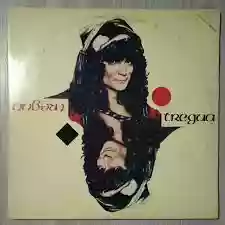
TREGUA (1980) 5.5/10
Originally released in two formats (single and double), “Tregua” is Renato Zero's first musical kolossal (among the very few in Italy at the time who could afford to put out a double album). RCA got scared: how would the public react to such a massive work (18 tracks, nearly 90 minutes), and how would Renato Zero’s fans take it? They reacted extremely well: at the end of the year, it was the sixth best-selling album (and that year he had to compete with the best Bennato; Dalla in top form; the final Battisti; “The Wall”—not exactly lightweight competition). This is Renato Zero’s most introspective album, the one in which he removes his makeup (as the title of one of his best songs, “Niente trucco stasera”, suggests), bares his soul, and speaks not only to his faithful “sorcini,” but also to the Italian public that up till then had seen him as the ultimate non-conformist, the joker of a generation that recognized in the Roman singer-songwriter a kind of out-of-the-box alter ego. Tregua: Renato Zero asks for a truce, for calm, let’s take a breath, let’s put together the puzzle of the last eight years (the years of “Triangolo” and “Mi vendo”) and look back. What have these years been? What was I to you? What are you to me? That, in a nutshell, is “Tregua”.
Only, 18 songs are a lot, especially if conceived and produced in less than a year, and in fact there are only 4 or 5 truly memorable tracks here (I’ll name them right away: “Niente trucco stasera”; “L’ultimo luna-park”; “Fortuna” and “Potrebbe essere Dio”; I’ll add the big single “Amico”, but with plenty of reservations). The 1980s seemed to catch Renato off guard—he adds a bit of electronics here and there, although nobody could have predicted the creative (and sales) slump that was about to hit him: after 1983, lost between Italy and England, he wouldn't get much right until his triumphant rentré in Sanremo with the solemn “Ave Maria” in 1993, and from then on a sort of genetic mutation led him to become more of a “priest” than a singer-songwriter.
“Amico” is the track that brought the album to the top of the hit parade. In “Tregua” there is much talk about the good old days, youth, and the passage of time. “Amico” is an example of this (not the best one). There’s nothing transgressive in this song; instead, there’s a lot of austerity (as already in “Il carrozzone”) and a number of prestigious signatures (Franca Evangelisti; Dario Baldan Bembo); then, it must be said, there’s a lyric with some embarrassing lines: “...E tu ragazza pure tu/che arrossivi se la mano andava giù”, not to mention “più fico amico”. Unforgivable slips. Yet, as a single, it was a huge hit. There are several covers, some by Renato himself: it’s worth mentioning the version with Jovanotti, reggae-style in 2012 (which isn’t all that great, but let’s give points for originality).
The passage of time and resurfacing memories are central in “L’ultima luna-park”, while “Potrebbe essere Dio” actually has lyrics truly worth taking in entirely (“...Ti giochi Dio al Totocalcio/lo vendi per una dose/lo butti via una frase/lo cercherai in farmacia...”); its delicacy and solemnity—never pompous—make it one of the best pieces in Renato Zero’s repertoire. “Fortuna” boasts a great rhythm and a catchy chorus—the kind that sticks in your mind.
But the rest of the album is extremely heavy, split between the already-heard and the excessively self-referential. Renato Zero is always, or almost always, talking about himself, from start to finish, and after a while, it’s just too much. Not to mention some crowd-pleasing tactics that I find impossible to forgive: in the song “Grazie a te”, the lyric ends with, “...Ti scorderai magari del nome mio/ma ti ricorderai di un uomo, io...” (which, for “smarmy-ness,” could compete—and maybe win—against “...You see I've forgotten, if they're green or they're blue/anyway the thing, what I really mean/yours
Loading comments slowly
Summary by Bot
The review delivers a critical perspective on Renato Zero's 'Tregua,' assigning it a low rating. The writer expresses disappointment with the album, suggesting it falls short of expectations. There is little enthusiasm for the music or its place in Zero's discography. Overall, the tone is reserved and lacks strong praise. The review serves as a warning for potential listeners.Tracklist Videos
Renato Zero
Renato Zero (born Renato Fiacchini, Rome, 1950) is an Italian singer-songwriter and showman famed for glam-theatrical performances and a powerful voice. Emerging from the late 60s clubs, he broke through in the late 70s with hits like Mi vendo, Triangolo and Il cielo, then consolidated with the double LP Tregua and the social snapshots of Artide Antartide. Over decades he’s remained a major live draw and a polarizing, iconic figure.34 Reviews
Other reviews
By MarkRChandar
"Despite a lanky and almost emaciated body, he bursts onto the scene with considerable noise, his name is Renato Zero."
"Renato Zero is reborn, and in this unconscious human-artistic palingenesis, he does not know that part of him will die forever."
