
 •
Rating:
•
Rating:
THE REVIEW
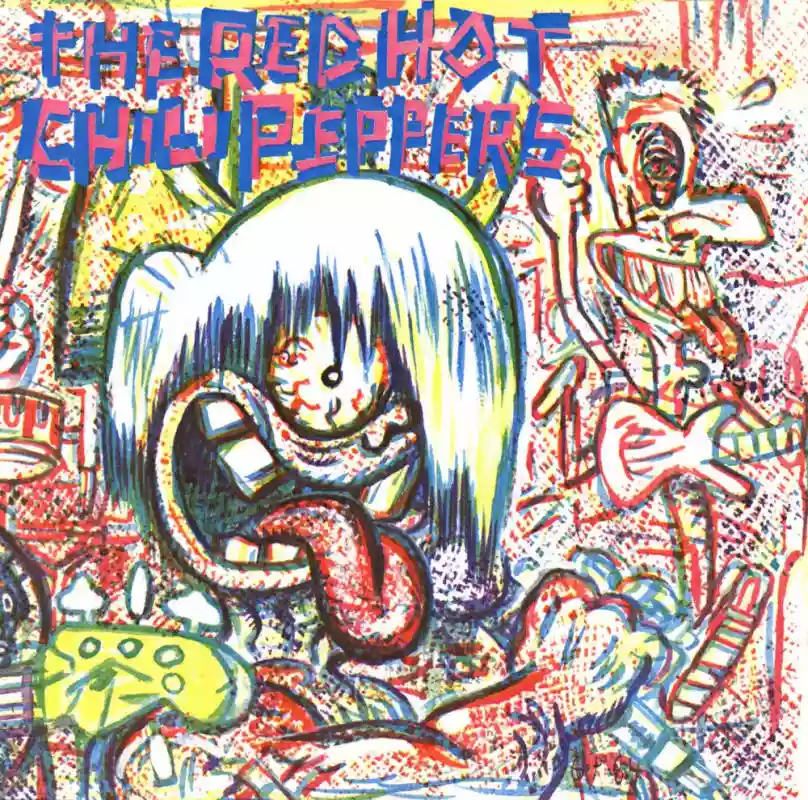
We are in 1984. The Red Hot Chili Peppers burst onto the music scene. They are raw, dirty, rude, and at their concerts, they show up wearing a sock to cover their genitals. They are the Red Hot Chili Peppers, offering a mix of funk and rock sounds.
This first album demonstrates the group's potential: it starts with "True Men Don't Kill Coyotes", which begins with the vibrant and slapping bass notes of Flea, joined by a good rhythmic section and the singer's voice, dark and not yet at its peak. Good track. "Baby Appeal" is a much funkier song with Anthony's singing fitting nicely into the intro created by a play between Jack Sherman's guitar and Flea's bass; we leave this funky piece and listen to "Buckle Down", which starts with a guitar riff backed by a massive drum, then Flea's bass enters, delighting us with one of his solos, followed by a little guitar solo, a track more metal than funk, with guitar solos that indeed lean more towards metal than funk. "Get Up and Jump" brings the situation back to standard levels, an authentic gem on this album, with a funky musical base and singing that touches on rap. . . "Why Don't You Love Me" is also a nice funk piece, less lively than the previous one, but very, very lovely and lighthearted; noteworthy here, as in other pieces, is the presence of trombones, trumpets, and saxophones, which add a touch of originality to the sound. "Green Heaven" is one of the very few political tracks by the Chili Peppers, where they lash out against pollution; we can consider this one of the most rock pieces on the album. "Mommy Where's Daddy" addresses the theme of divorce if I'm not mistaken; it starts with the drums keeping time, joined by Jack's funk guitar and Flea's bass, with Gwen Dickey on vocals for the chorus, notable is the strong performance by the horn section. Now it's a milestone of the early Red Hot period, namely "Out In L.A.", the first piece written by them: we can find all the characteristics of the early Peppers' sound: a bass that fires notes in rapid succession and slaps, a guitar that weaves excellent riffs, and a drum that controls this fabulous weave. "Police Helicopter" can easily be considered a punk track, another very interesting and all in all successful experiment. "You Always Sing" can be considered another punk piece, lasting 44 seconds, however, useless: the singer repeats the same phrase a couple of times. "Granf Pappy Du Plent" closes the album; it is a 4-minute instrumental piece; it is quite interesting but nothing remarkable.
After 33 minutes of listening (that's how long the album lasts), you realize that the potential is definitely there, although this album is not concrete proof of it. Better results will already be achieved with the subsequent Freaky Stealy, where the band turns to a certain George Clinton, who will bring better balance and greater freshness to the group's composition.
Loading comments slowly
Summary by Bot
The 1984 debut album by Red Hot Chili Peppers showcases the band's raw, funky, and punk-tinged energy. The review highlights standout tracks like 'True Men Don't Kill Coyotes' and 'Out In L.A.' while noting the band's evolving sound. Instrumentation featuring horns adds originality. Though not perfect, the album reveals the band’s potential ahead of their later, more balanced work.Tracklist Lyrics Videos
Red Hot Chili Peppers
American rock band formed in Los Angeles in 1983, known for blending funk, punk and psychedelic influences; core figures include Anthony Kiedis, Flea, John Frusciante and Chad Smith.72 Reviews
Other reviews
By zago
The result is a compromise that satisfies neither the band nor Andy Gill, but it does hint at the band’s potential and originality.
A sound very innovative for its time that very few had played before then.
By egr
This record could be considered historic if it had pushed a bit further into hybridizing rock and roll, old school hip hop, pop, punk, and their proverbial porno-toxic-funky.
One has to wait for George Clinton for the chilies, over time, to turn from rotten green to blazing red.
