
 •
Rating:
•
Rating:
THE REVIEW
In the early 1990s, there was a curious and somewhat heated debate among supporters of Entombed vs. Dismember (the bands, it must be admitted, never really fueled the fire, quite the opposite... but we'll discuss this further), in which, essentially, the authorship of the so-called Swedish Death sound was contested: it was a bit like deciding which came first, the chicken or the egg, since both bands benefited from the now-mythical Sunlight Studios in Gothenburg. Although, to be fair, it was the last demo tape by Nihilist "But Life Goes On" (the pre-fame Entombed, with Hedlund of Unleashed as a member) that slightly preceded the explosion of this wave of death bands with that particular sound.
However, if we were to create a chronological list of releases on record labels, the result would be as follows: Carnage "Dark Recollection" (a supergroup formed by M. Amott, Matti Karki, Fred Estby, David Blomquist, i.e., the future lead guitarist of Carcass plus 3/5 of Dismember), Entombed "Left Hand Path", and lastly, Dismember with their debut. Almost simultaneously with these were the early works of Grave, Grotesque (later At The Gates), Dan Swano's Edge of Sanity, and of course, Unleashed.
All this to say that the period in question was particularly rich in releases, or better said, there was an invasion of products coming from Sweden as a trademark: those who didn't hurry, among the various groups, lost significant portions of fans to those who could already boast album(s). Thus, Dismember, after the collaboration with Carnage (see above), decided in haste to release the first full-length album "Like an Ever Flowing Stream", so hastily that the solos were played by Nicke Andersson of Entombed, and the album, which remains a milestone of the genre for its ferocity and power (see "Skin Her Alive"), lacks definition. It appears scarcely thought-out, almost like a transposition of their previous demos.
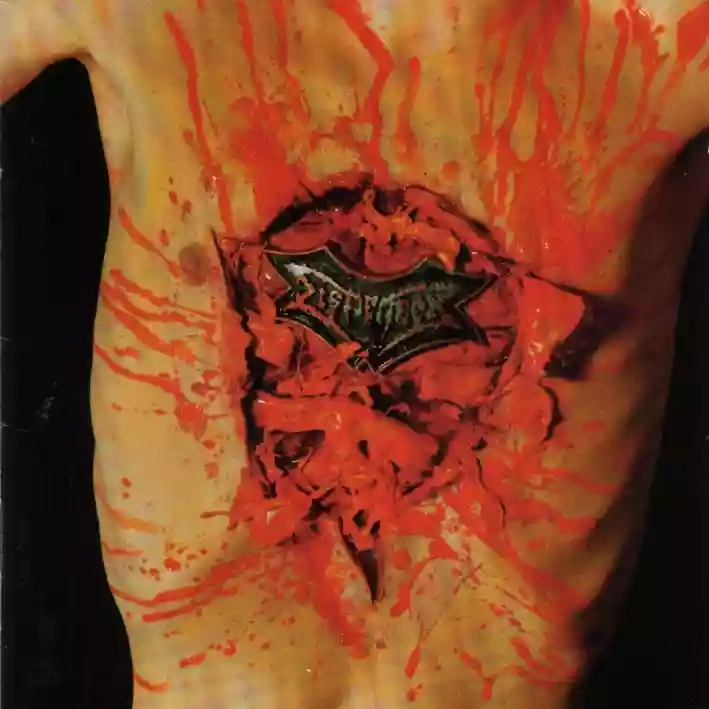
Shortly thereafter, Fred Estby & Co. released the controversial (for its cover) "Pieces", and then reached, in my opinion, the pinnacle of their career at a compositional level with the magnificent "Indecent and Obscene", a true masterpiece of the genre. It not only offers the pure sound violence of that style, of which the band can be seen, jointly, as the true fathers, but it also showcases improved individual technique, greater structural cohesion of the songs, and exceptional dynamism and impact potency.
The opener "Fleshless" and the subsequent and remarkable "Skinfather", with its truly devastating finale, clearly exemplify this, as violence and maturity in songwriting blend well with the ability to slow down and offer significant breaks at the right moment, enhancing the pathos of the songs. It's pleasurable to finally hear Matti Karki's growl more defined, as he yells lyrics that are as usual "indecent and obscene", as an English tabloid described them.
"Sorrowfilled", which opens with a riff that could have belonged to their friends Entombed from "Wolverine Blues", is another standout piece of the album, with great riffs, sudden tempo changes, and a very expressive solo. "Case # Obscene" is perhaps the least successful track on the entire record, yet it remains a very varied song with notable riff changes, but nothing memorable. The A-side of the platter closes with the song that perhaps can be considered more tied to the compositional schemes of "Like an Ever Flowing Stream", that is the dramatic and furious "Shouldervourer" with its horrific ending.
Well, about "Reborn in Blasphemy", what can be said, apart from it being one of the most famous and appreciated pieces of the entire Dismember discography, that it is loudly acclaimed at concerts, and that it signifies the grandeur of this album, etc. etc. "Eviscerated (Bitch)" starts fiercely and aggressively and concludes similarly after only 2 minutes and 27 seconds, adding nothing particular besides an increased neck pain from severe headbanging.
"9th Circle", excellent for its elaboration and intense passion over its long span of 4 plus minutes, acts as a prelude to the song that, in my opinion, deserves the prize of the LP's best song, namely "Dreaming In Red" (of which there is also a delightful video), an extended and dramatic descent into hell, almost romantic (??!!!) in its progression and its numerous beautiful solos, violated by the rather coarse vocal performance of good old M. Karki, and finally highlighting the bass part as well.
In conclusion of this lengthy review (please excuse my excessive wordiness, but I wished to clarify some historical considerations), all I can do is recommend purchasing this album, which does not fear comparison with the remaining Dismember discography and has nevertheless aged well, retaining a certain freshness with each subsequent listen.
Loading comments slowly
Summary by Bot
The review highlights Dismember's 'Indecent And Obscene' as a pivotal album in the Swedish death metal genre, emphasizing its improved songwriting, structural cohesion, and powerful dynamics. It contextualizes the album within the early 1990s metal scene and praises standout tracks for their brutality and maturation. The album is recommended for its lasting impact and continued freshness over time.Tracklist Lyrics Videos
Dismember
Dismember are a Swedish death metal band from Stockholm, formed in 1988 and central to the city’s pioneering scene alongside Entombed, Grave and Unleashed. Their 1991 debut Like an Ever Flowing Stream helped define the Sunlight Studios ‘chainsaw’ sound; highlights include Indecent & Obscene (1993) and Death Metal (1997). They disbanded in 2011 and reunited in 2019.10 Reviews
