
 •
Rating:
•
Rating:
THE REVIEW
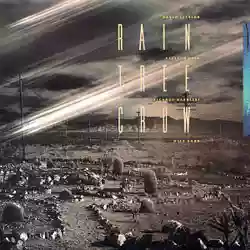
Once upon a time, there were the Japan, a leading band of the British new wave, active between the late '70s and early '80s, led by the elegant and charming David Sylvian. Solo careers followed after their disbandment in 1982, but here they are again in 1991 with a new name, Rain Tree Crow, and a new self-titled album. A singular operation, in the sense that it would not continue: "Rain Tree Crow" remains the only testament of this curious reunion. Nonetheless, the album is of excellent craftsmanship: 12 tracks, 46 minutes of music, warm and rich sounds more attributable to the artistic personality of David Sylvian than to an unlikely attempt to revive an old-style Japan sound.
Opening with an instrumental piece, "Big Wheels in Shanty Town," with a distinctive African color due to the involvement of two vocalists from the continent. Another four instrumental tracks throughout the album serve to bridge the sung tracks and bring the latter to the forefront, highlighting the emotional charge of David Sylvian's voice. The most successful episodes in this regard are "Every Colour You Are," a track with a hypnotic progression, "Pocket Full of Change," where the electric organ played by Sylvian himself stands out, and especially "Blackwater," a splendid ballad of great delicacy, capable of creating an atmosphere with essential strokes of sound, yet perfectly executed.
Mission accomplished then for the sophisticated Rain Tree Crow: Steve Jansen, David Sylvian's brother, on percussion; Richard Barbieri on synths; Mick Karn on bass (and also on bass clarinet); and David Sylvian on vocals and everything else. Among the guests are Bill Nelson and Phil Palmer on guitars. All musicians with class to spare, of great effectiveness yet never banal, never predictable.
If it is true, as noted in the booklet, that "most of the material on this album was written as a result of group improvisations, without preliminary rehearsals. The improvisation took place in the recording studio, and much of the finished work contains original elements from those initial performances," then... chapeau!
Loading comments slowly
Summary by Bot
Rain Tree Crow is a unique 1991 album by the members of the British new wave band Japan, led by David Sylvian. The album blends warm, rich sounds with sophisticated instrumental and vocal performances. Group improvisation during recording led to a fresh, original feel. The combination of emotional singing and expert musicianship results in an atmospheric and hypnotic listening experience.Tracklist Lyrics Videos
Rain Tree Crow
Rain Tree Crow was a short-lived British project by David Sylvian, Mick Karn, Steve Jansen, and Richard Barbieri—formerly of Japan—reuniting for a self-titled album in 1991 that blended ambient textures, art-pop, and world influences.03 Reviews
