
 •
Versione 1
Rating:
•
Versione 1
Rating:
THE REVIEW
In such troubled times as these, one can easily fall into despair and fear an impending apocalypse. But coming across a character like the protagonist of "Kontinental '25" can be heartening, because someone sensitive to injustices and human dramas does not belong to the broad ranks of apathetic and indifferent people. In other words, not all is lost.
We are in Cluj, a Romanian city in Transylvania, and the camera follows the miserable and wandering life of a certain Ion, a destitute homeless man. He rummages through trash bins, begs for a few coins, and even asks for the chance to do any kind of work (though in such conditions, that possibility is non-existent). Ion illegally lives in the basement of a building that is about to be renovated to make room for a prestigious hotel (the Kontinental, precisely).
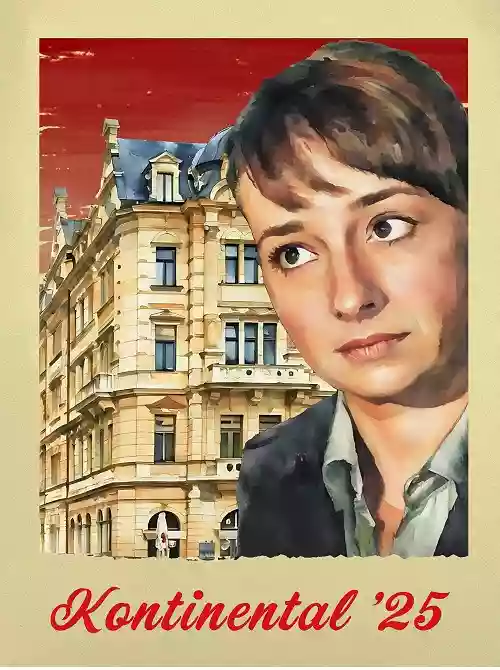
One evening, judicial officer Orsolya (the film's protagonist, excellently played by Eszter Tompa) arrives with an eviction notice for Ion, requiring him to leave the basement and be relocated to another temporary place. The homeless man, somewhat reluctant, eventually agrees, only asking for enough time to gather his essential belongings. Unfortunately, Ion chooses suicide. When, fifteen minutes later, Orsolya, accompanied by the police, makes the macabre discovery of his final act, she is deeply shocked. Although Orsolya had been very delicate and diplomatic in carrying out her duty, the ending is nonetheless dramatic, and the sensitive-natured woman cannot find peace.
From this moment, we see the protagonist vainly seeking comfort for her inner turmoil. Her husband reminds her that she simply did her duty, but Orsolya feels so uncomfortable that she refuses to join her husband and children on their vacation to Greece. In the meantime, she confides in an old friend, who does not pay her much attention. Nor is Orsolya's mother particularly empathetic, to the point of railing against Romanians given her own Hungarian origins (but how can one deny that today's Hungary is a quasi-fascist country, doing even worse than Romania, as her daughter reasonably points out?).
No better is her chance encounter with a former student (she was a law professor before becoming a judicial officer). Her sad reflections on the homeless man’s suicide are drowned in alcohol, with the ex-student spouting mathematical logic, followed by short Zen philosophy tales—useful mainly as a prelude to wild sex behind the flowerbeds of a public garden.
Finally, four chats with an Orthodox priest are not much more illuminating. The conversation again revolves around prayers based on the mysterious ways of divine will, complete with exhortations to read the Old and New Testaments, described as works of literature superior to any other, Shakespeare included (dear priest, you’d do well to reread something by the great William, perhaps "Hamlet"…)
After all her wandering, Orsolya may seem disoriented and lacking a clear answer to the evil and injustice in this world. Yet during her inner struggle, a far from fanciful idea emerges: why not give up her job as a judicial officer and return to teaching at the university? All the more reason since it’s clear that, in a country where real estate speculation is rampant, the judicial officer is only a small cog in a merciless system toward the weak and downtrodden.
Director Radu Jude presents us with the story of a sensitive woman (somewhat inspired by Rossellini's lesson in "Europa '51") in the context of a modern society full of contradictions. Jude, a filmmaker with a lively style and attention to social reality, creates a film less prurient and mischievous than "Bad luck banging or loony porn," but no less thought-provoking. If (as suggested by "Kontinental '25") everything in Cluj seems to be progressing in the name of development and not always transparent enrichment (there’s even an amusement park with giant puppets shaped like prehistoric dinosaurs, and not lacking a robot police-dog), then poverty may be just around the corner (Ion is just one example, but even the former student has managed only to become a food rider), while references to present wars crop up in conversations.
It seems that everyone is busy tending to their own little patch, but at least a woman like Orsolya does not remain indifferent to the fact that a man has killed himself. Was it merely a desperate act of a man adrift? Bringing him back to life is impossible, but in her own small way the woman has shown sensitivity of soul, to the point of wondering whether it’s time to change job and life. A fine example to reflect on.
Loading comments slowly
Summary by Bot
The review awards Radu Jude's Kontinental '25 a perfect score, praising its creativity and directorial execution. The reviewer highlights the film's bold vision and engaging storytelling. The movie stands out as a must-see for cinephiles. The author underscores Jude's unique approach to filmmaking. Overall, the reception is highly enthusiastic.
Radu Jude
Radu Jude is a Romanian film director and screenwriter known for sharp social satire and formally inventive works, including the Golden Bear–winning Bad Luck Banging or Loony Porn.02 Reviews
