
 •
Rating:
•
Rating:
THE REVIEW
The Quintorigo undoubtedly represent something unique in the current Italian music scene: violins, cello, saxophone, double bass, cello, sometimes the piano are their instruments, unusual in pop music.
One of the defining traits of this quintet is the distinctive voice of John De Leo, a nervous, sharp, and vibrant voice that often rises in prolonged falsetto. Another peculiarity lies in the choice of instruments, already listed above, to produce "rock-pop-songwriter" pieces. An additional characteristic is in their compositional choices, as there is never anything banal in their compositions. Quintorigo sometimes overhaul the structure of the pop song as we know it, other times they enjoy playing with its stylistic elements, because, in any case, they use instruments out of context that require, within certain limits, a reinvention of the starting cliché. This is particularly true for their covers, which sometimes sound as if they were unreleased tracks, so much do they end up diverging from the original tracks.
There are three covers included: the cover of "Night And Day" by Cole Porter (better than Bono's bland electronic version, released a few years ago), "Clap Hands" by Waits (here De Leo doesn't seem entirely comfortable: Waits can only be sung by Waits...), and the timeless classic "Darn That Dream" by Eddie DeLange.
The original tracks are very different from each other. There are the engaging crescendos of "Neon-sun", one of the most beautiful tracks (one risks the karaoke syndrome); there's the ambitious "Rap-Tus", a rap triptych (the only track featuring a drum) that uses violin and cello samples amplified like an electric guitar and has a "catchy" chorus, supported by a highly catchy wind melody that flirts with dance music. Also noteworthy is the text, an intriguing divertissement about an imaginary apartment building with a mysterious non-existent tenant.
The work also features the illustrious participation of Fossati, in the dreamy "Dimentico" and the oneiric "Illune".
There is also room for the oppressive atmospheres of "U.S.A. E Getta", dominated by the wind instruments, which on one hand evoke Brecht-like suggestions, on the other hand with their dull repetitiveness symbolize the foolish production-corporate logic, which after squeezing out the individual can only throw it away, in accordance with the iron equation "the company isn't doing well-you're worthless". The only solution is dismissal, with all due respect to the wishes, aspirations, and needs of the person. The track ties back to the leitmotif of the album, captivity in fact, as it can be in an alienating society structured like a company...
In this sense, we are all a bit prisoners, more or less aware of it. To all those enduring a condition of captivity, only the oblivion of sleep remains. Unsurprisingly, the CD begins and ends with a lullaby: "For others, it's already morning/ For me, it's an upside-down sky/ The dream sleeps by the shore/ Waits for the wave/ Waits for the shadow/ And sings the shadow/ And then in the shadow/ Will return"...
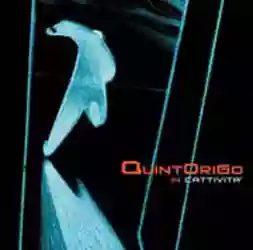
"In Cattività" is exciting and eclectic, sometimes twilight, sometimes majestic in the grandeur of the arrangements, to be listened to repeatedly to appreciate the multiple nuances offered by its complexity.
Not an album for everyone, though.
Loading comments slowly
Summary by Bot
Quintorigo's 'In Cattività' stands out in the Italian music scene through its unusual use of orchestral instruments and inventive pop-rock structures. John De Leo’s distinct vocal style complements original tracks and creative covers. The album explores themes of captivity and alienation, with varied musical moods from majestic arrangements to oppressive atmospheres. Collaborative contributions add depth, making this eclectic work worth repeated listens.Tracklist Videos
01 Illune (Ninna nanna) (03:34)
02 Neon-Sun (03:39)
03 Clap Hands (04:46)
04 Bogliasco (01:24)
05 U.S.A. e Getta (05:13)
06 Myxectbo E Ckopocts (00:51)
07 Dimentico (03:13)
08 Night and Day (04:08)
09 Deux Heures De Soleil (Deux) (04:32)
11 Rap-tus (04:13)
12 Raptus (La dimora inaccessa) (03:38)
13 Darn That dream (07:08)
14 Illune (05:43)
15 [silence] (00:07)
16 [silence] (00:06)
17 [silence] (00:07)
18 [silence] (00:08)
19 [silence] (00:07)
20 [silence] (00:08)
21 [silence] (00:10)
22 [silence] (00:08)
23 [silence] (00:13)
24 [silence] (00:08)
25 [silence] (00:10)
26 [silence] (00:09)
27 [silence] (00:09)
28 [silence] (00:07)
29 [silence] (00:08)
30 [silence] (00:10)
31 [silence] (00:10)
32 [silence] (00:10)
33 [silence] (00:10)
34 [silence] (00:08)
35 [silence] (00:09)
36 [silence] (00:09)
37 [silence] (00:10)
38 [silence] (00:08)
39 [silence] (00:09)
40 [silence] (00:19)
41 [silence] (00:16)
42 [silence] (00:16)
43 [silence] (00:14)
44 [silence] (00:28)
45 [silence] (00:16)
46 [silence] (00:21)
47 [silence] (00:24)
48 [silence] (00:24)
49 [silence] (00:21)
50 [silence] (00:29)
51 Illume + Zahra (ghost track) (02:00)
52 [silence] (00:05)
53 [silence] (00:08)
54 [silence] (00:05)
55 [silence] (00:08)
56 [silence] (00:05)
57 [silence] (00:05)
58 [silence] (00:06)
59 [silence] (00:05)
60 [silence] (00:04)
61 [silence] (00:05)
62 [silence] (00:06)
63 [silence] (00:05)
64 [silence] (00:05)
65 [silence] (00:04)
66 [silence] (00:04)
67 [silence] (00:04)
68 [silence] (00:05)
69 Raptus (ghost track) (01:02)
70 Illume (ghost track) (02:31)
71 [silence] (00:06)
Quintorigo
Quintorigo are an Italian music group known (in these reviews) for a largely acoustic lineup—strings and saxophone—used in unconventional, rock-like ways, mixing jazz, rock, classical and other styles. The group is strongly associated with vocalist John De Leo in their earlier period; later reviews discuss performances with vocalist Luisa Cottifogli and a reunion-era live context.11 Reviews
Other reviews
By khonnor
It’s impressive how John De Leo and his band manage to unsettle the hearing of those who come across this little chest full of surprises.
'U.S.A e getta,' incredibly relevant, narrates financial communication problems in the globalized era.
