
 •
Rating:
•
Rating: THE REVIEW
1988. It is the crucial year for Prince; the success achieved by the three albums recorded with the Revolution and the last one, Sign O' The Times, has transformed him into the greatest pop(rock?)star of the decade alongside Michael Jackson and Madonna. But unlike the latter, favor doesn't come predominantly from the public but also from critics who recognize his greater (and undeniable) musical stature. But Prince is an unusual and brilliant star (thus without rules), and heedless of any commercial angle, he announces, just a few months after the release of Sign O' The Times, a new album with a completely black cover, without an official title and no reference to the songs contained. This is the legendary Black Album, intended to be his “funk response” to The Beatles’ White Album. Everything is ready; Warner Bros (though hesitant about our peculiar choice) is waiting for another success when a few weeks before the release (some copies had already been distributed) Prince blocks the entire project, as he doesn't want to unsettle his fans with an album too dark in content and musically... this will be the beginning of the disagreements (and the ensuing war) between him and Warner, further intensified by the fact that the album chosen to replace the Black Album will not achieve the expected success, especially in the USA.
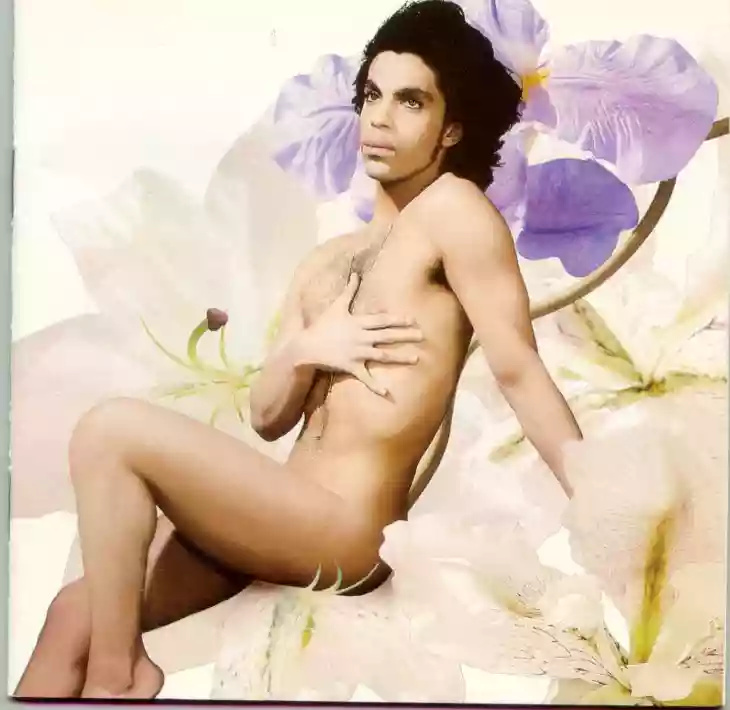
It is indeed May '88 when Lovesexy sees the light, and to testify Prince’s rethink concerning content and colors is not only the album's title but also its famous cover: total black is replaced by pastel colors, he is nude, reclining among petals of irises and lilies in a mischievous diva pose... it is pure kitsch, the result is at least perplexing and embarrassing (perhaps not even the most glam Bowie had dared so much) and it causes quite a scandal, so much so that some American stores will even refuse to sell the record. Success or not, it is undeniable that Lovesexy is one of our artist's most surprising and imaginative albums (despite its homogeneity). The departure from previous works is quite pronounced, the predominant style is the clearest, party-themed funky (with the first hints of hip-hop) and above all, it is a compact record that sounds almost like a concept album, with tracks seamlessly connected into one long track. Most of the tracks are characterized by a sonic amalgam dominated by a flow of horns, the percussion of the brilliant Sheila E., and a driving drum machine, solemn keyboards, and the indispensable funk guitar of Prince who this time shares the "vocals" with his new muse, the very sensual Cat. And so, it is a kind of sonic celebration that unfolds from the opening "Eye No" to the equally lively title track, going through the more rock-tinged "Glam Slam" and "Alphabet St." the only major hit from the album. Quieter are the dark ballad "Anna Stesia" (one of his most haunting pieces) and the very sensual, yet romantic "When 2 R In Love" (the only residue of the Black Album) which flows into the heavenly nursery rhyme (in name and in fact) of "I Wish U Heaven", not even 3 minutes of pure pop. Yet again, Prince does not shy from experimenting, and what you hear in the aggressive "Dance On" is almost incredible; we are at the end of the '80s, and Prince is already creating something not too far from the drum'n'bass almost 10 years later! To close the dance is the equally strange "Positivity", a sort of long, slow-motion sabbath divided between tribal pulses and metropolitan nervousness, all seasoned with nature sounds and heavenly voices...
In short, with this (often underrated) work, Prince closes in the best way his most inspired period and lays the foundation for what will be his new sound throughout the '90s, although only rarely will he be able to maintain such freshness and inspiration... if you are not ashamed of the cover (I know it's tough!), go and buy it.
Loading comments slowly
Summary by Bot
Released in 1988 as a follow-up to the unreleased Black Album, Prince's Lovesexy marked a major stylistic shift towards upbeat funk with early hip-hop influences. Despite a controversial pastel-colored cover that caused scandal, the album remains a bold, cohesive, and imaginative work often regarded as underrated. With tight production and seamless track transitions, it showcases Prince's evolving sound and sets the stage for his 90s music. Lovesexy blends dance, rock, and sensual ballads into a visionary celebration of positivity.
Prince
American singer, songwriter, multi-instrumentalist and producer; seminal figure in funk, pop and rock who led a prolific career from the mid-1970s until his death in 2016.29 Reviews
Other reviews
By Mr Funk
"Lovesexy represents Prince’s artistic maturity, the definitive sublimation of funk, no longer raw and raunchy but elaborate and refined."
"The album is noted as the triumph of arrangements: the minimalism of previous works gives way to a hyper-produced sound, full of embellishments and baroque ideas."
