
 •
Rating:
•
Rating: THE REVIEW
"Lovesexy" represents the pinnacle of Prince's production. It effectively closes the '80s (the Batman soundtrack is a project on its own) and opens the long season of conflicts with the whole world (record company first and foremost).
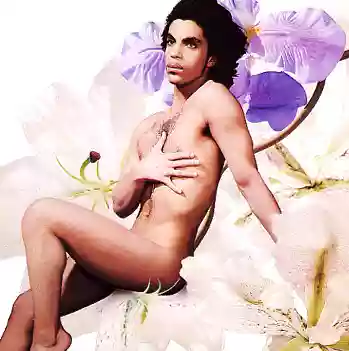
From a musical point of view "Lovesexy" continues what was already developed in "Sign 'o the Times" and the "Black Album", but accentuates the jazzy matrix. The backing band is the same as the previous year: Sheila E. on drums, Levi Seacer on bass, Matt Fink on keyboards, Miko Weaver on rhythm guitar and the horn section composed of Eric Leeds and Atlanta Bliss. Lovesexy is also a testament to how mainstream music critics often understand little about music, judging based on sales and friendships within record companies. It is also proof of how often a book (in this case, an album) is judged by its cover, focusing only on the more superficial aspects. Indeed, the album faced significant hostility in the USA due to its cover, to the point where many stores refused to display it in shop windows and some distribution chains even refused to distribute it. Despite this, "Lovesexy" represents Prince's artistic maturity, the definitive sublimation of funk, no longer raw and raunchy as in the early days (especially Dirty Mind), but elaborate and refined, elevated by the contamination with jazz, rock and other more or less defined genres (the "ambient" finale of Positivity is one of the peaks of his production).
The album is noted as the triumph of arrangements: the minimalism of "Parade" and "Sign o' the Times" gives way right from the start to a hyper-produced sound, full of embellishments, baroque ideas. The conceptual and stylistic unity of "Parade" is repeated here, but with a very different effect: if there the retro aspect prevailed, the "continental" flavor, in line with the film's atmospheres, here the unifying element is obtained with the piling up of a thousand overdubbed voices, the use of brass, strings, and simulated sounds that give it a more "contemporary" look. ‘Eye no’ is, as in similar cases, the statement of intent for the entire album: the tone is joyously spiritual, like a secular and sensual sermon. There is talk of hell, but with a joyful plea for reaching the promised heavens: the melody collapses under the frenzy of voices that talk, shout, whisper, while the brass pumps and leads to the climactic final explosion. The gospel ceremony concludes amidst applause, leaving the preacher's voice alone as it introduces ‘Alphabet street’: it sounds like an updated Bo Diddley (the guitar rhythm), and much cooler: the chest voice is laden with sexual undertones, with words spoken through clenched lips, as our hero proposes to the belle of the moment for a ride in a Thunderbird. Here the ensemble promises a decidedly "earthly" satisfaction, though he claims he just wants to watch, and the tone, much less lascivious compared to early days, leans towards courtship rather than actual "conquest". And, in seducing the partner by simply reciting the letters of the alphabet, Camille seems to peek out, the feminine side of our artist. ‘Glam Slam’ is the most immediate melody, for a track that, even in its Oriental-like atmospheres, deliberately wants to appear among the most spiritual moments of the album: not coincidentally, we hear an example of Prince's psychedelia again, which would not have looked out of place on Around the World In a Day, and which presents the same immediacy (well-constructed, actually, of a ‘Raspberry Beret’).
But the true spiritual heart of the album follows. As happens in his best moments (see ‘If I Was Your Girlfriend’), music and lyrics unite in ‘Annastesia’ (= anesthesia), reaching unparalleled effectiveness: despair, anguish, the yearning for "redemption" take complete form in the mournful procession of the song, perfectly underscored by the underlying guitar (and keyboard) solos, which rarely have had such a dramatic rendering in his music. A real character, metaphor for a much-desired sensory annulment, and finally a medium for ascension to god: ‘Annastesia’, which is all this, is the pivot around which the album and Prince's whole "faith" revolve (in my opinion, not at all pretentious, but, even if entirely unique, authentic). ‘Dance on’ picks up the reading of the present started with Sign o' the Times, doing so with unexpected virulence: the drumming and especially the bass like a machine gun make it an obsessive funk (proto drum 'n' bass?), dark, which suits the lyrics well (again, a glimpse into contemporary tragedies)... the darkness is quickly softened by the rhythm of ‘Lovesexy’, vaguely reminiscent of ‘1999’: the thread of the song is truly hard to follow, given how quick the changes of rhythm and atmosphere are, with brass taking center stage while everything else happens in the background, culminating in the crossed and sped-up rap by Cat and Prince. ‘When 2 R In Love’ restores peace to dazed ears, and finds a placement here more fitting than in the Black Album. The simplicity of the melody perfectly serves the warm, sensuous embrace that the song delivers, making it a pinnacle of his "bedroom" production. One feels cradled even in the smooth transition to ‘I Wish U Heaven’, a brief interlude where even the solid presence of the electric guitar serves the ecstatic atmosphere of the piece, along with falsetto choruses, rhythm guitars, female voices. ‘Positivity’ revisits social themes, but transfiguring them in the light of the eternal struggle between good and evil: the song is a true paean and a call to arms. The prince seems to sit among his cohorts, while the music gradually takes on a martial cadence, with handclaps and drum rolls. If you like, it's the least ironic side of our artist, and as such it might also be jarring. It's probable that opinions on this piece are divided starkly, either loved or disliked. Personally, I've always loved it: musically, it's always seemed bold, courageous, and novel (and the guitar is amazing)...
Do we mark u present, or do we mark u late?!
Loading comments slowly
Summary by Bot
Lovesexy is considered the pinnacle of Prince's production, combining jazz, funk, and rock with spiritual and elaborate arrangements. Despite criticism from mainstream outlets and issues over its controversial cover art, the album showcases Prince's artistic maturity and experimental spirit. Tracks like 'Eye No,' 'Annastesia,' and 'Positivity' highlight a seamless blend of emotion and virtuosity. This album closed the '80s era and marked the start of Prince's conflicts with the music industry.
Prince
American singer, songwriter, multi-instrumentalist and producer; seminal figure in funk, pop and rock who led a prolific career from the mid-1970s until his death in 2016.29 Reviews
Other reviews
By flood
Lovesexy is one of our artist’s most surprising and imaginative albums.
Prince closes in the best way his most inspired period and lays the foundation for what will be his new sound throughout the ’90s.
