
 •
Rating:
•
Rating: THE REVIEW
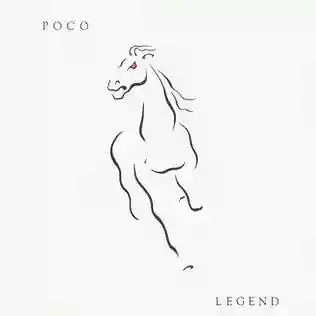
A minimalist and captivating cover encloses the most successful work of the Californian country rock quartet, released in 1978. In my opinion, there are three or four Poco albums that are better than this one, but so be it… In any case, the reasons for this pole position are easy to guess, despite more fascinating and dense works such as “Cantamos,” “Head Over Heels,” “Seven,” “A Good Feelin’ to Know.”
To begin with, the quartet's music here becomes a bit more… slick, leaning more towards a certain “adult” mainstream, diluting the country flavor with its mandolins and banjos and expanding instead towards less refined tastes, somewhere close to that rhythm & blues Americans love so much.
Secondly, this is one of those albums, so to speak, in chiaroscuro—it features three or four very successful, standout songs, while the others are more or less filler; and in the long run, it’s always better to include two or three high-level tracks and the rest as padding, rather than staying in a golden mediocrity, with nothing to throw away but also nothing able to become an evergreen, a lasting symbol of one’s artistic efforts.
In other words, “Legend” contains two magnificent songs, probably the best known of their entire career: I’m referring to the sweetly picked gem “Crazy Love” and the robust rhythm & blues “Heart of the Night.” Then there are two more notable contributions: the velvety, seductive “Spellbound,” and the strong rock closing track that gives the album its title.
Among the “mezze sòle” we can count the opener “Boomerang,” a galloping rock-blues with little punch; the bland “Barbados” with its predictable refrain; the harmless soft rock “Little Darlin’”; and the suffocating ballad “Love Comes Love Goes,” with annoying “sanremesi” echoes. On the other hand, the nocturne, maybe a tad sugarcoated duet between the two leaders Rusty Young and Paul Cotton in “The Last Goodbye,” is quite good.
The two masterpieces of this album could not be more different, in fact the first is by Young and the second by Cotton, two musicians both dissimilar and complementary. What to say about “Crazy Love”…: celestial picking, Young’s delicate voice weaving yet another portrait of a troubled love, sighing and musical harmonies. In contrast, “Heart of the Night” boasts a sculpted, high-octane steel guitar intro, a lovely soul-pop groove, and even a resounding alto sax solo thanks to the star guest, the powerful Phil Kenzie—the same of “Year of the Cat” and many other hits famous for a strong sax burst right in the middle.
With this record Poco break, though sadly for a short time, into the big time; for example, a perfect live performance of “Heart of the Night” can be admired on the double live album “No Nukes,” a document of four great concerts against the escalation of nuclear power held in 1979 at Madison Square Garden and organized by Graham Nash, Bruce Springsteen, Bonnie Raitt, and Jackson Browne.
Loading comments slowly
Summary by Bot
This review explores Poco's 'Legend' album, highlighting its strengths in country-rock. The author appreciates the band's musical direction and cohesive sound. Several standout tracks are discussed, reflecting the band's talent. The review notes how 'Legend' defines Poco's style and influence. Overall, the sentiment is positive towards the album.Tracklist Videos
Poco
American country-rock band formed in 1968 after Buffalo Springfield’s breakup, noted for close harmonies and Rusty Young’s pedal steel. Achieved mainstream success in 1978 with Legend, featuring Crazy Love and Heart of the Night.12 Reviews
