
 •
Rating:
•
Rating:
THE REVIEW
Before Pink Floyd dedicated their famous album to their crazy diamond, Poco had already done something similar for another great, crazy rock figure: Gram Parsons.
Parsons was one of the founding fathers of Country rock. His brief tenure in the Byrds and the Flying Burrito Brothers was fundamental for the definition of the genre (which he himself would later refine with his solo albums).
But Parsons also embodied, like few others, the figure of the cursed artist burning their life and talent with excesses of all kinds. His talent was recognized by people like U2, Elvis Costello, and Norah Jones (not to mention the Stones).
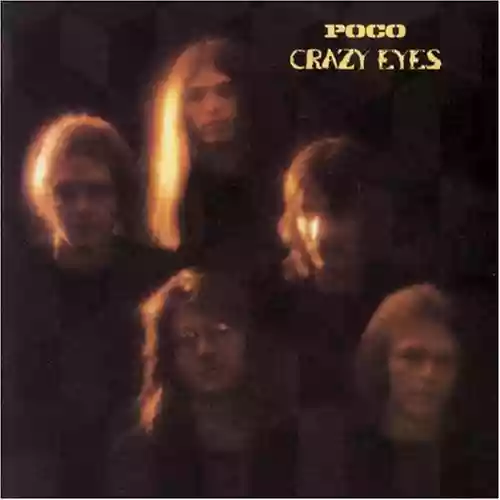
It was September 19, 1973, when an overdose cut his life short, ending a troubled existence. The "Cosmic Cowboy" was 27, and just a few days earlier "Crazy Eyes," the album the five Poco members had dedicated to him, was released.
"Crazy Eyes" is a good record. Essentially placed in the traditional realm of Country Rock, it manages to be convincing. And it offers us some unexpected gems.
So, along with canonical tracks like Let's Dance Tonight, Blue Water, and Fools Gold (the latter written by Cotton but enlivened by Rusty Young's steel guitar and banjo) and ballads like Here We Go Again and Magnolia (a cover of the J.J. Cale song), there are also pieces that elevate the quality of the album.
Like Crazy Eyes, a long suite that unfolds between country atmospheres, heavy orchestrations with a vague psychedelic flavor, and percussive interludes that float here and there.
In short, an unusually complex writing for a Country Rock album (almost Progressive) that highlights Furay's compositional talents in a clear state of grace.
The track, sung by Furay himself, weaves the legend of Red Crow (a Navajo Indian who went mad over the loss of his family and killed himself, turning into an eagle) with a delicate reflection on his friend, thus becoming a moving posthumous tribute.
The other gem of the album is the cover of Brass Buttons, a track from Parsons' second solo album, "Grievous Angel," released posthumously in 1974. The reinterpretation is truly noteworthy. The simple compositional framework is enriched with new nuances, making the new version more colorful than the original.
Unfortunately, like the previous ones, this record will not be a commercial success, and this may be one of the reasons why Furay will leave the group. With his departure, Poco will stabilize as a quartet and decisively turn towards a more melodic and successful country rock.
Loading comments slowly
Summary by Bot
Poco’s album Crazy Eyes is a heartfelt tribute to the late Gram Parsons, blending traditional country rock with progressive and psychedelic elements. The album features standout tracks like the suite Crazy Eyes and a notable cover of Parsons' Brass Buttons. Despite its critical strength, the album was not a commercial success, influencing Richie Furay's departure. Overall, it highlights Poco's compositional skill and respect for Parsons’ legacy.Tracklist Lyrics
Poco
American country-rock band formed in 1968 after Buffalo Springfield’s breakup, noted for close harmonies and Rusty Young’s pedal steel. Achieved mainstream success in 1978 with Legend, featuring Crazy Love and Heart of the Night.12 Reviews
