
 •
Rating:
•
Rating: THE REVIEW
Uh-oh! It has been pointed out to us that this review also appears (in whole or in part) in "The 500 Essential Rock Albums" by Mucchio Extra.
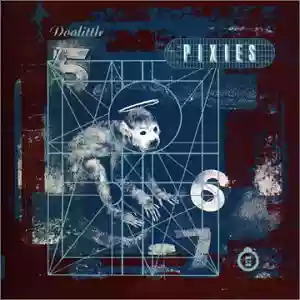
not to be confused with doctor dolittle. . . . . . ah. . ok. . there already was a review, but I didn't think it was up to par. . you decide. . . . If the long shadow of the Pixies still extends today over much of Anglo-American pop-noise, it is because of the extraordinary initial triptych of the group's recording career led by Black Francis (also known today as sexy Frank Black): the mini-album Come On Pilgrim had announced their talent, the subsequent Surfer Rosa had confirmed their uniqueness, while Doolittle is the album that cemented their role as genius manipulators of seemingly contrasting influences. The intrepid musicality of the Pixies remains in history as a supreme example of the enchanting power of music, beyond the obvious surface. Before them, merging hillbilly, hard-rock, and pop with a post-punk perspective was a titanic endeavor. And yet, the fifteen tracks on this album speak clearly: it is possible. . indeed, it is possible. You just need to have the courage and see a spark shine an inch from your nose and grab it, and then turn it into concrete matter. The intuition of this Boston group is epochal but certainly not just instinctive: it is the result, rather, of a very lively intelligence and a prodigious diversity of intents. The four Pixies lay out a white sheet of black, bitter, cynical irony, and build upon it, brick by brick, a beautiful structure even though (or precisely because) it is full of irregular corners and angles. The happy consonance of noise and melody derived from an askew perspective, like through a distorting wide-angle lens, through which rock 'n' roll is misconstrued with a desecrated fervor bordering on hysteria. The schizophrenic guitars support the symbolic visionariness of Francis, who cloaks memorable tracks in a splendid dissonant light, such as "Debaser" (pop 'n' roll for hallucinatory teenagers), "Wave of Mutilation" (with a killer sexyteen chorus), "Here Comes Your Man" (with a sixties scent), "Monkey Gone to Heaven" (the most famous and perhaps my favorite), "Mr. Grieves" (practically Television turned into a grotesque Plutine farce) and "La La Love You". Everything is the opposite of everything, and everything in one album. . . and all this in 1989. . . splendid. . . I would like to dedicate this review to Debaser. . . to all the editors. . . to all the reviewers. . beautiful, ugly, metalheads, punks, gay, bisexual. . . . . thank you. . . Debaser thank you. . .Loading comments slowly
Summary by Bot
This review celebrates Pixies' 1989 album Doolittle as a pivotal work in indie and alternative rock. The album combines contrasting musical styles—hillbilly, hard rock, and pop—with post-punk elements, showcasing the band's unique intelligence and creativity. Highlights include tracks like 'Debaser' and 'Monkey Gone to Heaven.' The review praises the album’s innovative blend of noise and melody and its lasting influence on rock music.Tracklist Lyrics Videos
Pixies
American alternative rock band formed in Boston; core early lineup included Black Francis (vocals/guitar), Joey Santiago (guitar), Kim Deal (bass/vocals) and David Lovering (drums). Late-80s/early-90s records (Surfer Rosa, Doolittle, Bossanova, Trompe le Monde) are widely regarded as highly influential. The band broke up in the early 1990s and reunited in 2004, releasing new albums in the 2010s.27 Reviews
Other reviews
By easycure
The Pixies have been one of the craziest and most brilliant interpretations of Rock ever.
Doolittle transmits a destabilizing lack of balance, yet everything appears completely homogeneous.
By Laggio
The Pixies were changing the coordinates of garage in a musical manner that would enormously influence the following decade.
With Doolittle, the Bostonian band gets their high school diploma without losing an ounce of the adolescent rage of the previous two, gluing the listener to the speaker.
By MissBlinky
Kim Deal starts decisively with the perfect bass line, followed by a powerful and intense riff and an ever-cryptic text shouted by the degenerated voice of Frank Black.
"The line between genius and madness is very thin."
By gmetti
Because it is simply love at first listen!
Much is owed to them by Nirvana, as well as Blonde Redhead and certainly PJ Harvey.
By lester69
The problem (and the delight) of this album is that you never fully understand it.
I find myself moved like the pimpled teenager I was as I sing Silver at the top of my lungs, not knowing exactly why.
