
 •
Rating:
•
Rating:
THE REVIEW
It was already thought of as the beginning of the end for this English band in the last months of 1968. Indeed, after the release of "The Piper At The Gates Of Dawn" (1967), "A Saucerful Of Secrets" (1968), and "More" (1969), which achieved moderate success, Syd Barrett was showing significant signs of mental imbalance caused by drugs and was removed from the group, replaced by a certain David Gilmour.
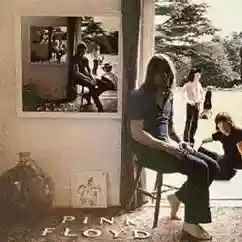
In 1969, the turning point album "Ummagumma" was released, composed of two parts: the first consists of four live songs. It begins with "Astronomy Domine," taken from the first album. "Careful With Axe, Eugene" is an instrumental piece, based on an initial bass line and Wright's keyboards, followed by a tremendous scream from Waters and the subsequent explosion of sounds that, as the seconds pass, calms down reaching the end. It is followed by "Set the Controls For The Heart Of The Sun" and closes the first part with a massive version of "A Saucerful Of Secrets," introduced by guitar, keyboards, and drums, whose progression becomes increasingly frenzied until a moment of silence leads to an angelic organ melody accompanied by the bass, to which guitar and Waters' singing join at the end, concluding a spine-chilling piece.
The second part, on the other hand, consists of previously unreleased studio recordings, individually written by the four members of the new Line-Up: opening with "Sysyphus" by Wright, divided into four parts. It’s a piece of classical music for piano: introduction, delirium, improvisation, and suite, which concludes with the initial theme. Waters, however, presents two very different pieces: "Grantchester Meadows" and "Several Species Of Small Furry Animals Gathered Together In A Cave And Grooving With A Pict". The first is acoustic, while the second is a melody constructed from animal sounds, psychedelic effects, and the writer’s voice. Instead, new entry David Gilmour presents a three-part piece entitled "The Narrow Way," immediately showing himself to be a great musician: the first part is acoustic, the second is a repeating bass line covered by psychedelic guitar and keyboard improvisations. Instead, the final part is the pivotal piece: the guitarist manages to give the group a new sound that will characterize them for the rest of their career and make them a key band in the history of music. Drummer Mason concludes with "The Grand Vizier’s Garden Party," a composition where the percussion dominates, enclosed by a flute that sounds sweetly both at the beginning and the end.
This is the first post-Barrett work, in which the band members do not deny the psychedelia of their predecessor, but do not refuse to experiment with new sounds, which as the years go by, they will perfect, and their career will be dotted with ups and downs until 1995, the year of their demise.
Loading comments slowly
Summary by Bot
Ummagumma marks a pivotal moment for Pink Floyd, showcasing their transition after Syd Barrett's departure. The double album balances live psychedelic performances with ambitious individual studio pieces. David Gilmour's entrance signals a fresh sound that would define the band's future. The album highlights experimentation and foreshadows the band's evolving legacy.Tracklist Lyrics Videos
Pink Floyd
Pink Floyd formed in London in 1965 and became a defining force in psychedelic and progressive rock. The classic lineage spans Syd Barrett’s founding vision, Roger Waters’ conceptual leadership, Richard Wright’s harmonic textures, Nick Mason’s pulse, and David Gilmour’s arrival in 1968, shaping their signature sound.237 Reviews
Other reviews
By velvetunderground
Ummagumma is chaos! Disorder, genius and unruliness, it’s a drunken, clear sound that dances light and confused towards infinity.
Not suitable for those who believe that music is just a simple melody to hum!
By Bubi
"Ummagumma is chaos! Disorder, genius, and unruliness, it’s a drunken, clear sound that dances lightly and confusedly toward a light, toward infinity, toward itself, toward freedom!"
I am a great admirer of Pink Floyd, whom I consider the most important in Rock history, and I love almost all their works.
By floydsound95
"Ummagumma is an album worth listening to, even though it is not easy to do so."
"The album’s gem... foreshadows the subsequent Pink Floyd sound."
By 33giri
This vinyl support is miraculous and indescribable, as the artistic completeness is at its highest level.
There is the vital breath, the dedication, and the zeal of the imaginative, chimerical master from Cambridge: Roger Keith Barrett.
By score_angel
You don’t know whether to choose the first or the second as better.
Once you’ve well understood and digested all that experimental phase, you don’t just put it on a shelf thinking you’ll dust it off sometime later.
