
 •
Rating:
•
Rating:
THE REVIEW
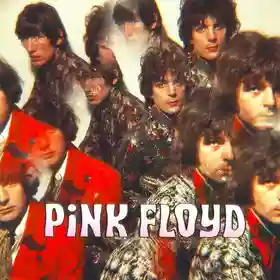
Excellent debut by that group that emerged from Norman Smith's sound experiments in the infamous Abbey Studios. Their promising career would begin shortly thereafter, highlighting the deterrent significance of Barrett's latent mental stability. Even here, as with the Doors, it is difficult for me to judge whether Barrett's absence, which was well replaced by Gilmour, was a good or bad thing.
The opening track is the beginning of what would become Pink Floyd's trademark, namely the best execution of psychedelia (a step above King Crimson and Grateful Dead), where Syd's schizophrenic genius is evident right from the start of the masterful "Astronomy Domine" (later revisited in "Ummagumma") with experimentation of interesting sound effects and particular vocal metrics. The influence of the aforementioned Smith, sound engineer for the Beatles during "Rubber Soul" and "Revolver", who would "leave" them during the "Sgt. Pepper's" sessions, is evident.
Even with excellent results, one can notice that in "Matilda Mother", featuring an oriental-esque solo that serves as a great balance point, the ending of "I Want to Tell You" is reminiscent, while "Flaming" gives way to the ending of "I'm Only Sleeping". In "Take Up the Stethoscope and Walk", one can recognize a touch of Zappa's absurd style already present in "Freak Out!"
Nothing to disparage, far from me, in fact it seems that Pink Floyd sense which is the right path that will lead them to worldwide success and they bet everything (at least in the debut) on "Interstellar Overdrive", where their distinct mark is clearly recognized. The metallic whirlpools represented in this performance provide the opportunity for turgid minds to sink into a plastic effect of estrangement that gives the impression of a slow flow, almost gently with surreal metrics. Indeed, it is an impression. The daring flight of screeching brakes in the innermost nodes of cerebral circuits takes hold, assuming a fierce dominance over the English group's unmatchable orchestrations.
It would seem to say to them: "Psychedelia is our stuff, gentlemen, step aside!". In my view, they have every right to claim it, even though the ancestral influences (in chronological order Bob Dylan, Donovan, Byrds, Holy Modal Rounders, 13th Floor Elevators, Kinks, Beatles) and their contemporary ones (Frank Zappa, Jefferson Airplane, Soft Machine, Moody Blues, Velvet Underground, Grateful Dead) cannot be denied.
Pink Floyd are Pink Floyd, and flirtatious glances can be granted (always in my opinion) only to King Crimson (The Court of the Crimson King, In the Wake of Poseidon, Red) and Grateful Dead (Anthem of Sun). The rest is copy.
Loading comments slowly
Summary by Bot
Pink Floyd's debut album, The Piper At The Gates Of Dawn, showcases their mastery of psychedelia and Syd Barrett's unique genius. The album features innovative sound effects and distinct vocal styles, marking the start of their worldwide success. The review highlights the band's originality while acknowledging their influences. Notable tracks like 'Astronomy Domine' and 'Interstellar Overdrive' set them apart in the psychedelic genre.Tracklist Lyrics Videos
Pink Floyd
Pink Floyd are an English rock band formed in Cambridge in 1965, known for pioneering progressive and psychedelic rock and for landmark albums such as The Dark Side of the Moon, Wish You Were Here and The Wall.236 Reviews
Other reviews
By charles
From the very first record, you can tell what they would do in the future, which is create a sound all their own.
Excellent record, which deviates a bit from the typical Pink Floyd sound but is still a colossus in the history of music.
By zaireeka
Written at the tip of LSD.
One of those clocks, orphaned by the irreversible madness of Syd Barrett, was preserved by his old companions and made to chime once again at the start of Time.
By Moro1
Only Barrett can explain the masterpiece he composed and wrote, and he does it through the stories of a king told in a mother’s fairy tale.
He sang it almost 40 years ago and it is still the most beautiful of all.
By anthon
"From these first seconds, the listener is transported into an otherworldly dimension, a dimension that characterizes much of the album."
"Interstellar Overdrive represents the true innovation, in terms of harmonic-melodic physiognomy, of the album."
By AJAX
The early Pink Floyd managed to synthesize into a unique and inimitable vision the impulses from West Coast acid rock, ... and the love for genuinely English fairy-tale elements.
'The Piper At The Gates Of Dawn' captures both sides of the coin, marking a year when pop and the avant-garde went hand in hand.
