
 •
Rating:
•
Rating:
THE REVIEW
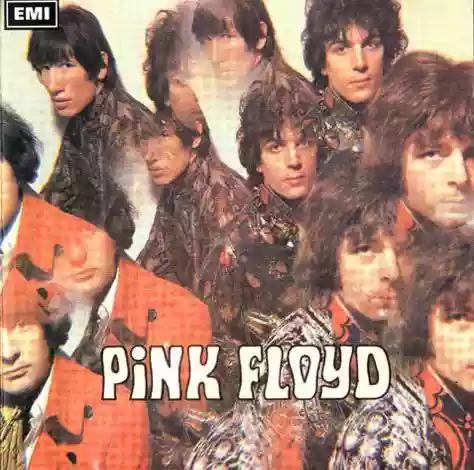
The first long-playing record by Pink Floyd sees the light under the auspices of the most mercurial talent of post-beat English music: Syd Barrett. An ungrammatical guitarist and singer, a composer ahead of his time, he radicalized together with Pink Floyd those psychedelic aromas that England, straddling two musically rich decades, proposed.
Kinks, Donovan, Rolling Stones baptized the psychedelic spirit mostly through aesthetic poses and bizarre arrangements, Pink Floyd instead codified the grammar of European popular music through the experiences of the new Californian trends, inspiring them in turn. The PATGOD is the least emblematic 33 rpm of Pink Floyd’s discographic journey. An unresolved, unsteady work that dazzles with the inspiration of the bandleader, the three-dimensionality of Waters' bass, the expertise of Wright - devil and holy water at the organ and piano - and the rainforest primitivism of the titanic Mason.
The narcotic exile of the young guitarist almost entirely emptied them of their creative urgency. During the '70s they were reduced, except for a small handful of LPs, to professional executors of lounge psychedelia.
"Astronomy Domine" the opening track, is all a pulsating of intergalactic frequencies and guitar slashes. The bass produces notes that seem to want to remain suspended and, along with a solemn drumming, place the listener in a mass of heretical liturgy. The chorus is introduced to us by a vaudeville guitar that, doffing its hat, raises the curtain on an alien song. This is modern psychedelia, because it is so in its substance.
A 1950s noir atmosphere gravitates over the riff of "Lucifer Sam". The attentive listener perceives the piece as a unicum in which musical fragments, paradoxically almost independent, are circularly connected through a process of barely hinted pauses. In its sonic evilness, it is a song that makes one uncomfortable, ‘…that cat has something I can’t explain. It terrifies the implication that well describes the Polanski-like spirit of the piece.
The third composition fully reflects Barrett's narrative and musicality, that solipsism of a troubadour that will be fully expressed in the matured work (The madcap laughs) and the physical and artistic decline (Opel).
The musical landscape initially seems to gaily accompany the fantastical lyrics, suddenly, the arpeggio becomes frenzied and the falsetto counterpoint pushes the piece towards a percussive and organistic drift. "Mathilda Mother" thus situates itself in a decidedly more musical path compared to the subsequent Flaming. This somewhat drugged children's rhyme is accompanied by whistles, carillons, cuckoos, cymbals, and junk shop knick-knacks.
Before closing, there is time for Pow R. Toc H. and Take thy stethoscope and walk.
The first would fit perfectly in Crown of Creation by Jefferson Airplane the following year, its subdued anticipation of the apocalypse, its tension entirely of disaster, anticipates the masters of flight from the bay.
The next track is the only one written by Waters, it is divided into three medium-length sections. The first is a frontal percussive and spasmodic assault on alienated lyrics (good in phonetic rendering but conceptually overused over the years). The second is composed of magmatic guitar and organ solos on a less dissipated rhythm than the previous one. Finally, the piece returns to singing and vertiginously implodes into a liberating falsetto.
Interstellar Overdrive is what Pink Floyd could have played without Barrett, but which Parson, funky guitars, and grandeur demoted to predictability.
There are few tracks in rock history that more than this define the concept of psychedelic jam. In its spanning across virtually infinite soundscapes, it is the most reliable magnifying glass to detect the ensemble’s potential as a collective.
The Gnome and the beginning of Barrett’s solo songbook, whimsical and dreamy folk, have the flaw of accentuating the leader's egocentrism, relegating the other personalities to the role of supporting actors.
With Chapter 24 and Scarecrow, they chisel out two docile, fragile, and perfect little works like Haiku.
The first text references the ancient Chinese divination text I Ching, of which Syd was a devotee. Almost a mini-symphony of the Orient, it shows, rather naively, the mystical and somewhat airy sensitivity of the author.
Scarecrow is almost a post-scriptum to it. A bittersweet footnote that despite the elementary musical progression (a silly tip-tap and a distracted almond-eyed organ) sublimates, lightening it, the very serious & serious composure of the previous composition.
Bike is the classic impossible Barrettian melody. Certainly one of the most dated songs, it benefits from spatial intrusions that seem to want to ennoble it from its ‘beat’ conception. However, it is such an inviting song for its freshness, and for the extreme band-like countability, that it could have been the ideal lead single of the album.
Childlike stories and vaguely religious suggestions are the interpreters of Barrettian paper dreams. Unripe but functional to the spirit of their sound, they are perhaps the “weak” link of the band's creative DNA.
Despite this, this absolutely non-aligned product, in our opinion, is the most inspired record of 60s English psychedelia, with due respect to the fans who own 8 unofficial live recordings of the The Wall tour but ignore this alternative link between ‘beat’ and ‘progressive’.
Loading comments slowly
Summary by Bot
This review praises Pink Floyd’s debut album as a pioneering and inspired psychedelic rock work anchored by Syd Barrett’s unique talents. The album is depicted as a complex, experimental blend of musical innovation and distinct atmospheres. Highlights include richly detailed descriptions of key tracks and the band’s collective potential. Despite some minor criticisms, it is considered one of the most important English psychedelic albums of the 1960s.Tracklist Lyrics Videos
Pink Floyd
Pink Floyd are an English rock band formed in Cambridge in 1965, known for pioneering progressive and psychedelic rock and for landmark albums such as The Dark Side of the Moon, Wish You Were Here and The Wall.236 Reviews
Other reviews
By charles
From the very first record, you can tell what they would do in the future, which is create a sound all their own.
Excellent record, which deviates a bit from the typical Pink Floyd sound but is still a colossus in the history of music.
By zaireeka
Written at the tip of LSD.
One of those clocks, orphaned by the irreversible madness of Syd Barrett, was preserved by his old companions and made to chime once again at the start of Time.
By Moro1
Only Barrett can explain the masterpiece he composed and wrote, and he does it through the stories of a king told in a mother’s fairy tale.
He sang it almost 40 years ago and it is still the most beautiful of all.
By anthon
"From these first seconds, the listener is transported into an otherworldly dimension, a dimension that characterizes much of the album."
"Interstellar Overdrive represents the true innovation, in terms of harmonic-melodic physiognomy, of the album."
By AJAX
The early Pink Floyd managed to synthesize into a unique and inimitable vision the impulses from West Coast acid rock, ... and the love for genuinely English fairy-tale elements.
'The Piper At The Gates Of Dawn' captures both sides of the coin, marking a year when pop and the avant-garde went hand in hand.
