
 •
Rating:
•
Rating:
THE REVIEW
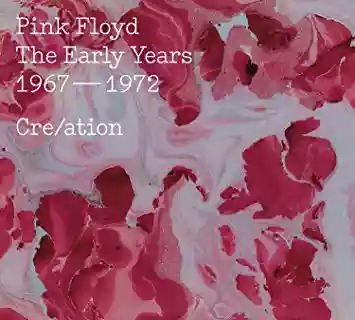
Pink Floyd – The Early Years 1967-1972. Cre/ation. 2016.
1.) Early (and Ever).
Pink Floyd in the "Early Years" are already what they were, are, and will be. Pink Anderson and Floyd Council. That is, the sum of several parts. Into an organic whole. Not just the wild imagination of Barrett. Not just Waters. Not Gilmour (in the latter case, in fact, two words come to mind, referring to the cover of "Atom Heart Mother" and the valid "Fictitious Sports," two words to be uttered in quick succession: "Cow" and "Races"). Then there's Wright and Mason. They were there too! Even the little master who set up their very first and innovative Light Shows was with them. Not because everything makes broth. But/because they were a collective, a group of friends, a band, art, and architecture students in Cambridge. That sharing of passions and intentions is the source of everything. That closeness, that "proximity" takes you far. Let's take an example. "The Piper at the Gates (of Perception) of Dawn." Barrett is the deus ex machina. So what? Someone drove the black van that took them to concerts; surely giving Syd the wheel was not a good idea. Anyway, if Barrett wrote all the lyrics, only the "Stethoscope" is by Waters (the other Roger), and, of course, in terms of music, the support that comes from the others is important. It enhances greatly. Enhances. Barrett invents "Interstellar Overdrive"; recording effects, studio effects, are his brilliant invention. The four dimensions of the space-time continuum. Or something like that. But it's a jam with the other three. The rhythm section is crucial. So is the plenary "Pow R. Toc H.", a joke, a trifle? But it fits so well on that LP. Now, let's take "Ummagumma 2", the studio one. Each of the "new" four composes a suite individually. All, with different results, can compose. And the live album, then, attests to how they were, unlike Syd, the surviving or ghost of '68, able to play.
So, anyway (and always), we are facing a group. Not just the "corporate identity," which legal battles will keep unchanged, to the detriment of the potential appeal of the mythical "Gilmour's Girls".
2.) 500 Euros.
Let me be clear. I am commenting on the double CD, which serves as a supplement to the totemic Box of about thirty CDs (plus the "Live At Pompeii" DVD), which costs around 500 €. The purchase of which, I say as a serious and passionate lover of the band, is immoral. What do you say, Count @[IlConte]? I’m not in. Not even Pinhead @[Pinhead] would buy such an "Early Years" collection, not even if it were by the Ramones. Maybe yes. Probably not. The double CD, 18 €, is certainly enough. It collects unreleased mixes, live sessions of the time, and recordings for Michelangelo Antonioni's "Zabriskie Point". Plus some singles, the first two ("Arnold" and "Emily"), also the delightful "Point Me At The Sky", and some B-sides…
3.) Ride the tiger (against the tiger).
As mentioned, the Pinks are the sum of the parts. In various shades. "Saucerful of Secrets," the LP, finds the expedient of Barrett's last autograph, the bitterly mournful (but splendid) vaudeville of "Jugband Blues", to bid farewell to the young leader who had become unreliable, cumbersome, and catatonic. Leaving him to continue a musical discourse, initiated with mysticism but wanting to go forward in a kind of dialectical empiricism in “making music”. And Rock music. What’s really great about this group is that they tackle the album, the Long Playing format, like a writer does with their book, like a painter with their painting or an entire cycle. An artistic production. Poietic. A work of art. Its genesis. Germination. Growth, even in awareness. They have (almost) always known how to renew themselves, indeed, to evolve (evolve? Always? Each to their personal answer). For years, I have been diligent in believing that progressive was improving, constantly progressing, surpassing one album after another. An evolutionary, rich, and refined sound. But, as in the theory of species, there are inexplicable leaps in quality, so here, and there are also setbacks, recoils, pockets. But the sound goes on. A sound that pierces your soul, that traverses, even through the technical rendering, the full potential of human hearing. The "good vibrations" are not going into fibrillation. They create huge sonic paintings. Cosmic. Or frescoes. Or waves. Huge. A sacred aura envelops, cloaks their works until the senility of Gilmour is excluded. The leader I appreciate the least, the composer most skilled in the noble art of recycling. The guide, for me, is Roger W.. His “own issues”, his paranoias, I have always willingly shared. To overcome them Hegelianly: to remove them, preserving. I put the bricks in the wall too, then, tearing down the wall, freeing oneself, is a project, not just an experience among others. It requires will. It is starting a process, not in the sense of "The Trial," "Worm, your Honor," blah, blah. It is something universal. Liberation from every bondage is an exodus. Certainly, the Floyds largely ruined my adolescence, as much, or no less, than the first unrequited love in the third grade, from a certain S.Z., has ever done… Even though thirty years have passed, in some sense, I have never recovered. From the Floyds, however, yes. And with the Floyds, not against the Floyds.
4). History
In 1967, the "Pink Fluid" became the paradigm and the matrix of English psychedelia (extravagant, eccentric, and out of fashion). They internalized the Velvet Underground jams, the informality of Red Crayola (from which they draw "Paintbox/Color Box," no joke), the melodicism of Jefferson, extending their appendices. And, moreover, there’s Syd, known as Roger Keith Barrett. Who gives name, identity to the band, and harsh sounds, rhythms, abstract noises, surreal rhymes, and overloads of distances. He pulls the flute-playing rabbit out of the hat of some alien space. Complete with "Astronomy Domine" and "Interstellar Overdrive", the clearest hallucinations of Swinging London's Rock.
Then, from the experimental vein of distorted Barrettian psychedelia, they will move to a majestic Art Rock, always avant-garde, pragmatic, launched towards the moon, the cosmos, and the cosmic spaces they traverse. Without also renouncing a direct language. Thus, in the early times, '68 offers a "Saucerful" that is less "elsewhere" and more concrete, capable of great emotional impact, amid slowness and dizzying impulses. "More" delivers twilight melodies and curious atonal chimes. The "Ummagummas", libertarian, ambitious, extreme, promote cosmic music with indefinable boundaries. The LP of Hipgnosis' reflective cow marks a new path, with a pompous, epic, and redundant sound. In "Meddle", melody and experimentation balance each other, hypnosis and dreamlike disturbances are the credentials of an increasingly metaphysical Pop Rock. After the fleeting interlude of "Obscured", there will be epochal and solemn albums, up to Gilmour's honest first solo "A Momentary Lapse Of Reason." And the rest is gratuity.
5.) Songs collection: 1969-1972. In Swinging London and beyond psychedelia.
Some salient episodes of the "small," double collection dated November 11, 2016, with a total duration of 1:52:41. "Matilda Mother", in a different praiseworthy mix, with shifted lyrics, is a "classic" of Barrettian psychedelia, intriguing and tortuous, inviting Mati's mother to keep telling stories of kings with silver eyes and misty knights, "You only have to read the lines in black/ and everything will shine". "Jugband Blues" is Syd's epitaph "I don’t care if the sun doesn’t shine/ I don’t care if nothing is mine/ And I don’t care if I’m nervous with you/ I’ll do love in winter./ And the sea isn’t green/ And I love the queen/ And what exactly is a dream?/ And what exactly is a joke?", besides, the beginning, to which we appropriately return, said "It's awfully considerate of you to think of me here/ And I’m much obliged to you for making it clear that I’m not there." There's the Single Version of "Careful With That Axe, Eugene" with piercing (but soon muffled) screams, and its 1969 BBC live Session, without feral screams. Always beautiful to listen to. Ancestral. Dreamlike. Threatening. "Interstellar Overdrive", recorded live in Amsterdam, in a less harsh version than the original, without the tonal music exploding into the most chaotic and bewildering improvisation. 4 minutes and 20 seconds, without the unique intensity of the convulsive instruments we know. Slow, disorienting. Gilmour's dreamlike guitar replaces Barrett's titanism. Of documentary interest. There’s the pastoral watercolor of "Grantchester Meadows" with a titillating piano in the final. Enchanting "Cymbaline", organ and drums in great shape; Gilmour expresses himself best in these songs. "Green Is The Colour" excels on sea waves and the cry of gulls, where it talks more concretely of the fresh water splashes of the kingfisher. Its beauty, simple melody, and bucolic texture fade into a slightly Eastern "[Careful]", deprived, as said before, of the piercing cries. The sea of being where it is sweet to be shipwrecked? Or alienation, oblivion? I would lean towards the first hypothesis.
The audio is always in very high fidelity. There is great interest in "In the Beechwoods", roughly unreleased, a strangely sunny Barrett instrumental with swinging cadences, vaguely Country. A genre that excels alongside the Folk influences in the brief "exercises in style" for the soundtrack of "Zabriskie Point". These are curious and pleasant episodes; they are not quite what we are used to listening to from the Pinks. Somehow they represent the most attractive side of this supplement. The suite from "Atom Heart Mother", live in Montreux 1970, without an orchestra, is resonant and gains in fierceness. Curious echo effects of "Nothing Part 14", a deviant, distorting, and syncopated work in progress of "Echoes." There is something missing like "Set The Controls For The Heart Of The Sun" or "One Of Thease Days", which could have easily taken the place of some "Embryo" too many. A dream to have included "A Pillow Of Winds", perhaps at the end. The conclusion is instead entrusted to three pieces from "Obscured By Clouds", the immediate predecessor of the permanent darkness of the moon. They have an almost comedic impact. At least the syrupy romanticism of "Stay". However, the text of "Childood's End", all under Gilmour's influence, is not bad at all.
[…]
You said, sail the ocean
Far from thoughts and memories
Youth is over, your fantasies
Mix with harsh reality;
And when the sail is raised
You'll feel your eyes fill with tears
And all the fears never expressed
Impose the final choice on you
Who are you and who am I
To say we know why
Some are born, some die
Under the infinity of the sky
There will be war and there will be peace
But everything will end one day
All the iron will turn to rust
All the proud will end in dust.
So time will fix all things
So this song will end.
Did he have a look at Ecclesiastes 3:1-15 again? Or had he sipped “Turn Turn Turn” from the legendary Byrds? It appears that many childhoods ended this way.
Dear Pink Floyd, for the good "Old Fat Burning Sun in the Sky," as much as I love you deeply, I have also tried to hate you in the past, but not even Clash and Ramones have buried you, I, as I was saying, won't give you 500 €. Regarding the very fresh publication in sections of this colossus, of three or five CDs, divided by date and place, around 34, 40 €, I’ll think about it. I'll look into it, but I'm very skeptical.
Goodbye Blue Sky.
Goodbye Cruel World (of Business).
Loading comments slowly
Summary by Bot
This review explores Pink Floyd's formative years from 1967 to 1972, emphasizing the collective creativity of the band and the contributions of Syd Barrett. While praising the music’s evolution and high-fidelity audio, the reviewer critiques the excessive cost of the full box set, recommending the more affordable double CD instead. The album highlights rare mixes and live recordings, balancing artistic innovation with historical insight. Ultimately, the review expresses deep respect for the band's legacy despite mixed feelings on pricing.Tracklist Lyrics Videos
01 In the Beechwoods (2010 mix) (04:43)
05 Atom Heart Mother (17:58)
06 Jugband Blues (2010 mix) (03:02)
07 Take Off (Zabriskie Point remix) (01:20)
08 Nothing, Part 14 (07:01)
10 Auto Scene, Version 2 (Zabriskie Point remix) (01:13)
11 Point Me at the Sky (03:40)
12 Matilda Mother (2010 mix) (03:59)
14 Looking at Map (Zabriskie Point remix) (01:56)
17 On the Highway (Zabriskie Point remix) (01:16)
18 Careful With That Axe, Eugene (single version) (05:46)
21 Ummagumma Radio Ad (Capitol US) (00:22)
23 Childhood’s End (04:33)
24 Green Is the Colour (03:21)
27 The Riot Scene (Zabriskie Point remix) (01:39)
Pink Floyd
Pink Floyd formed in London in 1965 and became a defining force in psychedelic and progressive rock. The classic lineage spans Syd Barrett’s founding vision, Roger Waters’ conceptual leadership, Richard Wright’s harmonic textures, Nick Mason’s pulse, and David Gilmour’s arrival in 1968, shaping their signature sound.237 Reviews
