
 •
Versione 2
Rating:
•
Versione 2
Rating: THE REVIEW
The day will come when I will close my eyes, take a deep breath, and finally calm my heart. A day when I will be so pleased with myself that I will desire nothing more.
When that day comes, please: take me down.
For a band like Phish, the risk of falling into self-indulgence for its own sake is always around the corner (and in my humble opinion, they've fallen into it several times).
Phish's music is flawlessly played and masterful: what a bore, you might say.
Generally, that's what I also say: but let's take it step by step.
In the late eighties and early nineties, it's hard to tell if Phish is an easy listening evolution of Frank Zappa or an ultra-technical version of the Flaming Lips to come: they rightfully play a bit of everything and become famous for their wonderful (apparently) and immensely long concerts.
Great instrumental jams and, over the years, the annoying habit of performing entire albums not their own (which, if there's one thing I can't stand, it's exactly that).
After a first album (that you're not sure whether it's really the first) that's somewhat freakish, Phish refines their approach and delivers a couple of albums where they pour their vast live repertoire.
The first of the two, “Picture Of Nectar,” I consider, surprisingly (given the introduction I made of the band earlier), wonderful. Lots of funk, perfect production, great solos (but not too many), and melodic lines that, for some reason I never understood, remind me of Steely Dan.
The second of the two is “Rift.”
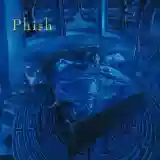
Look at the cover: I mean, something like that, not even Dream Theater! Moreover, the cover supposedly figuratively represents all (almost) the titles of the songs on the album (how sad!).
Let's be honest: it doesn't bode well.
In reality, the pool of songs with which this album was made is the same as “Picture Of Nectar,” so, in theory, you should expect more or less the same stuff.
Yet, it always seemed to me to be the contradiction of its predecessor. Or its reverse (which is like saying the same thing twice). I've probably been prejudiced by the cover, but if in the first I felt so much joy and lightheartedness, here I sense a slightly more serious tone.
But this is where Phish catches me off guard!
Despite an initial approach that dampened any enthusiasm in my little enthusiasm-prone heart, over time this album started to really grow on me.
Sometimes I wonder why.
The why is the simplest of all: because despite the ultra-technique, despite the desire to parody without being funny, despite Phish never really having a defined musical identity (to my ears), this is an album of songs. And beautiful songs at that.
I would say there's nothing else to add. Give it a listen: you've definitely heard worse.
A greeting to my grandmother who reads me from home
Loading comments slowly
Summary by Bot
This review explores Phish's album 'Rift,' initially met with hesitation due to its cover art and complexity. Over time, the reviewer appreciates its more serious tone compared to 'Picture Of Nectar.' Despite the band's technical and occasional self-indulgent tendencies, 'Rift' is recognized as an album filled with beautiful songs and rewarding listening experiences. The review encourages giving the album a chance beyond first impressions.Tracklist Lyrics
Phish
Phish are an American rock/jam band formed in Burlington, Vermont, in 1983. The classic lineup—Trey Anastasio, Mike Gordon, Jon Fishman, and Page McConnell—is renowned for marathon improvisational concerts and genre-blurring songwriting. The band’s 1990s run produced influential studio and live releases and a devoted, touring fanbase.10 Reviews
