
 •
Rating:
•
Rating:
THE REVIEW
America, America, America.
No matter how perplexed one might be about our neighbors across the ocean, it would at least be superficial to DISREGARD them.
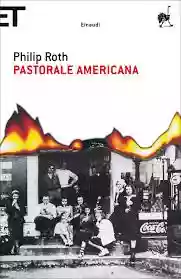
Whether we like it or not, we often have to reckon with them, and if the best tactic is to know our antagonists, then American Pastoral is an ace up the sleeve as it exudes America in its quintessence. Four hundred pages that, through the protagonist's journey, narrate the history, promises, dreams, and contradictions of the last century of this naive but also extremely furious country.
Indeed, a man like Seymour Levov, a blond and athletic Jewish boy known as the Swede, had never questioned the reason for things, but at some point, he too will have to face reality: and he will do so when his beloved daughter, fighting against the American war in Vietnam but also against everything and everyone, gets lost indefinitely. It is then that Levov the Swede awakens from that American dream he had blindly believed in. The Swede thinks: "Three generations. All had made progress. The one that worked. The one that saved. The one that broke through. Three generations in love with America. Three generations that wanted to integrate with the people they found here. And now, with the fourth one, everything had ended in nothing. The complete vandalization of their world."
"American Pastoral" is like a song — anything but bucolic — divided into three circles: the Remembered Paradise, the Fall, and the Lost Paradise and it's a story that has much to do with roots, memory, and sometimes the intolerability of memory. It is not a simple novel, requiring a certain degree of attention from the reader but, in return, it offers much in terms of awareness and reflections that sometimes turn into real revelations. Like those that will forever change the Swede's naïve attitude when, suddenly, he loses his innate innocence.
"He had learned the worst lesson life can teach: that there is no sense. And when something like that happens, happiness is no longer spontaneous. It is artificial and, even then, bought at the cost of a stubborn estrangement from oneself and one's story." On the other hand, he wasn't prepared for this: "How could he have known, with all his kindness, that the price for an obedient life was so high? You resign to obedience to lower the price... He had truly realized his version of paradise... And then everything changes and becomes impossible. But who is ready to face the impossible?"
Not the Swede, nor anyone else because "we're not enough. None of us is enough" in the face of the triumph of rage, chaos, and the irrationality of adolescent America.
Loading comments slowly
Summary by Bot
Philip Roth’s American Pastoral captures the complexities of 20th-century America through Seymour Levov’s personal tragedy. The novel explores themes of innocence lost, the clash between generations, and the harsh realities behind the American dream. It demands attentive reading but rewards with deep reflections on history and personal identity. Ultimately, it reveals the painful awakening of idealism to an irrational and chaotic reality.
Philip Roth
Philip Roth (1933–2018) was an American novelist from Newark, New Jersey, renowned for probing identity, sexuality, and U.S. history—often through his alter ego Nathan Zuckerman. He authored the American Trilogy and concluded his novelistic career with Nemesis.07 Reviews
