
 •
Rating:
•
Rating:
THE REVIEW
- What the hell did I tell you about holding it in! But you couldn't hold it, could you? You're just like my son, just left the Astrogrill: "Dad, I need to go." For Christ's sake …
- What can I do? It's already done!
- Yes, yes, it's done. See the mess that came out of it, everyone thinking of who knows what reasons for those decane, undecane, and dodecane: the largest organic compound molecules discovered so far on Mars, and in truth, it's just that they crapped there!
I open my eyes and, in the dim light, I see my two "alien" friends yelling and almost getting into a slap fight in an evident state of agitation, and this time not from alcohol but from anger! Since it's the middle of the night, I try to intervene before someone knocks on the door, but it's all pointless; not even the usual beers I try to hand them restore peace. There is only one method I know to bring tranquility that always works: a nice reggae record! If it works with dogs (I swear I read an article of a scientific study proving it), it will work with these two little space creatures! It’s because reggae has never just been a musical genre but a total identification between man and god, between people and religion; it’s a worldview, and the music is the message. However, there are two major misconceptions surrounding this musical genre:
- one often forgets the significant influence it has had on pop music (in a general sense), on par with other black genres such as blues, funk, and soul (even more so if you think about all the pre and post reggae genres from Jamaica: from calypso to ska to dub);
- the direct association between drug use (even if only marijuana) and the reggae world.
Moreover, the vinyl I choose to restore a bit of serenity carries a title that feeds misconception number 2: “Legalize It” by Peter Tosh, together with the penultimate from the Wailers (“Catch A Fire”) and the first from Bob Marley & The Wailers (“Natty Dread”), my favorites of the genre born in Jamaica that conquered the world between the '70s and '80s.
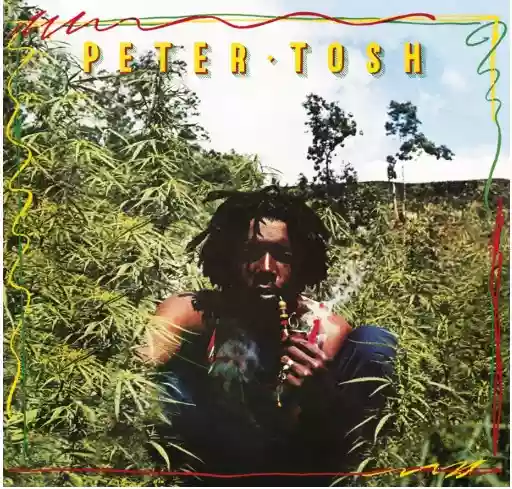
Before 1976, Winston McIntosh (Peter Tosh) was not as well-known as he is today, even though he was one of the main creative forces of the Wailers, a fate shared with the other talented members of the band overshadowed by the frontman Bob Marley, and when “Legalize It” was released, Marley had already become an international superstar. In response to Marley's success and the available proposal of “Natty Dread,” Tosh released the provocative debut album with a photo-portrait on the cover while smoking ganja in a marijuana field. Yes, because Peter was a true revolutionary, one who always spoke his mind and wasn't afraid to denounce the injustices of Jamaican society. The track that gives the album its title called for the legalization of marijuana in Jamaica, not the free high for kids worldwide. Tosh was firmly convinced that marijuana was the nation's healing, he thought the herb gave poor people a brief relief from daily life's problems, and he believed that was why the government made it illegal. The song caused such controversy that it was banned in Jamaica. As a result, Peter, the most activist of the Rastafarians, started to be seen as an outlaw, a condition that accompanied him until the dramatic end of his days, and more than a few people swear that behind the hand of the foul murderer was the orchestration of the Jamaican “shitstem,” Tosh's definition to describe the degradation of Kingston's political class.
Besides calling for the legalization of grass and also with a certain irony (“He maketh the grass to grow for animals. Jah make the herb for man”), in the nine tracks that compose the work, Peter mixes music with fiery accusations leading to the realization of a classic reggae album: a perfect combination of catchy, lively tracks and a variety of slower ballads and melodies. Although each track is quite simple, the voice and poetry in the writing are not at Marley's level, "Legalize It" is inexplicably pleasant.
How to explain the wonderful demonstration of catchiness of “Burial”? A song so enchanting, based on a solid beat common to most reggae songs but that allows Tosh to sway with the melody while still maintaining its coherence. Or the magic of the fake cheerful track “Whatcha Gonna Do,” which contains everything one could ask from a reggae song: joy, an ironic, biting text accompanied by an exciting rhythm, the lyrics of which speak of police brutality and a family arrested for marijuana possession. Although the songs are all reggae at heart, they also contain echoes of other genres partly due to its genesis with recordings between Jamaica and the USA, partly thanks to the musicians Tosh gathered around him, including blues guitarist Donald Kinsey, who completely changes the atmosphere in “No Sympathy” with some quick riffs in counterpoint to the reggae guitar to reach a much more heartfelt and laden version of despair compared to the Wailers' version released years before. And then “Why Must I Cry” with a funk flavor that seeps through the bass sound rendered deeper here, a kind of pessimistic song sung depressively but with a radiant and contagious musical accompaniment.
When I get up to flip the vinyl, I notice the niftier of the aliens is rolling … a joint! Well dear, you couldn't have picked a better moment: the sprawling expanse of "Igziabeher (Let Jah Be Praised)" starts, the most intoxicating of the tracks thanks to the use of the synthesizer, perhaps the first ever used in reggae music. I have a personal memory of this track: my mother, more asleep than awake during a car trip after a day at the beach, barely opens an eyelid and says: "what beautiful music" only to resume with the most. The pretty Ketchy Shuby, a cheerful track and once again a song that transports you under a palm tree, leads to the real gem of the collection: “Till Your Well Runs Dry.” It seems the inspiration for this track comes from “You Don’t Miss Your Water,” William Bell's debut single, famous for his collaborations with Booker T. Jones. The Wailers recorded "When The Well Runs Dry" in 1965, significantly altering Bell's work and making the composition their own by adding the ska arrangement typical of their productions from that period. It will be Tosh's version to finally do justice to the beauty of this piece transformed into a ballad with a surprising reggae refrain and embellished by Kinsey’s embroidery.
When the last track, “Brand New Second Hand,” starts, I have proof that reggae also works on the quarrelsome space visitors I see gently rocking on the carpet following the rhythm of this last little gem of a work that, for me, is the best expression of the Jamaican musician: his creative flair, the strong personality as a vocalist combined with being a good keyboardist and rhythm guitarist make this work special thanks also to the contribution of two genre icons: Rita Marley for the backing vocals and the legendary Robbie Shakespeare for bass and harmonica.
Loading comments slowly
Summary by Bot
This review celebrates Peter Tosh's debut album Legalize It as a powerful reggae classic. It highlights Tosh’s role as a revolutionary artist advocating marijuana legalization and justice in Jamaica. The album blends catchy rhythms with meaningful lyrics and diverse musical influences. The review captures the album's enduring appeal and Tosh's creative spirit. It also reflects on its cultural impact and memorable tracks.
Peter Tosh
Peter Tosh was a Jamaican reggae singer, guitarist, and activist, a founding member of The Wailers with Bob Marley and Bunny Wailer. His solo albums, including Legalize It and Equal Rights, cemented his status as a fearless voice against injustice. He was killed in 1987; No Nuclear War won a posthumous Grammy for Best Reggae Album.04 Reviews
