
 •
Rating:
•
Rating:
THE REVIEW
In January 1969, the Beatles were already a broken band: if "Sgt. Pepper's" (1967) had been their moment of greatest collective expression (at their artistic maturity), the "White Album" (1968) was a soloists' album released under the band's name. The critics' opinion was exemplary: "[...] the Beatles release a double album that irreparably reveals how the division of styles and directions, especially between Paul and John, has now reached a point of no return" (Enzo Gentile).
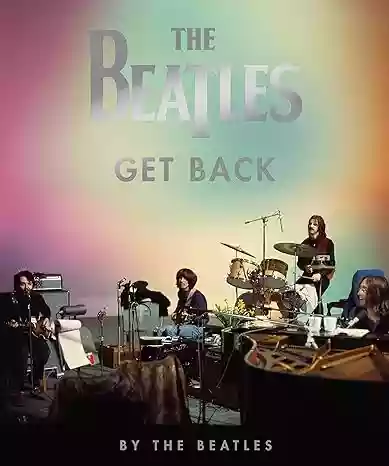
Lured by the idea of a television show that would never see the light of day, the band agreed to be filmed by young director Michael Lindsay-Hogg during the month-long sessions (initially planned for 2 weeks), first in the cold and inhospitable studios of Twickenham, then in the smaller but more comfortable Apple studios in London. The band worked on several songs that would later make their way into their last album, "Let it be" (1970), and concluded the month of rehearsals with the legendary concert on the Apple rooftop (which, in this documentary, is shown from new angles and with new details—particularly enjoyable are the moments with the two rookie policemen forced to go up on the roof to try, unsuccessfully, to turn down the volume or at least to lower it). In reality, the Beatles would return to the studio in the following months, discard all the songs from the January sessions and basically build "Abbey Road" (1969, except for two songs, "Something" and "Octopus's Garden," just sketched out here) almost from scratch; at the end of this cycle, with the band now dissolved, it would be George Martin—albeit with debatable results—who would take those songs in hand and release them, precisely, as "Let it be." But we know nothing about the post-January period; Lindsay-Hogg's filming lasted one month: that month.
Some of this footage was used the following year for the film "Let it be - Un giorno con i Beatles" (1970), but only a very small, almost insignificant part was actually included, compared to the 60 hours of video and 150 hours of audio recordings. In 2016 Peter Jackson, a filmmaker no stranger to epic undertakings, together with editor Jabez Olssen, extracted 7 hours from this: the most important ones. He initially thought of presenting everything as a single film (far too long, but editing it took 4 years!) and it should have been released in this form in 2020. But fate intervened, and that was the year of Covid, with everyone at home and cinemas closed. The Disney+ platform stepped up and offered to distribute it, splitting it into three parts, as if it were a mini-series (an excellent choice): first part 156', second part 173', third part 138'. The result is a sprawling, epic work with an astonishing cultural and artistic impact, yet never boring: it could go on for 80 hours and would still flow as naturally as a stream of water.
What we see is a band certainly frayed, divided between McCartney's leadership, Lennon's more laid-back approach, Harrison's dissatisfaction, and Starr's languid indolence, but not broken as people. The four have different, often conflicting musical ideas, but certain looks they exchange (especially McCartney and Lennon) "betray" a professional and human respect that was never truly lost. There are never any outright fights, just disagreements, and even Harrison's temporary departure from the band (he leaves the sessions for almost a week, only to return more enthusiastic than before) is never really a sign of a final split, but rather of differing opinions (and interests). McCartney pursues a more mature, yet instantly recognizable, pop sound; Lennon often follows his friend Paul, even though it's evident he's already heading toward a solo career (and Yoko Ono's presence in the studio is honestly insolent: she does nothing, flips through magazines, reads newspapers, sorts mail, but is a distraction); Harrison is already in his spiritual world and brings two Hare Krishna friends into the studio; Ringo hardly ever seems interested, yet he is flawless on every take.
The creative process for some tracks is remarkable; at other times, it is, without using euphemisms, tingling. The moment when McCartney improvises from nothing the guitar riff of "Get Back", a song that would take nearly a month to develop, is pure anthology. The vocal difficulties in "Don't let me down", the countless takes of "Let it be" (with Lennon continually missing an F chord), the painstaking patience in creating the highly difficult "I've got a feeling", the attempts at recording "The long and winding road" (which Lennon wasn't fond of and, almost in protest, barely plays the bass: years later Martin would call that performance simply "unpublishable"), the harmonies on "Dig the pony". There are also some "crunchy" off-the-record moments: a heated but ultimately harmless discussion between McCartney and Lennon, captured by microphones hidden in a flowerpot without their knowledge.
Around them is a host of top-quality technicians and musicians; besides the aforementioned George Martin, a certain Alan Parsons appears as sound engineer. Not to mention the fundamental contribution of Billy Preston, "recruited" as the group's fifth member almost without telling him, and then so much chatter and so much music. The rivalry, really just for show, with the Rolling Stones, the respect for the up-and-coming Fleetwood Mac, the good-natured teasing of Elvis Presley, the (ultimately unrealized) desire to work with Nicky Hopkins, and at one point the idea of bringing Bob Dylan into the group ("but he doesn't need it," McCartney wisely asserted). Harrison's brilliant insights (as he even tries his hand at the piano, with little success), Lennon trying to play the drums, and 110 songs performed in bits and pieces, about fifty of their own, and another sixty or so covers. It's a pleasure to hear them sing Elvis, Dylan, Eddie Cochran, Donovan, Chuck Berry and so on, or to hear Lennon sing a melody that would later become "Jealous Guy."
Of course, the rooftop concert. A note here: we all know those images, they've been on YouTube for years. Yet the recording work was far more complex: Lindsay-Hogg placed two cameras on the rooftop of a building across the street, and more down on the street, so as to capture the reaction of the crowd below. These are images that nobody had ever seen before and are perhaps even more interesting than the impromptu concert itself (in which the band plays four songs, two of which, "I've got a feeling" and "Get back", are repeated), because they are (almost) like a document on the tastes of the London population at the time (a mini sociological treatise). In order: about thirty people complain about the noise and call the police; younger people enjoy it and immediately recognize the group's voices, finding the songs fantastic (the Beatles hadn't released a single in five months, the last being the triumphant "Hey Jude"); an older lady claims she doesn't like the band, yet many men of a certain age don't dislike them (a seventy-year-old is mischievously asked, "If your daughter married one of them?" His answer: "Why not, they're rich").
Lindsay-Hogg's work was, in a way, supposed to echo Godard's more contained project with the Rolling Stones ("Sympathy for the devil", 1968; Godard who the Beatles themselves cite as a potential inspiration, along with the even more illustrious name of Stanley Kubrick), but it soon turned into something else, more modest in ambition. Jackson faithfully restores this truth, recounting the band's inner workings respectfully and with deliberate detachment (with an exceptional image quality), but there was no other way to tell a story as unique and unrepeatable, both human and artistic, as the Beatles'. At one stage, they even considered replacing the departed Harrison with Eric Clapton (of whom Harrison was very fond). In 1970, Lindsay-Hogg completely cut out the scene of Harrison leaving the group, almost censoring it: the Beatles had just broken up, and it was thought that a documentary about their troubled sessions would interest no one. In this sense, time has been the ultimate judge.
Obviously in original language with subtitles.
Loading comments slowly
Summary by Bot
This review highly praises Peter Jackson's documentary 'The Beatles: Get Back.' The film offers rare insight into The Beatles' final days together, showcasing their creative process and camaraderie. The reviewer sees it as an essential watch for music and Beatles fans. Jackson's treatment is described as immersive and respectful of the band's legacy.
Peter Jackson
Peter Jackson is a New Zealand film director, best known for directing The Lord of the Rings film trilogy, and also noted for early splatter-comedy features and later large-scale studio productions and documentary work.14 Reviews
