
 •
Rating:
•
Rating:
THE REVIEW
What's wrong if a record sells a lot? Nothing, it would seem. But you can be sure that some critic will come along and discover the obvious, deciding to label it as "commercial," as if there are records made with the specific intent not to sell, as if an artist remains one only as long as they're known only to their relatives.
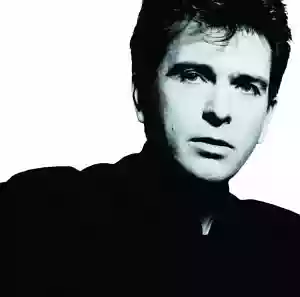
Now, if Peter Gabriel is an old fox and decides to place two catchy tracks in a splendid 1986 album called "So", with the logical consequence of selling like hotcakes, is it fair to say that all of a sudden he has transformed into a chart phenomenon and therefore compare him to the quintessential plastic stars, from Madonna to Michael Jackson? I'd say definitely not. For "Sledgehammer", one of the aforementioned "hits," I declare myself a member of the gullible club since it captivated me from the first listen. It's a perfect 60s soul miniature that surely has Otis Redding turning in his grave, but it's built and orchestrated so well that it makes you want to forgive any trace of plagiarism. In particular, the instrumental interlude with the flute "twists" is irresistible. More ordinary is the dry and nervous electro-funk "Big Time", which nevertheless still outshines the dance music of the era (which still had some human semblance back then...).
Setting aside these two flashy but somewhat misleading episodes, we delve into the true nature of "So," which is predominantly dark and desperate as is typical for the author. Compared to the excellent previous album "IV", at times a festival of tribal percussion, this is a more closed, more Western Peter Gabriel, but underneath he harbors an African fire, ready to flare up in the wild duet with Youssou 'N Dour at the end of the rhythmic yet sweet "In Your Eyes", one of the album's gems, but also in the downpour of percussion and keyboards that pins us to the ground without any defense, soaking us drop by drop under the treacherous rain of "Red Rain", a nightmare so well executed that it doesn't even make you want to escape, or in the cry of pain of "That Voice Again", supported by powerful bursts of drums and percussion, an anguished appeal that seems to originate from the entire so-called Third World. Peter Gabriel's voice, just as it can perfectly interpret these wild and hopeless lamentations typical of distant worlds, also conveys the more moderate and familiar resignation of an unemployed man, the protagonist of the fascinating "Don't Give Up", a chilling ballad, undoubtedly one of the album's peaks. To Gabriel's vehement protest, "grown strong in a proud land" where he was made to believe he "could never fail," contrasts Kate Bush's good fairy-like voice, which with all her feminine wisdom consoles the poor fellow by reminding him what truly matters ("Don't give up... because you have friends... because you have us" and so on). It's true that Kate Bush's sensual chirping could cheer up even a catatonic, but the value of the message remains, and the song, written during the height of Thatcherism, is dramatically relevant. Another abyss of sadness, and another masterpiece: "Mercy Street". Muffled percussion, a dark and murky bass like a nocturnal sea, an obsessive triangle from start to finish, but above all a melody so moving it first gives you goosebumps, and immediately after, tears. It's the story of a tormented soul: loneliness, broken dreams, faith as refuge. For very sensitive souls, as long as they are not in depression.
At the end of a record to be framed, here's the short but intense "We Do What We're Told": a timid start with some clear notes scattered, then a central progression to a sacred music choir (a taste of the future masterpiece "Passion"?) and a final faded in a burst of flutes. Creativity through the roof, plenty of finesse, impeccable sound, with Tony Levin's emphatic bass prominently featured. Give us many more "commercial" records like this one.
Loading comments slowly
Summary by Bot
This review celebrates Peter Gabriel's 1986 album 'So' as a brilliant fusion of catchy, commercial hits and deeper, darker themes. It highlights standout tracks like 'Sledgehammer' and 'In Your Eyes', and praises the emotional depth, world music influences, and masterful production. The collaboration with Kate Bush on 'Don't Give Up' is noted for its powerful message. Overall, 'So' is recognized as a timeless masterpiece that transcends its commercial success.Tracklist Lyrics Videos
Peter Gabriel
English singer-songwriter and former Genesis frontman who launched a solo career in the 1970s. Known for fusing rock, world music and electronic production; founder of Real World and co-founder of WOMAD; notable for landmark albums and film soundtracks.46 Reviews
Other reviews
By Rockardo
Peter’s face reveals a new serenity and, above all, shows an image that is finally not distorted or disguised.
'Sledgehammer' pays a strong tribute to the soul and black music Gabriel was drawn to during his adolescence.
