
 •
Rating:
•
Rating:
THE REVIEW
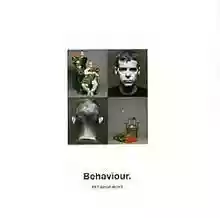
After the revelry of "Introspective" (1988), their best-selling album, Neil Tennant and Chris Lowe, more commonly known as the Pet Shop Boys, dedicated much of 1989 to producing for other artists. Liza Minelli called them for "Results," eager to keep up with the times. It's striking to hear her unique, unmistakable voice blend with the duo's synthesizers, but the experiment works. Just as the debut album of the supergroup Electronic (Bernard Sumner of New Order and Johnny Marr of the Smiths) works, where the Pets oversee, play (Chris), and sing (Neil) in "The Patience Of A Saint" and "Getting Away With It."
At the end of the year, the group set their sights on a new album. The declared goal was to create a masterpiece. Two rules: no sampling, only organic sounds. And, for production, a big name: Giorgio Moroder. The first rule would be relaxed during post-production. The second would find a very respectable compromise. Moroder would not follow the group in the studio; instead, he would introduce Neil and Chris to the producer who would give their tracks his trademark: Harold Faltermeyer. Remember "Axel F" from 1983? Well.
Faltermeyer would provide the guys with the instrumentation ("A real museum," Tennant would recall in the years to come), entirely composed of synthesizers and keyboards, used during the period when the German producer worked with Moroder.
To work in an ideal environment, the Pet Shop Boys met Faltermeyer in Berlin. "We started working around noon after sipping beer," Neil recalls. "Most of the time, we were drunk." Well. The intoxication did not spoil the inspiration, alive and present in every track. With painstaking patience, the duo would set a series of rare and beautiful pearls. Sadness is the backbone, the common denominator of "Behaviour," by Neil’s own admission. Perhaps this is why, in terms of sales, the album did not replicate the success of "Introspective."
"Behaviour" is not an easy listen, it doesn't insinuate immediate complicity. It takes time, often years (so yes, make yourselves comfortable). The structure of the tracks is sometimes complex, the lyrics imbued with historical references, stolen childhood, and rather troubled everyday life. Let's proceed in order.
The album opens with "Being Boring." The intro, which is actually the outro that the guys liked so much they re-edited it at the beginning of the track, is long and pleasant, the melody catchy and serene, the lyrics significant: they talk about friendship and capture three eras: the '20s ("In white attire, the invitation said, with a dedication"), the '70s ("I left the station with a backpack and some trepidation"), and the '90s ("All the people I kissed... some are here, others are gone"). When the track, chosen as the second single, stalled at number 24, the two were quite hurt. Chris: "How can it be that Heart went to number one and Being Boring to 24? The fans understand nothing."
The first real masterpiece is the second track, "This Must Be The Place I Waited Years To Leave." The melody had been proposed by the Pets for the 1987 film "007 - The Living Daylights," which was then won by A-Ha with the song of the same name. "That's why," Chris specified years later, "it sounds so cinematic." Johnny Marr adds to the structure with a spectacular guitar riff. The lyrics tell of Neil's childhood, the pre-adolescent period spent in boarding school. Do you know where I'll extract the phrase for my next tattoo? "I'm listening to the words I thought I'd never hear again, a litany of saints and other ordinary men. Kneeling on the parquet, whatever has gone wrong? The
Loading comments slowly
Summary by Bot
After their commercial peak with Introspective, Pet Shop Boys took a deliberate artistic turn with Behaviour, focusing on organic synth sounds and deep lyrical themes. Produced with notable collaborators like Harold Faltermeyer, the album embraces sadness, complexity, and cinematic influences. Despite modest chart success, Behaviour stands as a cherished, patient listen that reveals its depth over time.Tracklist Lyrics Videos
Pet Shop Boys
Pet Shop Boys are an English synth-pop duo formed in 1981, consisting of Neil Tennant and Chris Lowe, known for blending electronic dance-pop with irony, social observation, and meticulously crafted production.15 Reviews
Other reviews
By donjunio
"’Behavior’ is the one that comes closest to perfection on 33 rpm."
"The masterpiece of ‘Behavior’ is certainly the poignant ‘Being Boring’, one of the peaks of pop of all time."
