
 •
Rating:
•
Rating:
THE REVIEW
On Debaser, practically everything is reviewed. Yet it occasionally stands out, among 7(!!!) reviews of the latest Oasis or Depeche Mode albums, the absence of names that have written significant pages in the history of pop. I believe one of the most surprising gaps in the Debaser archive is that concerning the Pet Shop Boys.
The duo formed by Neil Tennant and Chris Lowe did not only produce clever dancey snapshots of the 80s like “West End Girls” or “Domino Dancing”, but intelligently contributed to shaping the aesthetic of that decade, and the way this would extend its influence in a post-modern sense in the years to come. This aesthetic was expressed both in the imagery evoked by the duo – of loneliness and boredom amidst the hedonistic anxiety of the yuppie era, as well as sexual emancipation in Thatcherite England – and in making appealing to the masses the insights of the various Kraftwerk, rendering them organically expansive. In this sense, consider a track like “DJ Culture” or the ironic hi-nrg cover of U2's “Where the Streets Have No Name”.
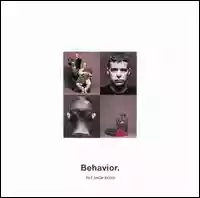
This silent revolution was carried forward by a series of amazing singles, from “Rent” to “Left to My Own Devices”, which made the Pet Shop Boys one of the band singles par excellence, like the Kinks or T-rex. Indeed, there are no indisputable masterpieces among the various albums Tennant and Lowe have created over the years, but it seems to us that “Behavior” is the one that comes closest to perfection on 33 rpm. Released in 1990, it prominently displayed all the elements of the sound that made our heroes great. Lowe's sumptuous synthesizer textures, now symphonic now hi-nrg (as per Soft Cell's lesson), the measured pathos of singer Neil Tennant, an equally intelligent and ironic Morrissey though less emphatic. The approach, however, is far more ambitious, organic and clearly attempts to finally forge an album to be recorded in the annals, as already attempted on “Actually”. In this sense, the stylistic perspectives broaden their horizons, with various piano parts supplanting keyboards, and there are even guitar parts (hosted by His Majesty Johnny Marr).
There is only the Village People-esque number “So Hard” that is dancefloor-friendly, the rest of the album slips away on unusual sound coordinates, delivering a handful of memorable episodes. Exemplary in this respect is “Jealousy”, where the dance temptations break against a sparkling sound carpet reminiscent of Bowie's “Rock 'n' Roll Suicide” period. Excellent is also the funk ride “How Can You Expect to Be Taken Seriously?”, a tasty parody of the various “humanitarian rockstars” like Bono and Sting, or the soul vein that envelops “To Face the Truth” or an “Only the Wind” whose melody – stripped of the digital layer – seems to come from the pen of the greatest known white soul man, Neil Young.
But the masterpiece of “Behavior” is certainly the poignant “Being Boring”, in our view one of the peaks of pop of all time, also thanks to a video clip that made history. It's a heartfelt elegy by Tennant for a friend who died of AIDS, as well as a bittersweet portrait of England in the singer's green years. Lowe is masterful at calibrating keyboards, guitars, and synthesizers in an almost Morricone-like mix without being magniloquent, while Tennant provides his best performance ever, whispering phrases like “But I thought in spite of dreams /You’d be sitting somewhere here with me”. There could be no better seal to the 80s, and soon thereafter the decline of the award-winning Lowe-Tennant company would begin.
Loading comments slowly
Summary by Bot
The review praises Pet Shop Boys' 1990 album 'Behavior' as a near-perfect fusion of electronic textures, clever lyrics, and emotional depth. It highlights their role in shaping 80s pop aesthetics and notes standout tracks like 'Being Boring' and 'How Can You Expect to Be Taken Seriously?'. The album is recognized for its ambitious and organic sound, blending synthesizers, piano, and guitars thoughtfully. Overall, it frames 'Behavior' as a significant milestone in the duo's discography and pop music history.Tracklist Lyrics Videos
Pet Shop Boys
Pet Shop Boys are an English synth-pop duo formed in 1981, consisting of Neil Tennant and Chris Lowe, known for blending electronic dance-pop with irony, social observation, and meticulously crafted production.15 Reviews
Other reviews
By Abraham
"Sadness is the backbone, the common denominator of 'Behaviour,' by Neil’s own admission."
"'Behaviour' is not an easy listen, it doesn’t insinuate immediate complicity. It takes time, often years."
