
 •
Rating:
•
Rating:
THE REVIEW
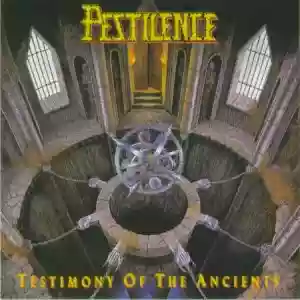
Born in the mid-80s in the Netherlands as a fairly technical thrash group from the start, primarily thanks to the two axe men Patrick Mameli and Patrick Uterwijk, Pestilence gradually transformed into a techno death act, alongside Atheist, Cynic, and the Death of the late Chuck Schuldiner. "Testimony ..." is surely their most solid, intense, and elaborate work, despite the subsequent "Spheres" being equally intricate and complex, but in this case we’re on different musical shores, which eventually led to the premature split of the band.
Released in 1991, "Testimony..." was very favorably received by the press, thanks also to a very complex structure (each song has a highly unusual and hallucinatory instrumental intro) and the massive inclusion of keyboards, giving the album a very horror-like mood, which for the time was surely the zenith of originality that death metal could express. Noteworthy is also the presence of Tony Choy from Cynic on bass and the wonderful production, which has not at all distorted the agility and dryness of the classic Pestilence sound, perfectly mixing the presence and body of all the instruments.
The album kicks off strongly with the opener "The Secrecies of Horror", with sharp and nervous thrash riffing, Obituary-style vocals, and a magnificent central opening with ghostly keyboards adding depth to it all. A great way to start.
Then one of the album’s jewels: "Twisted Truth", a song that highlights the technical soloing skills of the Mameli/Uterwijk duo over a background worthy of an AOR group, only to burst out again furiously and changing. Truly a great track.
Furious headbanging for the subsequent "Lost soul", a very elaborate, sulfurous death song, with the excellent work of Tony Choy on bass standing out and the now omnipresent keyboards making everything very horror-like.
"Land of Tears" is another bone-crushing track, with a really catchy and destructive-intense initial riff, then slowing down on the chorus which gives its name to the song, the atmosphere becomes dreamy similar to Dead Can Dance, leading to a blues solo over tears and various laments in the background. Chilling.
The album continues with the lascivious "Prophetic Revelations", a song that starts quietly, then accelerates and remains tense and nervous for almost its entire duration, except for the truly unsettling chorus with cathedral organ in the background and a finale with sampled female voices in sexual ecstasy.
"Testimony" is a really combative death-spirited song, but it finds the strength to stand out thanks to the really theatrical central mid-tempo with keyboards and samples in Gregorian chant style and yet another great solo from the Mameli/Uterwijk duo.
"Presence of the Death" is undoubtedly the most thrash-oriented track on the album, even bringing to mind some Voivod-like dissonance, with a great bass work, and then another radical style change with a dreamy interlude and the return to the main riff. As always, the work of the two axe men is excellent.
Another jewel: "Stigmatized", a song full of cascading riffs, very engaging in its ability to dose brutality and melody, with an atmosphere of inquisition and death metal tenacity.
"In Sorrow", a slow and magnificent instrumental suite with a truly depressive and sad mood, closes a truly imposing album for its originality and craftsmanship, a true swan song of the Dutch band that, in my opinion, enjoyed less fortune than their talent promised.
An album I highly recommend to everyone who was listening to something else in '91 and hasn’t yet been able to enjoy this jewel of power and emotional impact.
Loading comments slowly
Summary by Bot
Pestilence's 1991 album Testimony of the Ancients showcases a technical and intense fusion of thrash and death metal with elaborate song structures and horror-like atmospheres. Featuring standout performances by Patrick Mameli, Patrick Uterwijk, and Tony Choy, the album is praised for its originality, production quality, and emotive depth. It includes complex riffs, haunting keyboard elements, and highly dynamic compositions. The reviewer regards it as an underrated masterpiece worth discovering.Tracklist Lyrics Videos
Pestilence
Pestilence is a Dutch death metal band formed in 1986, known for evolving from thrash/death roots to progressive, jazz-fusion–tinged extremes on Spheres. Led by guitarist/vocalist Patrick Mameli, their classic run and later reunions made them a cornerstone name alongside Atheist and Cynic.10 Reviews
Other reviews
By jigoro
This album truly turned out to be a gigantic leap in quality, with more listenable and slow melodies, songs filled with ultra-melodic solos.
Prog-death, never neglecting its thrash origins, with elements of fusion, impeccably played by four masters who have been able to innovate the genre without ever forgetting where they come from.
