
 •
Rating:
•
Rating:
THE REVIEW
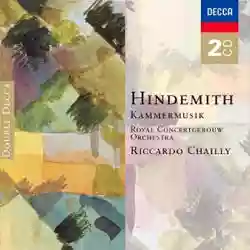
Rhythmic vivacity and instrumental verve are just two of the characteristics of the "Kammermusik" cycle by Paul Hindemith: seven compositions written in the 1920s, along with a piece for wind quintet, the "Kleine Kammermusik," which is also typically included in the cycle. The pieces are of medium length, ranging from 13 minutes for the shortest to 20 minutes for the longest, adding up to a total duration of 2 hours and 20 minutes: a demanding listen, though not particularly difficult.
Chamber music is the title of this cycle because it was written for ensembles with a limited instrumentation, where the various instrumentalists are treated as if they were soloists: so much so that the first piece, "Kammermusik n. 1," is written "for 12 solo instruments," as the description states. Divided into four short movements, the piece seems to set the rules for all the others (with some exceptions): the extreme movements are fast and swift, characterized by intricate melodic lines and a masterful richness of timbre and style; the middle ones are slower and more reflective, with lyrical and relaxed passages.
Looking at the arrangement of the other pieces in the cycle, all composed for a solo instrument plus ensemble, we find the usual instruments of the classical tradition along with some surprises: thus the "Kammermusik n. 2" is written for piano, "no. 3" for cello, "no. 4" for violin. The "Kammermusik n. 5" is written for viola, an instrument of which Hindemith himself was a celebrated soloist, while the last two pieces of the cycle spotlight the viola d'amore, a curious seven-stringed baroque instrument ("no. 6"), and the organ ("no. 7"), for which it is very entertaining to hear the transformation, executed by the composer, of a pious instrument suitable for expressing the most solemn meditations into a raucous and intrusive machine that boldly spreads its impetuous voice into the sound space.
Even the "little" Kammermusik, the piece for five wind instruments mentioned at the beginning, doesn’t deviate stylistically from the other pieces in the cycle. Thus, anyone wishing to delve into listening to these Hindemith pieces has plenty of reasons to be drawn in: compositional expertise, instrumental exuberance, richness of sound, virtuosic passages that involve most of the instruments featured prominently in the various pieces... in short, with this music, we are faced with one of the most brilliant outcomes of the first half of the 20th century.
Music far beyond the usual "classical/romantic" dichotomy: music that makes me want to throw open the window and shout at the top of my lungs: I'm starting again with Hindemith!
Loading comments slowly
Summary by Bot
Paul Hindemith's Kammermusik is a compelling set of seven chamber works from the 1920s, showcasing rhythmic vitality and instrumental brilliance. The cycle features diverse solo instruments including piano, cello, violin, viola, viola d'amore, and organ. Its energetic yet reflective style pushes beyond classical-romantic norms, delivering a rich listening experience. The reviewer praises its compositional mastery and encourages renewed appreciation for Hindemith's innovative music.Tracklist
01 Kammermusik No. 1 Op. 24 No. 1 (Für 12 Solo-Instrumente) (15:11)
02 Kleine Kammermusik, Op. 24 No. 2 (Für 5 Bläser) (13:20)
03 Kammermusik No. 2, Op. 36 No. 1 (Klavierkonzert) (18:51)
04 Kammermusik No. 3, Op. 36 No. 2 (Cellokonzert) (17:26)
05 Kammermusik No. 4, Op. 36 No. 3 (Violinkonzert) (20:10)
06 Kammermusik No. 5, Op. 36 No. 4 (Bratschenkonzert) (19:00)
07 Kammermusik No. 6, Op. 46 No. 1 (Konzert Für Viola D'Amore Und Kammerorchester) (16:04)
08 Kammermusik No. 7, Op. 46 No. 2 (Konzert Für Orgel Und Kammerorchester) (16:54)
09 Kammermusik No. 1 Op. 24 No. 1 (Für 12 Solo-Instrumente) / I Sehr Schnell Und Wild (01:06)
10 Kammermusik No. 2, Op. 36 No. 1 (Klavierkonzert) / I Sehr Lebhafte Achtel (03:21)
11 Kammermusik No. 2, Op. 36 No. 1 (Klavierkonzert) / II Sehr Langsame Achtel (08:13)
12 Kammermusik No. 2, Op. 36 No. 1 (Klavierkonzert) / III Kleines Potpourri: Sehr Lebhafte Viertel (01:26)
13 Kammermusik No. 2, Op. 36 No. 1 (Klavierkonzert) / IV Finale: Schnelle Viertel (05:39)
14 Kammermusik No. 3, Op. 36 No. 2 (Cellokonzert) / I Majestätisch Und Stark. Mäßig Schnelle Achtel (02:16)
15 Kammermusik No. 3, Op. 36 No. 2 (Cellokonzert) / II Lebhaft Und Lustig (04:20)
16 Kammermusik No. 3, Op. 36 No. 2 (Cellokonzert) / III Sehr Ruhige Und Gemessen Schreitende Viertel (07:30)
17 Kammermusik No. 3, Op. 36 No. 2 (Cellokonzert) / IV Mäßig Bewegte Halbe. Munter, Aber Immer Gemächlich (03:15)
18 Kammermusik No. 1 Op. 24 No. 1 (Für 12 Solo-Instrumente) / II Mäßig Schnell Halbe (03:26)
19 Kammermusik No. 1 Op. 24 No. 1 (Für 12 Solo-Instrumente) / III Quartett: Sehr Langsam Und Mit Ausdruck (04:24)
20 Kammermusik No. 1 Op. 24 No. 1 (Für 12 Solo-Instrumente) / IV Finale 1921: Lebhaft (06:08)
21 Kleine Kammermusik, Op. 24 No. 2 (Für 5 Bläser) / I Lustig. Mäßig Schnell Viertel (02:53)
22 Kleine Kammermusik, Op. 24 No. 2 (Für 5 Bläser) / II Walzer. Durchweg Sehr Leise (01:53)
23 Kleine Kammermusik, Op. 24 No. 2 (Für 5 Bläser) / III Ruhig Und Einfach (04:52)
24 Kleine Kammermusik, Op. 24 No. 2 (Für 5 Bläser) / IV Schelle Viertel (00:50)
25 Kleine Kammermusik, Op. 24 No. 2 (Für 5 Bläser) / V Sehr Lebhaft (02:43)
26 Kammermusik No. 4, Op. 36 No. 3 (Violinkonzert) / I Signal: Breite, Majestätische Halbe (01:54)
27 Kammermusik No. 6, Op. 46 No. 1 (Konzert Für Viola D'Amore Und Kammerorchester) / Mäßig Schnell, Majestätisch - (03:37)
28 Kammermusik No. 6, Op. 46 No. 1 (Konzert Für Viola D'Amore Und Kammerorchester) / Langsam - (06:46)
29 Kammermusik No. 6, Op. 46 No. 1 (Konzert Für Viola D'Amore Und Kammerorchester) / Variationen - (04:18)
30 Kammermusik No. 6, Op. 46 No. 1 (Konzert Für Viola D'Amore Und Kammerorchester) / Lebhaft, Wie Früher (01:23)
31 Kammermusik No. 7, Op. 46 No. 2 (Konzert Für Orgel Und Kammerorchester) / I Nicht Zu Schnell (03:24)
32 Kammermusik No. 7, Op. 46 No. 2 (Konzert Für Orgel Und Kammerorchester) / II Sehr Langsam Und Ganz Ruhig (06:53)
33 Kammermusik No. 7, Op. 46 No. 2 (Konzert Für Orgel Und Kammerorchester) / [Achtel Bis 184] (06:31)
34 Kammermusik No. 4, Op. 36 No. 3 (Violinkonzert) / II Sehr Lebhaft (05:29)
35 Kammermusik No. 4, Op. 36 No. 3 (Violinkonzert) / III Nachtstück: Mäßig Schnelle Achtel (07:17)
36 Kammermusik No. 4, Op. 36 No. 3 (Violinkonzert) / IV Lebhafte Viertel - (03:13)
37 Kammermusik No. 4, Op. 36 No. 3 (Violinkonzert) / V So Schnell Wie Möglich (02:10)
38 Kammermusik No. 5, Op. 36 No. 4 (Bratschenkonzert) / I Schnelle Halbe (03:59)
39 Kammermusik No. 5, Op. 36 No. 4 (Bratschenkonzert) / II Langsam (08:07)
40 Kammermusik No. 5, Op. 36 No. 4 (Bratschenkonzert) / III Mäßig Schnell (03:27)
41 Kammermusik No. 5, Op. 36 No. 4 (Bratschenkonzert) / IV Variante Eines Militärmarsches (03:19)
Paul Hindemith
Paul Hindemith (1895–1963) was a German composer, violist, conductor, and influential teacher. A leading 20th‑century figure, he championed a rigorous, contrapuntal, tonal language. Targeted by the Nazi regime, he left Germany in 1938 and later taught in the United States. Cornerstone works include Ludus Tonalis, the Kammermusik cycle, Mathis der Maler, Das Marienleben, and Symphonic Metamorphosis.03 Reviews
