
 •
Rating:
•
Rating:
THE REVIEW
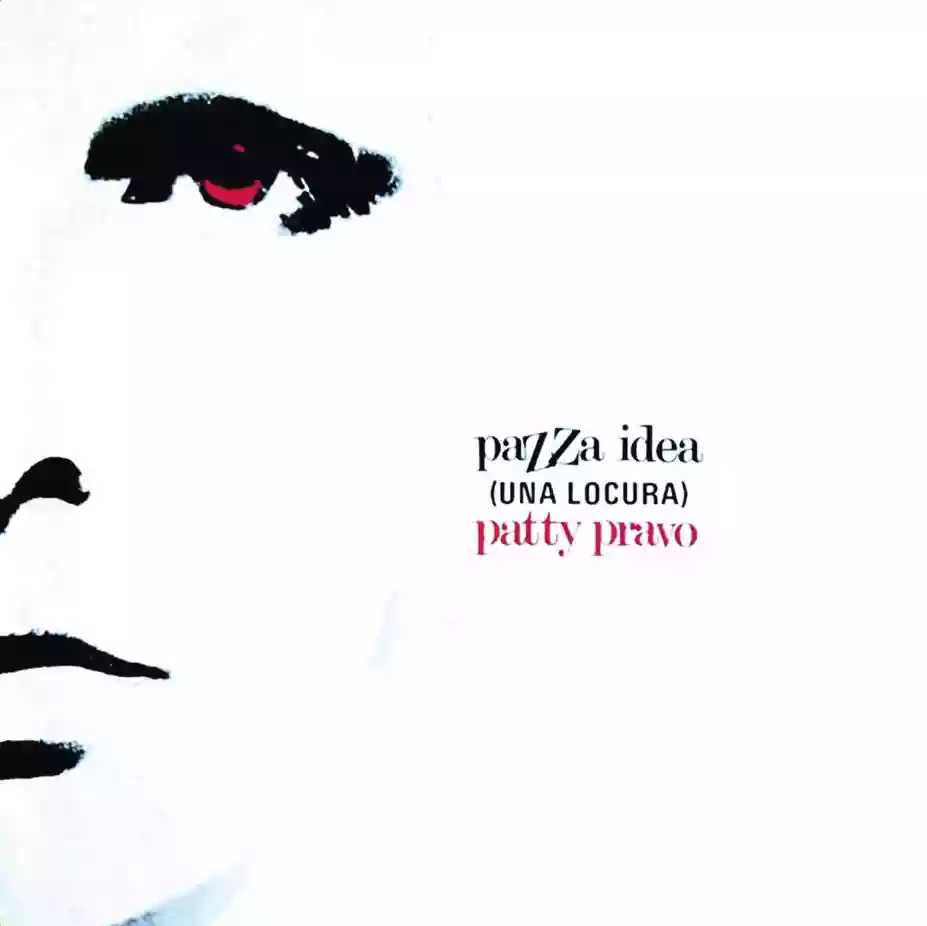
No matter how hard I tried, I couldn’t find the black-and-white video of the TV broadcast where, in the autumn of 1973, Patty Pravo sang “Pazza Idea,” the summer hit of that year. Yet, in my mind, the memory—also in black and white—is vivid: it captures one of those family moments that, for some reason, never leave you, even after more than fifty years. We’re sitting together at the dinner table, the TV tuned to Rai1; my father playfully covers his face with his napkin to avoid watching the scandalous Pravo, who, on the other hand, my mother adored. But what can you expect—he was born in 1930, in a small inland town in Sicily, and simply couldn’t tolerate a woman who went around declaring, “Gli uomini me li fumo come sigarette.”
Restless, sensual, endowed with hypnotic charm, the “Ragazza del Piper” is above all an avid devourer of passion. A daughter of Venice’s upper middle class, at the end of the ‘60s she arrived in Rome via London, where she lived, mingling with hippie and Pop Art artists, as well as avant-garde musicians. Today, she is 77 years old but remains, in the collective imagination, the Piper girl—and with this album, especially with the titletrack, she eclipsed all of Italian pop music in 1973. The 1970s were years of revolution and great change for Italian music, which put aside “bel canto” and pushed the “shouters” to innovate; now it was the era of the Folkstudio singer-songwriters, a hotbed of talents produced by RCA—the label that had launched Pravo’s career seven years prior and where she returned, after her Philips period, finding a new atmosphere. Patty had already upended every convention about female singers in Italy with her powerful, erotic, provocative, and overwhelming voice as well as her stage presence; the burgeoning Italian singer-songwriter movement could only bow to her. So a very young Cocciante composed the music for “Poesia” (lyrics by Marco Luberti and Amerigo Paolo Cassella), another excellent track on the album—which boasts several classy numbers, such as the sophisticated piece “Morire tra le viole,” about a girl’s first cravings for love, or the sweet “Limpidi pensieri” by Mauro Lusini (the author of “C’era un ragazzo che come me amava i Beatles e i Rolling Stones”).
Of course, nothing compares to “Pazza idea,” the song that has become a great melodic classic, with lyrics that explore transgressive fantasies and which contributed to defining the emancipated, non-conformist and, at times, heretical image of Patty Pravo. An emotionally overwhelming ballad, with irresistible melodic sex appeal and a poignant and sinful aura. She tries to forget the man of her life by sleeping with another, only to realize it’s pointless, because she’s still thinking of him (“…pazza idea di far l’amore con lui/pensando di stare ancora insieme a te/folle, folle, folle idea di averti qui/mentre chiudo gli occhi sono tua…”). Legend has it that, rummaging through demo tapes, Lilli Greco found a track recorded in English titled “Follow, Follow Me.” It was a bolt of lightning. Greco immediately contacted Dossena, Pravo’s musical factotum, and the two had no doubt: that track was a bomb. All they had to do was translate “follow” as “folle”—“Folle Idea,” maybe. Though, in the end, they went for “Pazza Idea” as the title. The single was a sensational commercial success, staying at the top of the Italian charts for nine weeks, selling over a million copies, and also receiving broad acclaim abroad. In fact, versions were released in English, Spanish, French, German, Dutch, and—rumor has it, though I’ve found no evidence—Japanese!
It’s only right, to conclude, to say a word about “I giardini di Kensington,” a cover known for completely upsetting Lou Reed’s “Walk on the Wild Side.” While it’s undeniable that Patty Pravo was in tune with the world and imagery of artists like Lou Reed and David Bowie (during those same years, the Venetian musician recorded two more Italian versions of Lou Reed’s songs, still unreleased: “Alaska-Sara non piange mai,” a translation of “Caroline Says II,” and “Un giorno perfetto,” obviously “Perfect Day,” both with lyrics by Vandelli), already from the title, “I Giardini Di Kensington,” you understand it has nothing to do with Lou’s masterpiece. For the Italian version, the lyrics by Maurizio Monti and Paolo Dossena were inspired by literature: “Peter Pan Nei Giardini di Kensington,” the novel by Scottish author J.M. Barrie. Published in 1906, it tells about little Peter, half-human, half-bird, who flies to the Kensington Gardens where he lives out a series of fantastic adventures—light years away from the sexual ambiguity of the five protagonists in the original song. It shows that Patty wasn’t really as transgressive as she claimed to be; in the end, her extremism was relative to a prudish country where the divorce law was about to be threatened by a referendum. If I could go back, I’d say: “don’t worry, dad, go ahead and watch—because in Italy (unfortunately…) we don’t have damned Lou, but the mischievous Patty.”
Loading comments slowly
Summary by Bot
This review explores Patty Pravo's album 'Pazza idea,' highlighting its standout qualities and emotional depth. The reviewer gives it a high rating, emphasizing Pravo's distinctive vocal style and the album's lasting appeal. Suitable for both long-time fans and new listeners, the review positions 'Pazza idea' as a significant work in Italian pop.Tracklist Videos
Patty Pravo
Patty Pravo (born Nicoletta Strambelli in Venice) is an Italian singer who rose to fame in the 1960s and became known as the “Ragazza del Piper.” Reviews highlight her provocative public image, a distinctive low voice, major hits such as “Pazza idea” (1973) and “Pensiero stupendo” (1978), and later phases that include electronic and rock-leaning projects as well as Sanremo appearances.11 Reviews
