
 •
Rating:
•
Rating:
THE REVIEW
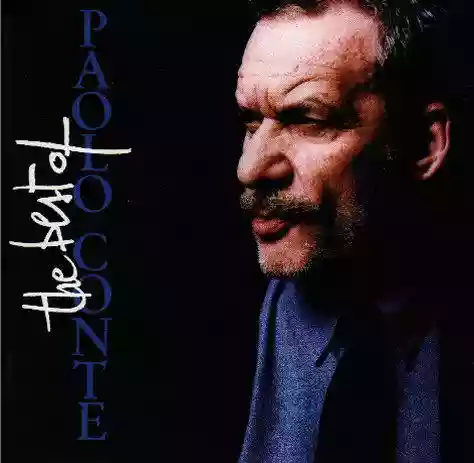
Many might turn up their noses a bit seeing this review: it is, after all, a "the best of" and, above all, an album already reviewed on this site. In reality, that review was rather brief and sparse and therefore did not do justice to either the artist or the album.
The album, it must be said immediately, is not just any "greatest hits": many tracks have been rearranged and reinterpreted by Conte for the occasion, achieving a result (in my opinion) better than the original versions.
Paolo Conte, for the few who may not know him, is one of the most important and original singer-songwriters in Italian light music of the last 35 years. His career actually began in the early Sixties as a songwriter for other artists: "Siamo la coppia più bella del mondo" and "Azzurro" for Adriano Celentano, "Genova per noi" for Bruno Lauzi, "Messico e Nuvole" for Enzo Jannacci, "Insieme a te non ci sto più" for Caterina Caselli, just to name a few. It wasn't until 1974 that he released his first album, reaching full maturity (compositional and, above all, vocal) starting in 1981 with the extraordinary "Paris Milonga". Paolo Conte is therefore an extraordinary "craftsman" of music, who has managed, with great passion and dedication, to explore new horizons and coin a new expressive and musical language, combining jazz and swing with classical music and South American rhythms in a completely personal way, the allure of exotic countries with provincial life. His songs are mainly music: they are born and develop, in fact, from a motif, a musical theme. Perhaps because of this (or maybe due to this), Paolo Conte has found (and finds) more success abroad (especially in France) rather than in Italy.
His lyrics, cultured and refined, manage to be profound but, at the same time, ironic. New for the Italian song, they almost never speak of love (or, when they do, they do so in a completely different and unconventional way). They evoke more than describe or narrate. The poet Conte has invented new expressions that have rightfully entered our collective imagination ("abbaia la campagna", "lo sguardo vitreo dei bicchieri di boemia", "questo buio sa di fieno e di lontano", just to mention a few). Another typically Contian characteristic is the free use, within the lyrics, of syllables and onomatopoeic sounds, which do not serve as mere accompaniment to the music but rather replace words, verses, and even stanzas, coining a new, highly communicative language that shines with its own light (notably, the famous "Chips chips chips/ Du du du du du/ Ci bum ci bum bum..." from "Via con Me" and "Za za ra za/ Za za ra za/ Za za ra za ra za za za za!" from "Bartali")
His vocal interpretation, minimal and baritone, is certainly not refined (after all, he himself hesitated ten years before debuting as a performer of his own songs) but is absolutely inimitable. It is indeed unimaginable to hear a song by Paolo Conte sung by another artist, because it would certainly sound like a different song, as demonstrated, for example, by the track "Azzurro". Conte's voice does not shout, it whispers. It doesn't sing, it accompanies.
"The best of Paolo Conte" was released in 1996 in Italy and two years later in the USA. The album contains twenty extraordinary songs. Starting with the aforementioned "Azzurro", a true anthem of Italian identity, brought to success by Celentano back in 1968. Conte's version is very different from the "original": faster, more rhythmic, more "stormy".
From the early albums "Paolo Conte" of 1975 and "Un gelato al limon" of 1978, "Genova per noi", "Gelato al limon" and the famous "Bartali" are included. These are new versions, undoubtedly more convincing than the originals, thanks to new arrangements and especially, Conte's new interpretation (with a lower tone). "Genova per noi" describes how Genoa and the sea are seen by country people. It almost becomes an anti-epic anthem in its beautiful closure: "lasciaci tornare ai nostri temporali/Genova ha i giorni tutti uguali/In an immobile campagna/con la pioggia che ci bagna/e i gamberoni rossi sono un sogno/e il sole un lampo giallo al parabrise". "Bartali" is another one of Conte's most well-known compositions, perhaps the best in my opinion. The legendary and touching figure of Bartali remains as sung by the Piedmontese artist (Piedmontese like that certain Coppi...): "quel naso triste come una salita/ quegli occhi allegri da italiano in gita.". "Un gelato al limon" is instead a declaration of love to his beloved ("donna che stai entrando nella mia vita/con una valigia di perplessità"), a very fine musical composition that also boasts a remarkable sax solo.
From Conte's first masterpiece album, "Paris Milonga" from 1981, "Via con me", "Alle prese con una verde Milonga" and "Boogie" are drawn. "Via con me" is undoubtedly Conte's most famous composition (soundtrack of the film "French Kiss" and the television show "Scherzi a Parte") and most loved, often closing his concerts. Unforgettable is the verse "Entra e fatti un bagno caldo/ c'è un accappatoio azzurro/ Fuori piove, è un mondo freddo", irresistible is the chorus sung in English.
From the subsequent "Appunti di Viaggio " of 1982, the beautiful "Fuga all'inglese" and "Hemingway", compositions that boast two of the best musical themes in Conte's production are reported. The first is a cheerful and ironic invitation to a love escape to his girl, featuring some of Conte's most beautiful nonsensical images ("che tanto il tempo passa/anche sotto ai sofà/Sì che il tempo passa sotto ai sofà/nemico numero uno/ degli aspirapolvere di tutta città"). The second is a delicate and intense homage to the American writer, with a truly moving musical finale.
From his third masterpiece, "Paolo Conte" from 1984, the restless swing "Come Di", the delicate and nocturnal "Sotto le stelle del jazz", the beloved "Sparring Partners" and finally "Gli impermeabili", a song made famous by an irresistible motif (and by a famous commercial) are taken.
The album is completed by "Max" from "Acquaplano", "Happy Feet", "Colleghi trascurati", "Dragon" and "Ho ballato di tutto" from "Canzoni d'amore scritte a macchina", "Gong oh" from "Novecento", "Elisir" and "Quadrille" from "Una faccia in prestito", perhaps lesser (that is less well-known) but not negligible tracks.
In conclusion, it is an anthology of Conte's production up to 1996, boasting some excellent reinterpretations (the aforementioned "Genova per noi", "Bartali", "Via con me" and "Azzurro" above all) and for this reason it cannot be defined as a mere commercial operation. It is certainly an album that every Paolo Conte enthusiast should have (indeed, surely has), but it also represents an excellent calling card for those who (still) do not know him.
I don’t feel like giving it the highest rating only due to the absence of some absolutely essential tracks from the discography of the Asti artist: from "La topolino amaranto" to "La fisarmonica di Stradella", from "Madeleine" to "Parigi", from "Diavolo Rosso" to "Aquaplano", up to the most recent compositions.
Loading comments slowly
Summary by Bot
This review highlights Paolo Conte's "The Best Of" as more than a typical greatest hits album. Many tracks are reinterpreted and rearranged, showcasing his unique style blending jazz, swing, and evocative lyrics. Conte’s distinctive voice and poetic lyricism shine through, making this album a must-have for fans and newcomers alike. Despite missing some essential tracks, it remains an excellent introduction to his work.Tracklist Lyrics Videos
Paolo Conte
Paolo Conte (born January 6, 1937) is an Italian singer-songwriter and pianist from Asti, known for jazz- and chanson-inflected songs, cinematic lyrics and a smoky baritone. He began his career as a songwriter in the 1960s and released his first solo albums in the 1970s; his best-known records include Paris Milonga and Aguaplano.44 Reviews
Other reviews
By Devon
Songs that are more like poems due to the refinement and mystery that the lyrics evoke.
I honestly would never have believed that a lawyer could be so poetic.
