 •
Rating:
•
Rating:
THE REVIEW
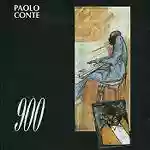
There is a slice of the 20th century that "rightfully" belongs to the art of Paolo Conte, extending from the beginning of the century to a few years after the now-legendary '46, immortalized in "Topolino amaranto". An undefined and magical era, "glimpsed in the white flash bursting from the magnesium flare...", which no one like this great nostalgic poet can bring to life in both verse and music.
Be careful with the word "nostalgic": in times of creeping revisionism, it's always good to clarify. The Ventennio lies squarely in the middle of this period, but in the clear black-and-white musical photographs of "900" we will find no trace of the "magnificent and progressive destiny of the Empire", nor the Skull Head, nor his hierarchs. Instead, there is the naive industriousness of women sewing dusters with old Singers, the amazement of boys who, perched on cherry trees, watch a glittering airplane—a rarity at the time—with wonder.There's the vitality and pride of a nation content with little, with its nascent technology exalted by futurism, the "big excited engines" which, seen through contemporary eyes, evoke a bit of tenderness. There is also boundless confidence in the future, which is yet to present a hefty bill, but for now, no one thinks of it.
It's not easy to convey all of this in music, but Paolo Conte manages to masterfully, using his preferred language, jazz. Yes, precisely that music banned by the regime for being "American" and, worse still, "black". As a means of representing the mood of those times, jazz proves superior even to the splendid images from the films of the Istituto Luce, and perhaps even better than the legendary covers of the "Domenica del Corriere". And where jazz doesn't reach, the lyrics do: it's no coincidence that the densest text of recollections is that of "Novecento", a kind of little waltz that wouldn't be out of place played by a barrel organ: turn the crank and scenes from times past unfold.
Even "Pesce veloce del Baltico" is a special episode: here the task of taking us to a sad and shabby hotel for traveling salesmen is entrusted to the intimate dialogue between Paolo Conte's increasingly hoarse voice and the notes of his piano. The obsessive "da-dam, da-dam, da-dam..." seems to accompany the rain that falls and falls endlessly...
But for the rest, it's jazz that dominates, in its various forms: "Gong-oh" evokes "the ghost of Chick Webb", which doesn't need to be asked twice and promptly appears in this delightful reconstruction of a '30s swing.
Even "Brillantina bengalese" takes us back to those times, but in this case with Paolo Conte in the role of a virtuosic and ironic Fats Waller.
Slower and more elaborate rhythms, always of jazz origin, sometimes fused with others of South American origin, are found in "Una di queste notti", "Il treno va" (beautiful vibraphone), "La donna della tua vita", "Schiava del Politeama".
More reflective moments, of great sweetness, are "I giardini pensili hanno fatto il loro tempo", where the title itself is as quintessentially Conte as it can be, and "Per quel che vale", a bitter grumble, expressed almost reluctantly, in sobs, about the (apparent) futility of the artist's life. In these latter tracks, it's the brilliant and decisive sound of Paolo Conte's piano that takes center stage.
More jazz rhythms, but this time in slow motion, in "Chiamami adesso", while "Inno in re bemolle" has a majestic pace, but not enough to overshadow the refined plot of a bolero rhythm. There's little to add: it's an album of absolute pleasure, that touches perfection, and at the same time is Paolo Conte's most complete declaration of love for his ideal era.
Loading comments slowly
Summary by Bot
Paolo Conte's album '900' masterfully evokes early 20th-century Italy through jazz and poetic lyrics. The review praises its nostalgic but nuanced depiction of the era, highlighting Conte’s jazz versatility and storytelling. Tracks blend swing, South American rhythms, and reflective melodies, revealing a complex love for the period. It is celebrated as a near-perfect album and a significant artistic statement.Tracklist Lyrics Videos
Paolo Conte
Paolo Conte (born January 6, 1937) is an Italian singer-songwriter and pianist from Asti, known for jazz- and chanson-inflected songs, cinematic lyrics and a smoky baritone. He began his career as a songwriter in the 1960s and released his first solo albums in the 1970s; his best-known records include Paris Milonga and Aguaplano.44 Reviews
