
 •
Rating:
•
Rating: THE REVIEW
The sky is fascinating. I could stand for hours looking up at the stars without the slightest idea of what I'm actually observing or why I'm doing it. Getting lost tracing imaginary constellations, romantic for those embracing their lover in the intimacy and darkness of the night, intriguing for those hoping that humanity's solitude in the universe will eventually end, magical for those like myself who find themselves daydreaming, staring at those luminous bodies that, twinkling due to the atmosphere's distortion effects, seem to smile at us, winking, as if to mock our inability to reach them.
One of the most well-known star complexes, due to its extensive visibility from Earth, is certainly Orion, which, thanks to its famous belt, has always captivated the collective imagination of many peoples. These cultures often attributed a mystical meaning to the straight-line disposition of its three stars, starting from the Chinese tradition of divinizing stars of prosperity, good fortune, and longevity, moving on to recent speculations about its alignment with the pyramids of Giza, and finally, yes, even to prog.
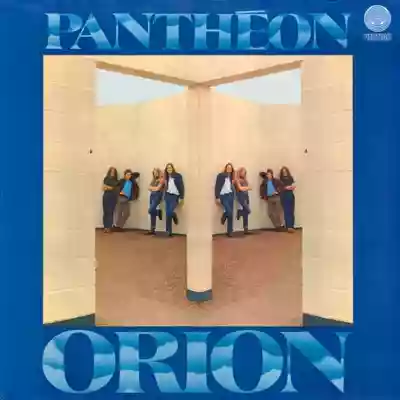
In 1972, in Holland, a year after winning the Rekreade Festival held annually in The Hague, the then-young Albert Veldkamp (bassist and guitarist), Ruud Wouterson (keyboardist), Hans Boer (wind player), and Rob Verhoeven (drummer) recorded, under the name Panthéon, their first and only LP, aptly naming it "Orion."
The work in question boasts a particular liveliness, which, combined with certain jazz stylistic traits, quickly reveals its Canterbury origins, easily recognizable from the opening "Daybreak", where the flute and guitar joyfully exchange an imaginary baton, constantly pursued by the keyboard and occasional vocal appearances with a vaguely liturgical flavor, not very attuned to the atmosphere produced by the other instruments, which come face to face again during the meditative tones of "Anais", where the flute is tasked with staying in the background.
The longer pieces are also the best, and if the concluding suite "Orion", despite the commendable work of the sax, perhaps suffers from excessive prolixity and frequent rhythmic changes somewhat ending in themselves, "Apocalyps" (separated from the title track by the brief and quite avoidable interlude of "The Madman"), illuminated by a remarkable performance of the rhythmic and wind sections and with slightly less annoying and out-of-place vocals, not to mention a splendid piano solo at the end, stands out as the most successful episode of an album where, at times, one senses a slight, though noticeable, lack of ideas.
Like the hero who gives his name to the constellation the album is titled after, the Panthéon, after enduring for two years following its release, eclipsed permanently, thankfully not in the same way as the mythical hunter, who, according to one version of the legend, for rejecting Artemis' advances, was killed, along with his faithful dog Sirius, by a scorpion, sent for this vile purpose by the scorned goddess of the hunt. Zeus, greatly angered by the event, reserved a place in the northern hemisphere for Orion and his dog, forever safe from the constellation of the Scorpion, destined to eternally chase the two friends, who continue their hunts to this day in the infinite depths of space.
Loading comments slowly
Summary by Bot
Panthéon's 1972 album Orion stands out as a lively Canterbury-influenced jazz-rock work with strong flute and guitar interplay. While some vocals feel mismatched, the longer tracks shine, especially the vibrant "Apocalyps" featuring excellent rhythm and piano. The review connects the music to the mystical allure of the Orion constellation and reflects on the band's brief but notable existence.
Panthéon
Dutch band Panthéon recorded a single LP, Orion, in 1972. Line-up named in the review: Albert Veldkamp (bass, guitar), Ruud Wouterson (keyboards), Hans Boer (winds), Rob Verhoeven (drums). According to the review they won the Rekreade Festival in The Hague a year earlier and the group dissolved about two years after Orion's release.01 Reviews
