
 •
Versione 1
Rating:
•
Versione 1
Rating:
THE REVIEW
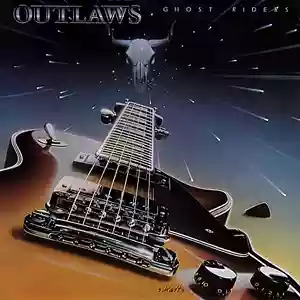
The sunburst shaded Gibson Les Paul Standard (the very instrument usually flaunted by one of their guitarists, specifically Freddie Salem) shines from the cover in all its alluring forms and polishes, placed as it is in a somewhat naive and flashy astral space while it prepares for an unlikely galactic rendez vous with the skull of a bighorn, which has become a symbol of this Florida formation since their debut album and destined to make its appearance on many of their covers.
This is the sixth studio album from the band (1980) and the feelings revert to not being very good in the sense that, as in the fourth album “Playin’ to Win,” the creativity tap appears quite rusty, with the work consisting largely of calligraphic southern rock compositions, correct and gritty but faded in terms of melodies, harmonic progressions, arrangements, and guitar ideas.
But the Outlaws, cunning, manage to patch up the situation by sneaking a couple of impactful covers into the lineup. The first is a super classic of post-war American country & western, that “Riders in the Sky” real standard known more or less to everyone thanks to its iconic “Yippie I oooh, yippie I ayeeee…” in the chorus. This version by the Outlaws traces the original style with that galloping rhythm that's so much cowboys and gunshots, only to extend into a confused final jam session at accelerated pace with the three lead guitars taking turns, without much construct, at the forefront.
The second cover follows the exact same strategy, titled “I Can’t Stop Loving You” and is a famous hit from the fifties, a slow romantic ballad somehow in everyone's ears.
Thanks to these two strokes of savvy flattery, the album moves fairly well on the charts, much better than the previous “Playin’ to Win” and "In the Eye of the Storm," so much so that the Outlaws start to breathe again and develop their career.
The rest of the collection, however, made up of six other tracks composed and respectively sung, two by each of the three guitarists in the lineup, isn’t much to speak of. As usual, the richest melodic ideas come from the mustached Billy Jones, with a tenor and clean voice and a rounded and harmonic guitar style. The more bristly and aggressive Hughie Thomasson, on the other hand, finds a way to recycle yet again the blessed E minor harmonic progression of “Green Grass & High Tides,” this time in a piece titled “Angels Hide.” The two contributions from the third axeman, Freddie Salem, as usual, are the “heaviest,” bordering on raw hard rock. Little that can stay in your head for long, except for the chorus of “Devil’s Road” but only because it is partially modeled on his previous song, “Fallin’ Rain,” which was much more successful and a gem of the previous album already mentioned.
Outlaws on the mediocre side at the dawn of the eighties then, in reference to the excellent, unmissable first period consisting of the first three studio albums and the compelling double live album. Three stars for this album, with affection.
Loading comments slowly
Summary by Bot
Outlaws' sixth studio album 'Ghost Riders' reflects a period of creative rustiness, with mostly average southern rock tracks. The album is notably helped by two impactful covers that revive their chart success. Individual contributions vary, with Billy Jones providing melodic richness while other songs fall flat. Despite its mediocre quality compared to the band's earlier works, 'Ghost Riders' helped the band regain momentum.Tracklist
Outlaws
Outlaws are a southern rock band from Tampa, Florida, known for a three-guitar lineup and rich vocal harmonies. Reviews highlight guitarist Hughie Thomasson as a central figure and praise the band’s 1970s output—especially extended live performances and the epic “Green Grass & High Tides”—while describing later decades as more uneven but still active.11 Reviews
