 •
Rating:
•
Rating:
THE REVIEW
For Stone, America is a violent, hedonistic, wild country, America is a snake traveling along Route 66, America is the homeland of cops who appear more ferocious and psychotic than serial killers (cops well represented by the crazy cop expert in catching psychopathic Jack Scagnetti), America but a bit all of the West is the homeland of disgusting vulture journalists well embodied by the figure of Wayne Gayle, journalism today is this and the media today are these "it’s good to be with you Wayne Gayle, you do good for people".
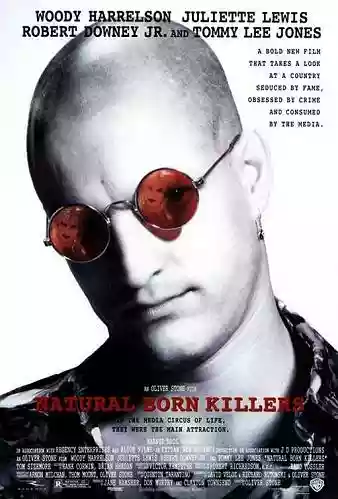
The film is also famous for its hyper-frenetic editing MTV style of the '90s, the era of ecstasy and jungle frequencies at 320 bpm, who instead appears completely normal in his anti-hero nature is precisely the figure of the serial killer, elevated to the only true philosopher and especially pure man in a world covered by filthy scum, one of the few cult films of the '90s, ones that remain imprinted in the years to come because they have painted the present and future reality, in fact, you cannot say that this film did not somehow anticipate the media reality-lies we live today, the film was then shot in '94, and things in '94 did not stink as they do today. In the famous hyper-frenetic editing of the film, Stone uses all available media: video, blue-screen, b/w, cartoons in a triumph of visual effects doubled by a pounding soundtrack of 75 different tracks, exceptionally achieving a mix of TV serial, music video, horror, and road movie.
The film moves at the speed of sound, and it does not take itself too seriously, I even find it entertaining, in Stone’s manner, who believe me, must have his flaws too, like a certain excess of rhetoric in telling his stories, Stone is not Tarantino precisely because he's too anchored to social implications and national problems, while Tarantino couldn't care less about the dramatic state fart.
Among the iconic moments of the film, how can we forget the appalling interview in the prison of Wayne Gayle with Mickey Nox, a scene that alone is worth the movie, like when Gayle during a commercial break asks Mickey if he wants to powder his face, Wayne Gayle is the career man of 2000, a ruthless vulture, a Fabrizio Corona before his time, who comes with the audience ratings, Stone is a moralist okay, but who knows if this "natural born killers" would have been better than it already is in Tarantino’s hands, surely some characters might have taken on different tones, maybe characters like Wayne Gayle or Jack Scagnetti would not exist, or would have taken on other characteristics in Tarantino's hands, even though they were eventually sketched by Tarantino himself during the script phase, only to later disown everything, in fact, the original script of the film was written by Tarantino, but radically modified by Oliver Stone to the point that Tarantino decided to distance himself from it.
"here is Wayne Gayle from the maximum security prison… a massacre is happening, but don't worry viewers, we'll show you everything" thinking of Mentana, or Fede, or Bruno Vespa and then let's shoot ourselves this film at maximum volume, the effect is guaranteed.
America needs an enemy. And an enemy is never missing if obsessively sought and consumed in daily news.
Loading comments slowly
Summary by Bot
Oliver Stone's 'Natural Born Killers' presents a violent and chaotic vision of America through innovative, hyper-frenetic editing and sharp social critique. The film tackles media sensationalism and America's dark underbelly with memorable characters like Wayne Gayle and Jack Scagnetti. Despite some excesses, it remains an influential cult film that anticipated modern media realities. Its mix of styles creates a unique viewing experience that blends horror, road movie, and music video elements.
Oliver Stone
Oliver Stone is an American film director and screenwriter known for politically charged cinema and controversial, debate-fueling takes on U.S. history, institutions, media, war, and finance.14 Reviews
