
 •
Rating:
•
Rating:
THE REVIEW
The first two Nucleus albums, "Elastic Rock" and "We'll Talk About It Later," maintained a fixed lineup, which was repeated in the third one, "Solar Plexus," with the difference that new musicians were added to the original formation. After the disbandment of the original Nucleus, mainly due to some members progressively joining Soft Machine, Ian Carr decided to conceive Nucleus as a interchangeable, vibrant, and pulsating ensemble of musicians. From this conception came the album "Belladonna," interesting but overshadowed by many uncertain moments, too restrained compared to the potentials of the exceptional musicians involved.
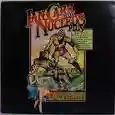
With this "Labyrinth" dated 1973, Ian Carr's art is reborn in all its splendor, in all its main characteristics, which are the extreme refinement of the arrangements, the particular expressive power, and the grandeur of the choral instrumental parts, and a cutting-edge jazz that nevertheless doesn't forget the traditionalist lesson of swing, of the rich big band sound.
The album provides no indication about the recording conditions, but we can assume it is a live performance: the particular clarity of the sound is striking, while the jolts, spasms, surges, sweetness, pulsating and omnipresent joy of the sound flow induce the listener to a feeling of elation.
Ian Carr on trumpet has now left behind the last residues of Davis-like imitation, and his often sharp and fragmented textures form the guiding pivot for an exceptional array of instrumentalists: from bassist Roy Babbington (Soft Machine), to keyboardist Dave McRae (Matching Mole), to saxophonist Brian Smith (the only surviving original Nucleus member), to trumpeter Kenny Wheeler, to pianist Gordon Beck, to singer Norma Winstone and others. A substantial part of the cream of new English jazz assembled for an exceptional record: Labyrinth is a long suite inspired by the mythology of the Minotaur of ancient Greece, as demonstrated by the evocative titles of the six movements that comprise it: Origins, Bull-Dance, Ariane, Arena, Exultation, and Naxos.
With this astonishing album, Ian Carr truly demonstrates the authenticity and revolutionary nature of his way of conceiving Nucleus: an extremely variable ensemble of musicians revolving around his figure, a constantly mutating formation that excellently respects and represents the extreme fluidity that characterizes the entire new "jazz" environment in England.
Loading comments slowly
Summary by Bot
Labyrinth (1973) by Ian Carr with Nucleus marks a triumphant return showcasing refined arrangements, expressive power, and a vibrant, evolving jazz ensemble. Featuring notable British jazz musicians, the album blends avant-garde innovation with traditional swing and big band richness. Its six-part suite draws inspiration from Greek mythology, highlighting Carr’s vision of a constantly shifting, exceptional jazz collective.Tracklist
Nucleus & Ian Carr
Nucleus was a British progressive jazz-rock ensemble led by trumpeter Ian Carr. Carr conceived Nucleus as an interchangeable, fluid ensemble; the group has strong ties to the Canterbury-related circle and produced albums such as Elastic Rock, Belladonna and Labyrinth.02 Reviews


